Thermal Storage
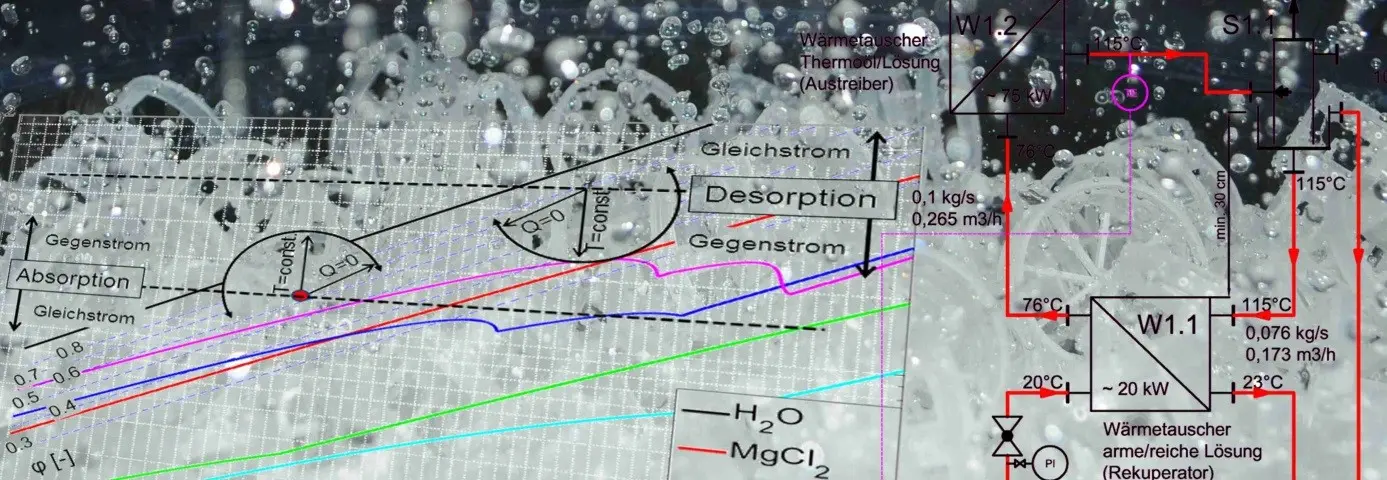
Energy storage systems play an important role in ensuring that the energy supply meets the energy demand at all times. In the transition to a society based on renewable energy sources, which have a fluctuated and unpredictable production, storage technologies are fundamental for smoothing out the energy supply and for time shifting between energy production and consumption and ensuring that the supply of energy matches the demand.
Watt d'Or 2020
The Thermal Storage research group won the Watt d'Or in the "Energy Technologies" category for its project on energy-efficient air conditioning of a greenhouse. All information on the prestigious award from the Swiss Federal Office of Energy, pictures and videos can be found here.
Core area
The Thermal Energy Storage research group deals with non-electrical energy storage systems (PDF 601 kB).
One focus is the research of sorption technology. Storages based on absorption technology allow a long-time storage of chemical potential without thermal losses and minimize thermodynamic losses adjusting the generated temperature to the required effective temperature.
The research and development focus of the group is on developing application-oriented system solutions, processes and plant components. This is where the research group benefits from close collaboration with experts from the other groups of the IEFE, such as electrical system and numerical simulation groups.
Expertise
Absorption processes
What are absorption processes (PDF 586 kB)?
Application of absorption processes:
- Thermal long-term loss-free storage with a high "energy density"
- Air conditioning (greenhouses, air conditioning for archives and museums, food production and storage)
- Drying processes (low temperature drying of agricultural goods)
- Waste heat utilization (high temperature condensing boiler technology (PDF 1.74 MB), waste heat storage in salt solutions (PDF 295 kB))
- Building air conditioning
Working fluids
Optimization of the power supply through thermal energy storage systems
Facilities
Project examples
H-Disnet Official Webpage: https://www.h-disnet.eu/
MPC - Adaptive building energy management system (PDF 246 kB)