Health and Environmental Analytics

Statistical modeling and machine learning make complex data understandable and provide sound insights, supporting smart decisions on health and environmental issues in business, science, and policy.
Our Data Analytical Approaches
- Statistical Methods are tools for collecting and evaluating data. They help identify trends, validate hypotheses, and support data-driven decisions even under uncertainty.
- Predictive Analytics applies statistical models and machine learning techniques, including ensemble methods and deep learning, to analyze data and reliably forecast future trends, events, or behaviors.
- Special Topics
- Causal Inference
- Conformal Prediction
- Data Anonymization
- Experimental and Study Design
- Network Analysis
Research & Projects
A Model-Based Three-Stage Classifier for Particulate Matter
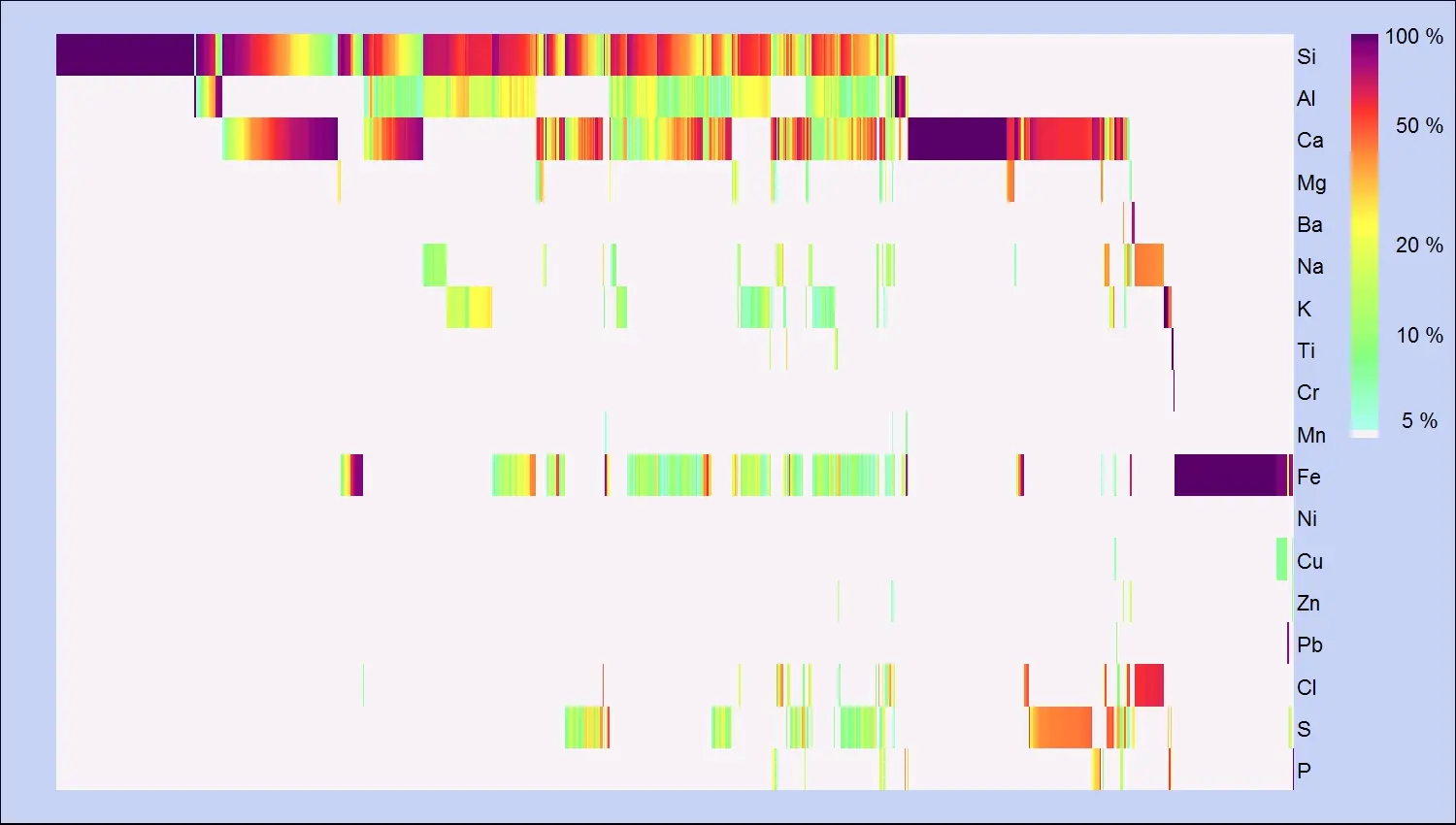
Development of a universally applicable three-stage particle classifier for Particle Vision GmbH, which categorizes particles into several thousand classes based on their chemical composition.
Project details
Data Anonymization
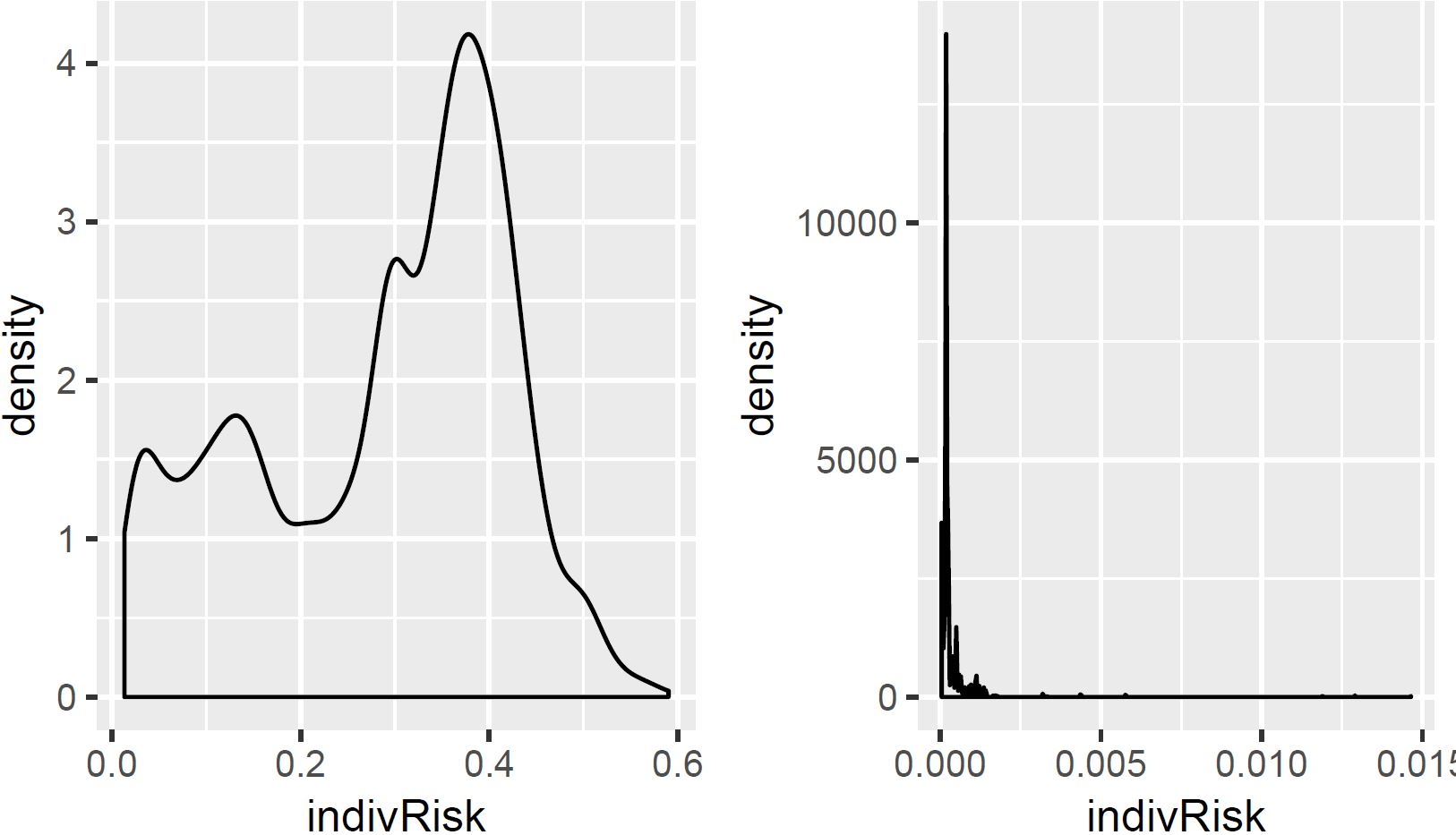
Data anonymization is required for both data sharing and internal use to prevent identification of individuals while preserving analytical quality as much as possible. This anonymization process is applied to complex data from Helsana.
Project details
Deep Learning-Based Classification of Histological Subtypes of Lung T
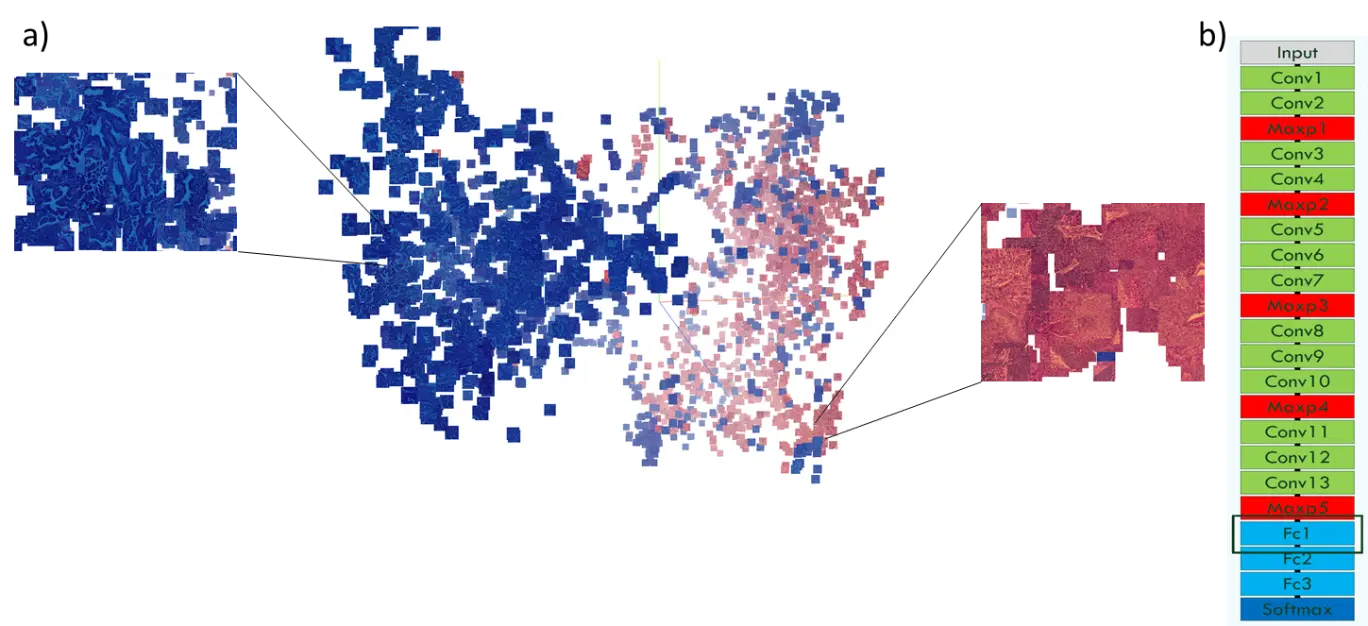
b) VGG CNN extracts 4,096 image features at specified layer.
More in project details.
Deep learning methods (specifically convolutional neural networks) can distinguish different types of lung tumors from histological images almost as accurately as pathologists.
Project details
Sales Forecasting for the Restaurant and Catering Industry
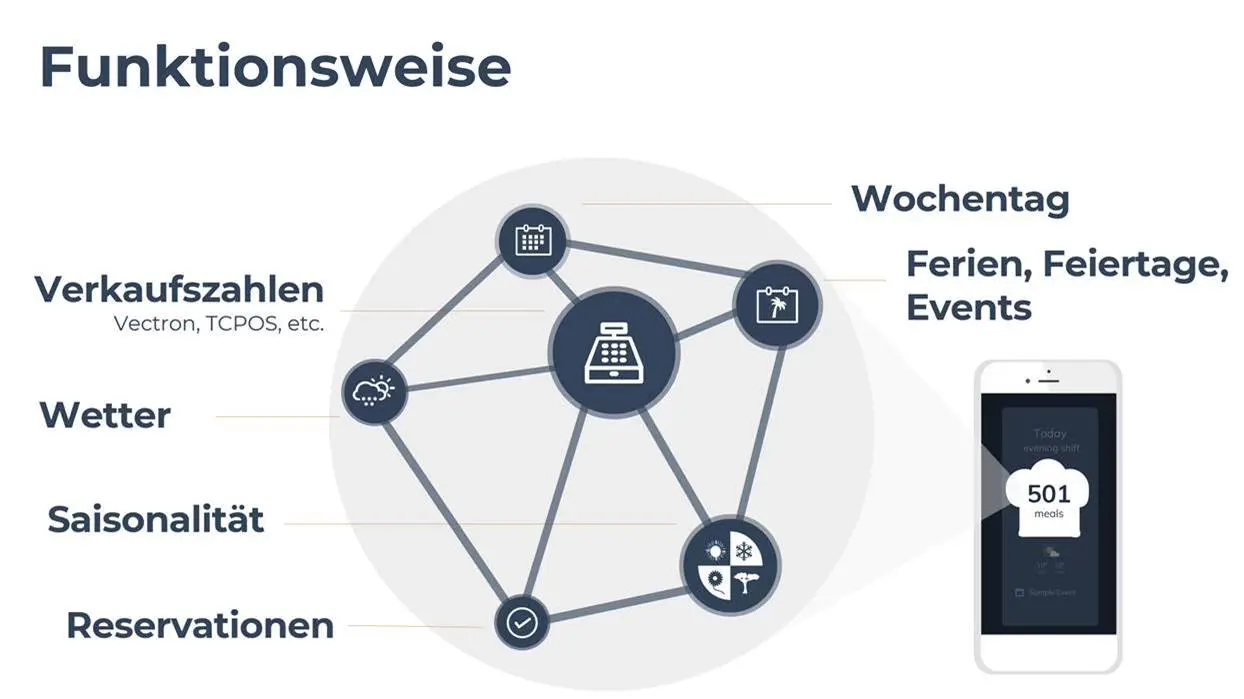
Development of forecasting algorithms that use calendar data, weather, events and other factors for Prognolite, a provider of software for revenue and footfall forecasting in the hospitality industry.
Project details
Tariff System for Inpatient Rehabilitation
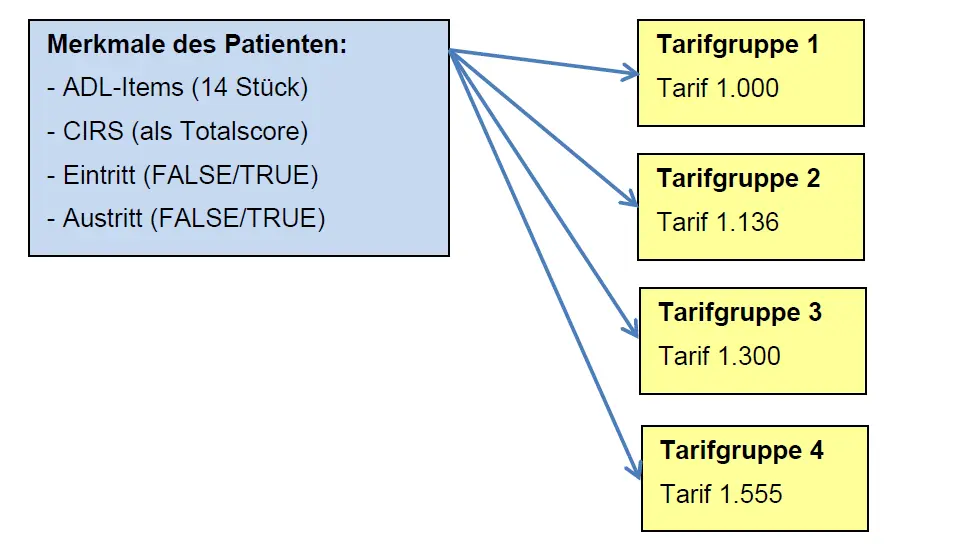
As part of the performance-based and lump-sum reimbursement model for hospitals and clinics mandated by the Swiss Health Insurance Act, ZHAW has developed a tariff system for performance-based daily flat rates in rehabilitation.
Project details
News
No news available.
Publications
Some recent articles in scientific journals, peer-reviewed
Achermann Basil B, Kong Taewoong, Drewek Anna, Lee Gyeongeun, Lorenzetti Silvio R. and Kim Hoon. 2026. Acute effect of the bounce technique on joint angles, net joint moments, and muscle activity in the free weight back squat. The Journal of Strength & Conditioning Research. https://doi.org/10.3390/sports13120426
Bayer Sofie, Pawle Beate , Tomic Uros, Del Duce Andrea, Mildenberger Thoralf, Steiner Albert and Sennekamp Fabian. 2026. Commuting Patterns in the Lake Constance Region: A Cross-Border Analysis of Higher Educational Institutions. European Journal of Sustainable Development 15 (3):915. https://doi.org/10.14207/ejsd.2026.v15n3p915.
Dettling Marcel and Liberatore Florian. 2026. Work schedule preferences and shift schedules of per‐diem nurses : a descriptive cross‐sectional study of online labour platform data - empirical research quantitative. Nursing Open, 13(2). https://doi.org/10.1002/nop2.70456
Vollrath Sabrina, Bitterlich Norman, Lüdin Dennis, Rothenbühler Adrian, Hackney Anthony C, Lorenzetti Silvio R, Drewek Anna, Achermann Basil B, du Toit Therina and Stute Petra . 2025. Acute Adrenal Suppression Following Resistance Training in Elite Female Athletes: A Comprehensive Steroid Profile. Sports 13, no. 12: 426. https://doi.org/10.3390/sports13120426
Achermann Basil B, Drewek Anna and Lorenzetti Silvio R. 2025. Acute effect of the bounce squat on ground reaction force at the turning point and barbell kinematics', Journal of Strength and Conditioning Research, 40(1), pp. 1–8. https://doi.org/10.1519/JSC.0000000000005269
Templ Matthias and Hofer Christoph. 2025. Compositional analysis of the relationships between the organic matter content and chemical and physical properties of soil. Applied Geochemistry. 193, S. 1-16. https://doi.org/10.1016/j.apgeochem.2025.106526
Achermann Basil, Regazzi Naire, Heynen Rahel, Lüdin Dennis, Suter Julia, Drewek Anna and Lorenzetti Silvio. 2025. From monitoring to prediction : velocity-based strength training in female floorball athletes.Sports. 13(6), S. 175. https://doi.org/10.3390/sports13060175
Doemer Manuel and Kempf David. 2023. Is It Ops That Make Data Science Scientific?. Archives of Data Science, Series A8 (2): 1–17. https://doi.org/10.5445/IR/1000150238.
Spurk Christoph, Koch Carmen, Bürgin Reto, Chikopela Louis, Konaté Famagan, Nyabuga George, Sarpong Daniel Bruce, Sousa Fernando and Fliessbach Andreas. 2023. Farmers’ innovativeness and positive affirmation as main drivers of adoption of soil fertility management practices: evidence across sites in Africa. The Journal of Agricultural Education and Extension. https://doi.org/10.1080/1389224X.2023.2281909
Bürgin Reto, Muratori Corrado, Roca-Riu Mireia and Heitz Christoph. 2023. A space-time model for demand in free-floating carsharing systems. Journal of Advanced Transportation. 2023(6610624). https://doi.org/10.1155/2023/6610624
Arpogaus Marcel, Voss Marcus, Sick Beate, Nigge-Uricher Mark and Dürr Oliver. 2023. Short-term density forecasting of low-voltage load using bernstein-polynomial normalizing flows. IEEE Transactions on Smart Grid. 14(6), S. 4902-4911. https://doi.org/10.1109/TSG.2023.3254890
Mildenberger Thoralf, Braschler Martin, Ruckstuhl Andreas, Vorburger Robert, and Stockinger Kurt. 2023. The role of data scientists in modern enterprises : experience from data science education. SIGMOD Record. 52(2), S. 48-52. https://doi.org/10.21256/zhaw-27357
Some recent articles in scientific journals, non-peer-reviewed
Thalmann Basilius, Hofer Christoph, Wächter Daniel, Kulli Beatrice, 2022. Per- und polyfluorierte Alkylsubstanzen (PFAS) in Schweizer Böden. altlasten spektrum. 31(6), S. 176-179. https://doi.org/10.37307/j.1864-8371.2022.06.05
Some recent published project reports
Rapp, Christian, Jakob Karin, Drewek Anna, Kruse Otto and Waller Gregor. 2025. Generative KI beim Verfassen von Abschlussarbeiten: Ergebnisse einer Studierenden- und Dozierendenumfrage im Juni/Juli 2024. Winterthur: ZHAW Zürcher Hochschule für Angewandte Wissenschaften. doi: 10.21256/zhaw-2549.
Bürgin Reto, Stucki Michael, Vetsch-Tzogiou Christina, Kauer Lukas Kohler Andreas, Drewek Anna, Thommen Christoph, Dettling Marcel and Wieser Simon. 2024. Wirkungsanalyse zum Risikoausgleich mit pharmazeutischen Kostengruppen (PCG): Schlussbericht. https://doi.org/10.21256/zhaw-30489
Drewek Anna, Ordelt Christian, Riahi Nima and Sedding Helmut. 2024. 100 Jahre Sollzeiten - Ein Konzept für die Zukunft?. Logistics Innovation. 2024(1), S. 10-13.
Some recent talks, peer-reviewed
Dömer Manuel, Biruk Hailesilassie and Ipsita Panda. 2026. Anomaly Detection for Weigh-in-Motion Sensor Health Monitoring. Konferenzbeitrag. In IEEE Swiss Conference on Data Science and AI (SDS), Zurich, Switzerland, 2026, pp. 217-220 , 217–20. IEEE. https://doi.org/10.1109/sds70563.2026.00041.
Wulf Jochen, Meierhofer Jürg and Dömer Manuel. 2026. Designing Cost-Optimal Human-AI Workflows for Retrieval-Augmented Generation : Analytical Framework and Industrial Case Study. Konferenzbeitrag. In IEEE Swiss Conference on Data Science and AI (SDS), Zurich, Switzerland, 2026, pp. 37-44. https://doi.org/10.1109/sds70563.2026.00013.
Bürgin, Reto; Vetsch-Tzogiou, Christina; Stucki, Michael; Kauer, Lukas; Pirktl, Lennart; van Kleef, Richard C.; Kohler, Andreas; Drewek, Anna; Thommen, Christoph; Dettling, Marcel; Wieser, Simon. 2024. Improving risk adjustment in Switzerland with pharmaceutical cost groups. Conference Paper. In: 6th Swiss Health Economic Workshop, Lucerne, Switzerland, 7 June 2024.
A complete overview of all publications by the institute's members can be found in the institute's publication list.
Teaching
“We teach students to learn from data with statistical methods, separating structure from noise."
Lectures
We teach Bachelor students all about statistical data analysis starting from exploratory data analysis, to inferential statistics, statistical modelling, advanced regression modelling, survey design analysis, data mining, predictive modelling, data analytics, and statistical quality control.
Our primary teaching contributions are focused on the Bachelor programs Wirtschaftsingenieurwesen, Mobility Science and Data Science , complemented by two advanced module courses—Advanced Statistical Data Analysis and Business Analytics—within the Master of Engineering program.
Furthermore, we are running two CAS course call Data Analysis and Advanced Statistical Data Analysis organised by the school of Engineering under the program MAS Data Science. In addition, we offer a short introductory course in R, called R Boot Camp.
Supervising Student Projects
We are excited to collaborate with students and provide dedicated support to both Bachelor's and Master's (MSE) candidates throughout their project journeys.
You can explore current project and thesis opportunities on Complesis.
We also welcome your own ideas and would be glad to discuss them with you!
Team
-

ZHAW School of Engineering
IDS Institute for Data Science
Technikumstrasse 81
8400 Winterthur