Bachelor’s degree Medical Informatics: specialisation
In the Bachelor’s Degree Programme in Medical Informatics, you specialise in areas such as software development, data analysis or digital health technologies, depending on your interests and career goals. You can tailor your studies by combining elective modules from different subject areas.
Health Data, Artificial Intelligence and Clinical Research
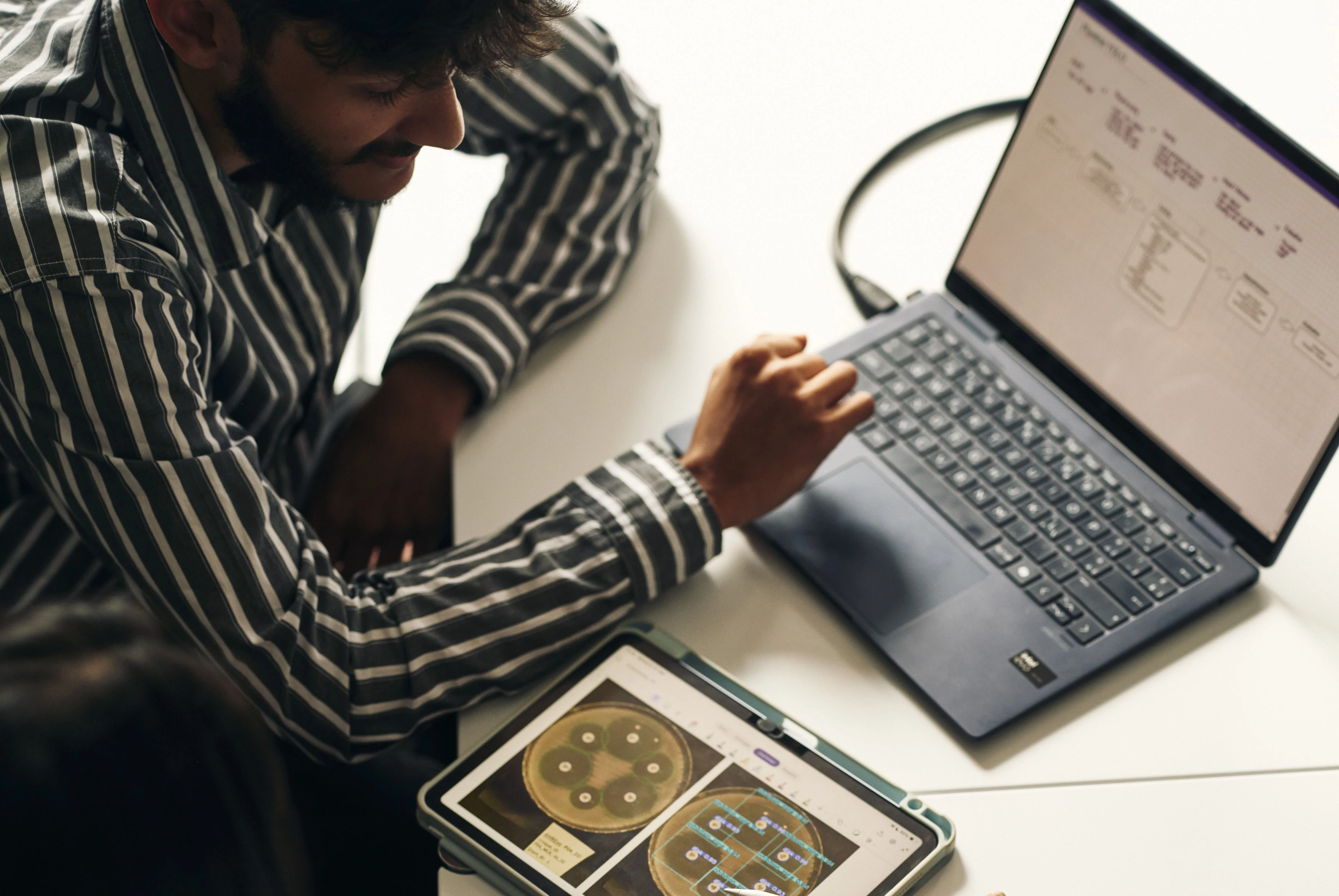
Health data and artificial intelligence are opening up new opportunities in medical research, diagnosis and treatment. In this specialisation, you learn to analyse medical data and images and apply modern AI technologies such as deep learning and generative AI.
You also gain a foundation in clinical research and discover how scientific studies are designed, analysed and critically evaluated. You explore the reliability, explainability and ethical challenges associated with the use of AI in medicine.
Examples of modules:
- AI in Medicine
- Clinical Research
- Data Science in Health
- Explainable AI
- Digital Image Processing
Digital Health Applications and Software Development

From health apps and telemedicine to digital therapies and gamification in prevention and rehabilitation, software plays a central role in modern healthcare.
In this specialisation, you develop your expertise in building complex and reliable software systems. You explore modern software development processes, user-centred design and the integration of different technologies. You also learn to implement digital health solutions, from initial concept and development through to practical application.
Examples of modules:
- Software Engineering
- Natural User Interfaces
- Applied Cloud Computing
- Mobile Applications
- Game Development
Clinical Information Systems and Digital Healthcare Processes

Hospitals, medical practices and other healthcare facilities rely on reliable information systems and efficient processes. Digitalisation creates new opportunities to make better use of medical information, connect systems and improve healthcare delivery.
In this specialisation, you learn to integrate digital solutions into healthcare processes, optimise organisational workflows and support complex decision-making using mathematical methods. Practical applications range from staff and resource planning to assessing the level of digitalisation in healthcare facilities.
Examples of modules:
- Operations Research for Health Care
- Digital Health Insights Seminar
- Intelligent Information Systems
Medical Devices and Safety
Digital technologies are a key component of modern medical devices and connected healthcare systems. From intelligent sensors and motion tracking to software-based medical devices, they open up new opportunities in diagnosis, treatment and rehabilitation.
In this specialisation, you learn to develop and integrate medical technologies and to collect and process sensor data. You explore the specific requirements for safety and quality and discover how regulatory requirements and technical standards are incorporated into the development of medical devices and medical software.
Examples of modules:
- Regulations and Safety of Medical Devices
- Movement, Data and Technology
- Internet of Things
Curriculum
You may also be interested in
Application for the Bachelor’s degree programme
Apply for the Bachelor’s degree programme today.
Admission requirements
The requirements for admission to the Bachelor’s degree programme at the ZHAW School of Engineering.
How to prepare yourself for the Bachelor’s degree programme
Learn how you can best prepare yourself for the Bachelor’s degree programme.
Application for the Bachelor’s degree programme
Admission requirements
How to prepare yourself for the Bachelor’s degree programme
Apply for the Bachelor’s degree programme today.
The requirements for admission to the Bachelor’s degree programme at the ZHAW School of Engineering.
Learn how you can best prepare yourself for the Bachelor’s degree programme.