Bachelor's degree Mechanical Engineering
Machines keep the world moving – from industry and energy to medicine. The Mechanical Engineering degree programme combines creativity with technical expertise, enabling you to develop innovative solutions using simulation, AI, new materials and sustainable production.
Good reasons to study Mechanical Engineering
With a Bachelor’s degree in Mechanical Engineering, you can:
- develop sustainable products designed for a circular economy;
- contribute to decarbonisation through innovative energy engineering solutions;
- use creative approaches to address challenges in energy, mobility and health.
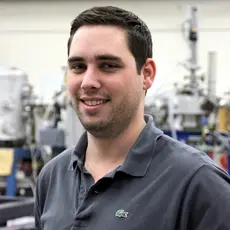
"I naturally still benefit enormously today from the technical knowledge gained during my mechanical engineering studies. I have also learned, however, how project work is planned, how presentations are given, how I can best handle pressure, and how to work in a structured and efficient manner. This is very beneficial to me in my current professional life."
Joël Bourquin, Graduate Mechanical Engineering, CEO Ionplus AG
At a glance
Degree: Bachelor of Science in Mechanical Engineering UAS Zurich
Workload: 180 ECTS credits
Duration: 6 semesters (full-time), 8 semesters (part-time)
Study model: Full-time degree programme, Part-time degree programme, Work-study Bachelor’s degree programme, International profile
Modules in English: Fall semester (PDF 532 kB), Spring semester (PDF 454 kB) (for more information please visit International Office)
Start of programme: Autumn
Application deadline: 30 April
Location: Winterthur
Language of instruction: German
Tuition fee: CHF 720 per semester plus additional study costs
Consecutive degree programmes: Master of Science in Engineering (MSE)
Admission: Admission requirements
What you will study in Mechanical Engineering
Sustainable products for industry, heat pumps, new materials for sports shoes, medical implants and innovative coatings: mechanical engineers are involved in almost every newly developed and manufactured product. Technologies grouped under the term Industry 4.0 – such as virtual and augmented reality, additive and advanced manufacturing, and product lifecycle management – are shaping the future of mechanical engineering.
In the first two years, you will acquire foundational knowledge in subjects including mathematics and physics, engineering mechanics, fluid mechanics and thermodynamics, materials science, and measurement and control engineering. Alongside these subjects, you will apply what you learn directly in project modules. By developing future-ready solutions in product and production engineering, you will gain practical experience of every step from the initial idea to manufacture.
Study models
The Bachelor's degree programme can be completed on either a full-time basis, with a duration of three years, or on a part-time basis, with a minimum duration of four years. A maximum employment level of 60% during the lecture period is recommended to students wishing to work while studying part-time.
Graduates of Swiss baccalaureate schools can choose the work-study Bachelor's degree programme, which combines internships and study in a four-year model.
Mechanical Engineering can also be studied in the international profile, which features specialist modules in English and an extended stay abroad during studies. In addition, students have the opportunity to spend an exchange semester at one of our partner universities during their Bachelor's degree programme.
With the Entrepreneurial Profile, you complement your degree programme with entrepreneurial skills and develop your own ideas through practical projects.
Professional relevance
The Bachelor's degree programme in Mechanical Engineering is highly relevant to professional practice. From the very first semester, students have the opportunity to apply the knowledge acquired in the scope of practice-based projects. In the project and Bachelor's thesis at the end of the study programme, students work independently on current topics and questions, often in collaboration with a company.
The lecturers in the Mechanical Engineering study programme are also active in research and development, and the findings from their projects – generally completed together with business partners – are directly incorporated into their teaching.
You may also be interested in
Application for the Bachelor’s degree programme
Apply for the Bachelor’s degree programme today.
Admission requirements
The requirements for admission to the Bachelor’s degree programme at the ZHAW School of Engineering.
How to prepare yourself for the Bachelor’s degree programme
Learn how you can best prepare yourself for the Bachelor’s degree programme.
Application for the Bachelor’s degree programme
Admission requirements
How to prepare yourself for the Bachelor’s degree programme
Apply for the Bachelor’s degree programme today.
The requirements for admission to the Bachelor’s degree programme at the ZHAW School of Engineering.
Learn how you can best prepare yourself for the Bachelor’s degree programme.