Bachelor's degree Mobility Science
Electrification, automation and connectivity are transforming mobility and logistics. In the Mobility Science degree programme, unique in Switzerland, you will analyse mobility data and develop integrated solutions for complex, sustainable transport systems.
Good reasons to study Mobility Science
With a Bachelor’s degree in Mobility Science, you can:
- actively shape the future of mobility;
- make a difference in sustainable transport;
- develop intelligent mobility concepts based on new technologies and trends.
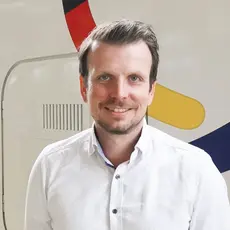
"Through the programme, you are trained to become a generalist, which enables you to tackle challenges in day-to-day operations with a holistic approach. I learned the tools for this at ZHAW."
Gregor Frei, Mobility Science Graduate, CEO of SBB Deutschland GmbH
To the Graduate Portrait
At a glance
Degree: Bachelor of Science in Mobility Science UAS Zurich
Workload: 180 ECTS credits
Duration: 6 semesters
Study model: Full-time degree programme, Work-study Bachelor's degree programme
Modules in English: Fall semester (PDF 532 kB), Spring semester (PDF 454 kB) (for more information please visit International Office)
Start of programme: Autumn
Application deadline: 30 April
Location: Winterthur
Language of instruction: German
Tuition fee: CHF 720 per semester plus additional study costs
Consecutive degree programmes: Master of Science in Engineering (MSE), Master in European Railway Systems
Admission: Admission requirements
What you will study in Mobility Science
Transport accounts for around 30% of Switzerland’s total greenhouse gas emissions. Reducing these emissions requires innovative solutions. The Mobility Science degree programme focuses on the sustainable development of passenger and freight transport, with the aim of achieving climate-neutral mobility by 2050. E-bikes, autonomous cars, delivery drones, self-driving trains and sharing schemes – the mobility of the future is diverse and connected. The focus is on optimising transport as an integrated system. Developing future-ready mobility solutions requires engineers who can create new concepts for public transport and freight logistics.
Study models
The Bachelor's degree programme can be completed on either a full-time basis, with a duration of three years, or on a part-time basis, with a minimum duration of four years. A maximum employment level of 60% during the lecture period is recommended to students wishing to work while studying part-time.
Graduates of Swiss baccalaureate schools can choose the work-study Bachelor's degree programme, which combines internships and study in a four-year model.
Students have the opportunity to spend an exchange semester at one of our partner universities during the course of their Bachelor's degree programme.
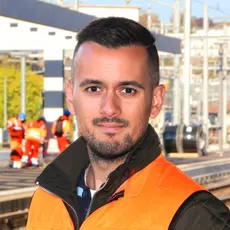
"Helping to actively shape the future of mobility in a way that is relevant to society motivated me to opt for this degree programme and still drives me today."
Martin Grolimund, graduate in Mobility Science and execution project manager at SBB Infrastructure
Internship prior to starting the Bachelor's degree programme
In order to begin studying in the Bachelor's degree programme in Mobility Science, it is beneficial to have completed a one-year internship prior to the study programme. Holders of a Swiss baccalaureate must provide proof of professional experience lasting at least 12 months. We are happy to help students find suitable internships.
In general, we recommend the following online platforms when searching for an internship:
- Internship portal of the Swiss association of transport engineers and experts (in German and French)
- Internship portal of the training association "login" (in German, French and Italian) (commercial internships but may be suitable for individual cases)
- www.bahnjobs.ch (in german)
- Job portal Absolvententag ZHAW (in german)
Students who have difficulty finding a good solution should feel free to contact us.

“The faculty members teaching the Mobility Science course whom I have met are all highly committed. They teach their students the critical skills they will need in their future careers. They are very much in tune with current trends and have exciting ideas and concepts for the future of mobility.”
Dr. Jörg Beckmann, CEO of the Mobility Academy and Director of the Swiss eMobility Association
Professional relevance
The Bachelor's degree programme in Mobility Science is highly relevant to professional practice. From the very first semester, students have the opportunity to apply the knowledge acquired in the scope of practice-based projects. In the project and Bachelor's thesis at the end of the study programme, students work independently on current topics and questions, often in collaboration with a company.
Topics surrounding mobility are a major research area of the ZHAW School of Engineering. The lecturers in the Mobility Science study programme are also active in research and development, and the findings from their projects – generally completed together with business partners – are directly incorporated into their teaching.
You may also be interested in
Application for the Bachelor’s degree programme
Apply for the Bachelor’s degree programme today.
Admission requirements
The requirements for admission to the Bachelor’s degree programme at the ZHAW School of Engineering.
How to prepare yourself for the Bachelor’s degree programme
Learn how you can best prepare yourself for the Bachelor’s degree programme.
Application for the Bachelor’s degree programme
Admission requirements
How to prepare yourself for the Bachelor’s degree programme
Apply for the Bachelor’s degree programme today.
The requirements for admission to the Bachelor’s degree programme at the ZHAW School of Engineering.
Learn how you can best prepare yourself for the Bachelor’s degree programme.