Electric Power Systems and Smart Grids
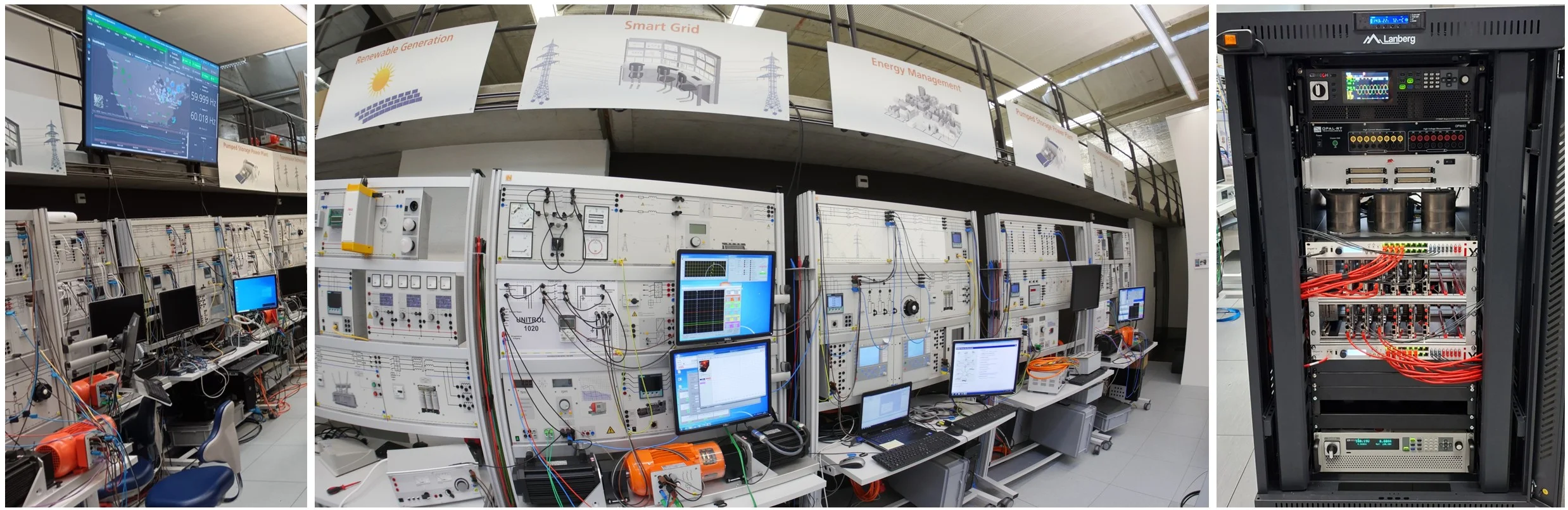
The Electric Power Systems and Smart Grids (EPSSG) group at the Institute of Energy Systems and Fluid Engineering (IEFE) at ZHAW, School of Engineering is equipped with a state-of-the-art laboratory with professional hardware and software for technical, and engineering education, as well as scientific development. In this laboratory, it is possible to interconnect and communicate among different elements to investigate and mimic real challenges faced in the real electrical network. In this form, it is possible to investigate problems across different levels of the grid such as integration of renewable energy sources, power quality issues, electro mobility, energy management and energy storage systems, just to mention some.
Team

The group is led by Prof. Dr. Petr Korba and consists of a core team integrated by the researchers: Dr. Rafael Segundo, Dr. Miguel Ramirez, Dr. Artjoms Obusevs and Dr. Alfredo Velázquez.
Research Areas
Our team follows different research directions that span across following core areas of electrical power systems:
Power system dynamics & control
Person in charge: Dr. Rafael Segundo
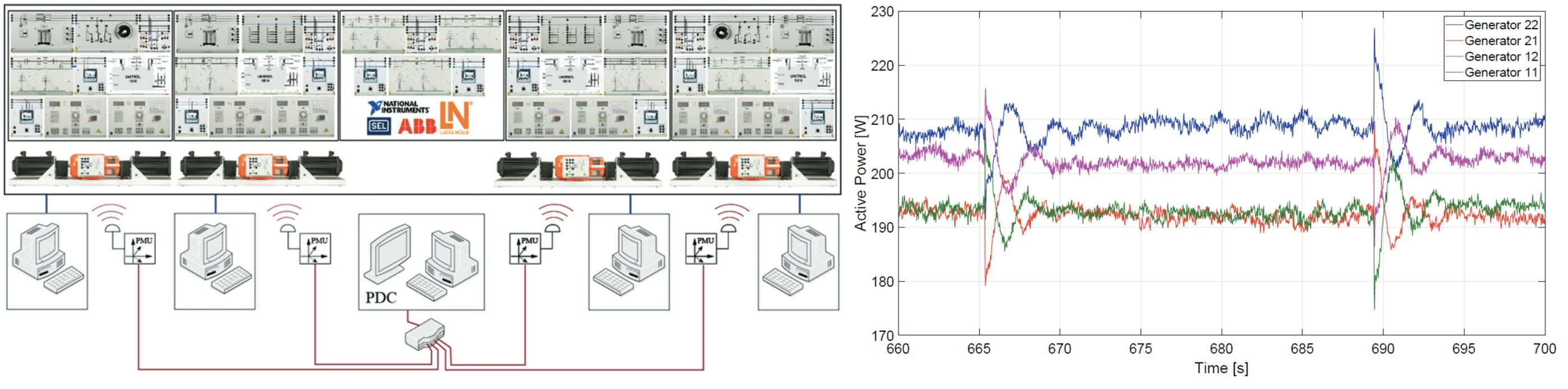
The objective of this research direction is to investigate and analyse power system phenomena that occur at the highest voltage level of the grid (transmission system). Some of these problems include classical stability phenomena such as rotor angle, voltage and frequency stability but also to include new challenges related to integration of renewable energy sources such as low inertia. Moreover, control algorithms to mitigate these problems are also investigated. In the figure below, the classical academic four-machines two-area systems was developed in hardware and equipped with a monitoring system. This setup allows to change the rotational inertia in any of the four machines and in this form, enable the analysis of electromechanical oscillations as in the real grid.
Big data analytics for stability assessment
Person in charge: Dr. Miguel Ramirez
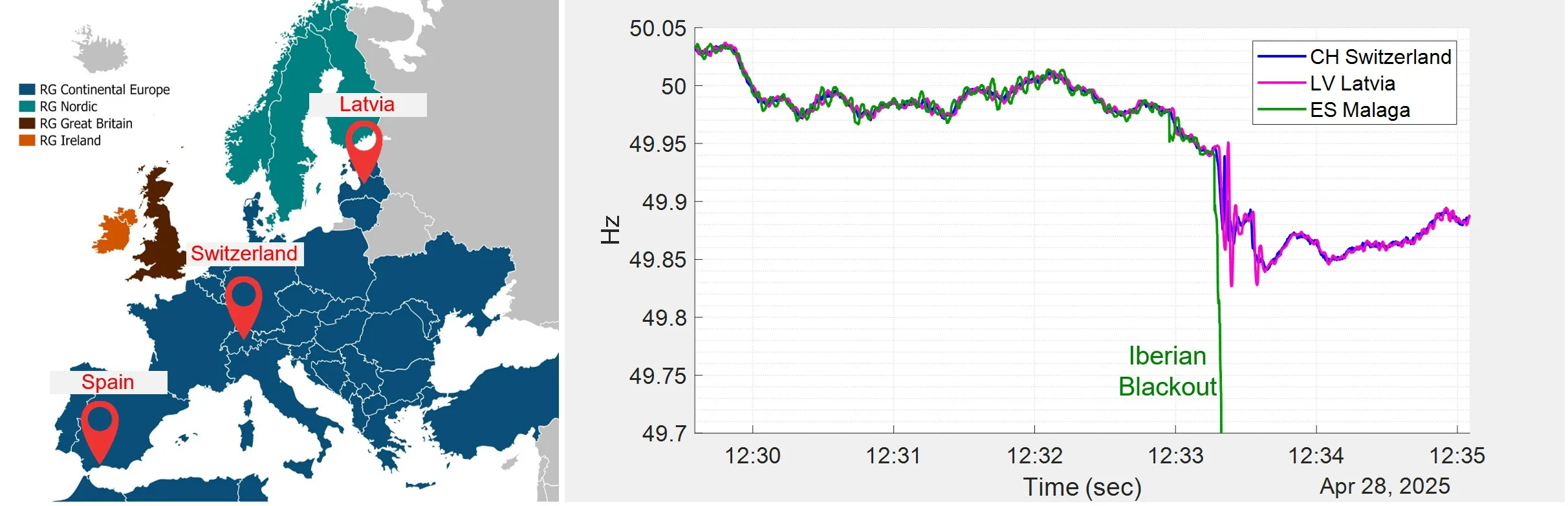
The digitalization of electrical power systems has introduced sophisticated sensors namely smart meters in distribution systems and phasor measurement units (PMUs) in transmission systems. These sophisticated sensors are providing electric utilities with more data than ever before. However, without processing these data, utilities cannot profit from these large volumes of measurements. In this research direction, signal processing approaches based on data driven methods, machine learning and artificial intelligence are investigated. The figure below displays frequency excursions measured with PMUs during the Iberian blackout in April 2025. With this type of measurements, the EPSSG group can develop solutions to prevent such type of events by sending alarms to the operators of the system in advance before the problem is spread.
Smart distribution and automation
Person in charge: Dr. Artjoms Obusevs
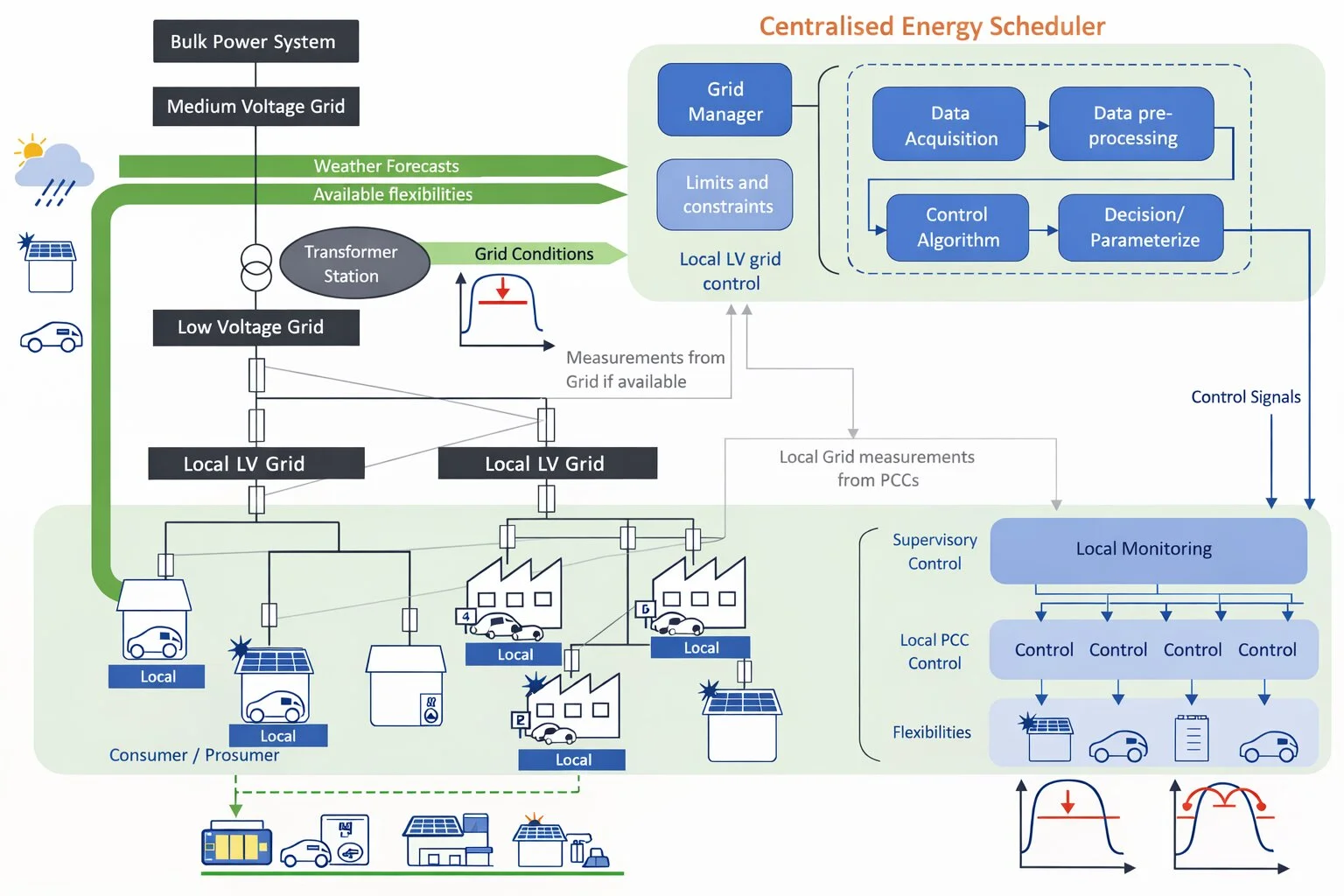
In this research direction different analysis to solve challenges in the low voltage grid (distribution system) are investigated. The team works jointly with different distribution system operators (DSOs) such as Stadtwerk Winterthur, Elektrizitätswerke Zürich (EKZ) and Elektrizitätswerk der Stadt Zürich (ewz), as well as with companies to tailor the proposed solutions. One example of the projects developed in this area is the project GAMMA, that aims to develop cost-effective, innovative and modular grid monitoring approaches to increase the observability of the low-voltage grid using low-cost voltage and current sensors.
Grid Integration of Power Electronics Converters
Person in charge: Dr. Alfredo Velázquez
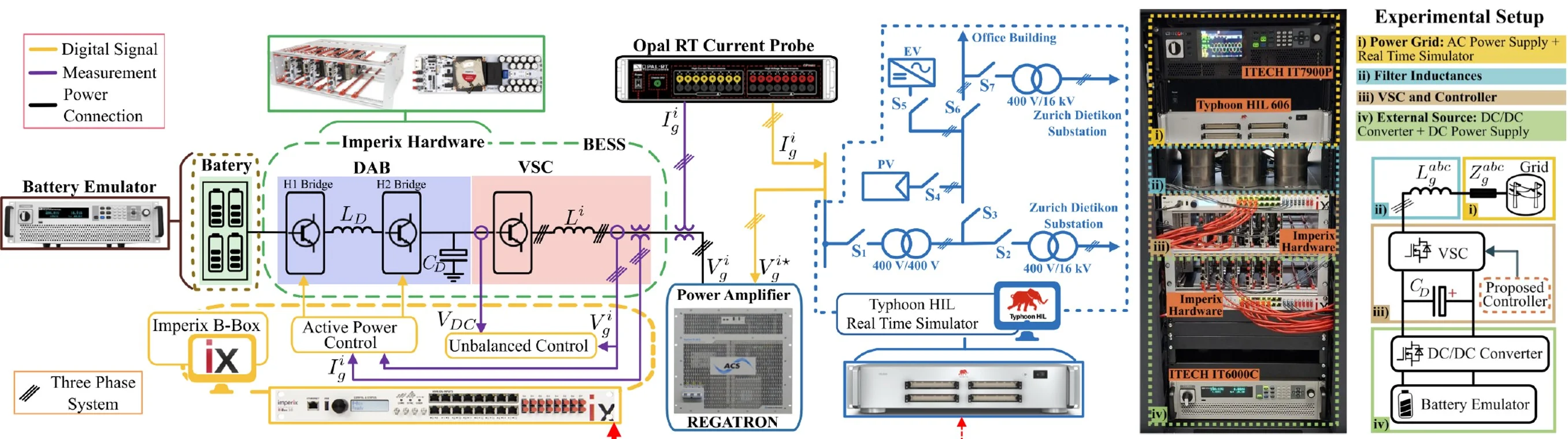
The massive integration of renewable energy sources such as solar PV and Wind, the use of battery energy storage systems (BESS), is consequently increasing the integration of Power Electronics Converters (PECs) in electrical grids. These components are helping the electrical grids to become more sustainable systems, but at the same time are introducing new challenges such as degradation of the grid stability and power quality. This research direction aims to develop, validate, and implement innovative methods to mitigate these challenges, ensuring reliable and stable grid operations. Some research directions include the analysis and control for PEC when operating as grid forming and grid following structures, respectively. The figure displayed below depicts a laboratory setup of a power hardware in the loop (P-HIL) experiment of a BESS connected to a distribution system available in the EPSSG laboratory.
International Activities
The Electric Power Systems and Smart Grids group is very active internationally, and in this section, useful links of the different initiatives where the group cooperates can be found.
The ISGAN-SIRFN Network
The International Smart Grid Action Network (ISGAN) is an international platform for the development and exchange of knowledge and expertise on smarter, cleaner, and more flexible electricity grids. The Smart Grid International Research Facility Network (SIRFN), is a network of top-tier smart grid researchers, testbed facilities, and relevant projects that fosters collaboration among countries involved in ISGAN and the Electric Power Systems and Smart Grids (EPSSG) group at ZHAW, School of Engineering is the Swiss representative in the ISGAN-SIRFN Network also known as Working Group 5. More details can be found under following Link.
International Workshop DynPOWER
The international workshop on dynamic stability challenges of the future power grids DynPOWER is an event established by the Electric Power Systems and Smart Grids group of the Institute of Energy Systems and Fluid Engineering (IEFE) at ZHAW, School of Engineering. The event takes place on a yearly basis since September 2017 and since its first edition, the workshop has been evolving, growing and moving around in Europe from Switzerland to the Netherlands, and Italy. Thanks to its hybrid modality, the workshop brings together the international power system community to debate and share their work and findings on the different aspects encountered in modern electrical grids.
The workshop covers a broad range of topics such as power systems dynamics and control, integration of renewable energy sources, and challenges arising from inverter based resources (IBRs), just to mention some. The speakers represent transmission system operators, leaders of technological companies and academics from top universities. Students, early career researchers and public in general can learn and profit from the presentations. More information about the latest or upcoming workshop can be found in the following Link.
IEEE Working Group on Big Data Analytics for Transmission Systems
The Working Group (WG) on Big Data & Analytics for Transmission Systems is a subgroup of the IEEE Big Data & Analytics (BDA) for Power Systems Subcommittee, and the Analytic Methods for Power Systems (AMPS) Technical Committee. The group was established in 2020 as Task Force (TF) and elevated to WG in 2023. The activities of the group include regular online and in-presence meetings, organization of panel and tutorial sessions in major IEEE conferences, publications and organization of special issues in high impact journals, international workshops and dissemination of technical reports. The group's activities have been recognized by the IEEE with awards such as the Outstanding Working Group Award in 2024.
If you want to join this group and/or follow its activities, you can find more information under following Link.
Projects and Publications
All projects and publications of the research group Electric Power Systems and Smart Grids can be found under following Link.