Machine Perception and Cognition

“Equipped with frontier AI expertise, we are committed to practical problem solving: developing, for example, common-sensical world models; deploying document foundation models; innovating medical & industrial AI under scarce resources; researching human-AI interaction patterns; and envisioning positive societal futures, advocating for pro-human AI."
Expertise and Services
Expertise
- Sensory pattern recognition with deep learning
- Document recognition and multimedia analysis (e.g., for industry and medicine)
- Biology-inspired neural system development, world models
- Societal effects of AI, pro-human AI design
Real-world AI tasks often start with the detection of patterns in sensory data (like similarities and anomalies in image, video, time series, or audio data) and extend to making sense of these patterns (leading to actions like a classification, segmentation, prediction or decision).
The MPC group spans this arc from perception to cognition, being rooted in pattern recognition research and focusing on deep neural network methodology.
Tasks we study have diffferent learning target (e.g., detection, classification, clustering, segmentation, novelty detection, control) and corresponding practical use case (e.g., predictive maintenance for industrial assets, speaker recognition for multimedia indexing, document analysis for construction, computer vision for industrial quality control, automated machine learning in general data sciences, deep reinforcement learning for building control, video analysis for automatic media production, face recognition for biometric access control, human-AI co-learning for meaningful human-AI collaboration in high-consequence scenarios), which in turn shed light on different aspects of the learning process.
We use this experience to create increasingly general real-world AI systems built on neural architectures. Fundamental challenges thereby lie in the systems’ robustness as well as their sample and label efficiency, and are often approached with transfer learning and domain adaptation.
Beyond this, we take inspiration from biological learning to work on next-level AI methodology with world models, and are actively engaged at the interface of technology and society to contribute to a future worth living in with pro-human AI.
Services
- Insight: keynotes, trainings
- AI consultancy: workshops, expert support, advise, technology assessment
- Research and development: small to large-scale collaborative projects, third party-funded research, student projects, commercially applicable prototypes
Additional Information
The group has very diverse backgrounds, which lets us complement each other’s skills and work on diverse problems with focused methodology. Get in touch to explore engaging with us as a practice partner in funded collaborative research & innovation or undertake master’s studies under our supervision. We post job offers (including for PhD students) on the institutional website if and when they become available.
Team
Head of Research Group









Projects
-
Automated Music Track Extraction and Identification from Full-Length Movies (soundtrackID )
We are developing an end-to-end system for the automatic detection, segmentation, and identification of music in full-length movies. Audio is analyzed in one-second windows using pretrained models, merged into candidate tracks, reviewed, and submitted to external APIs; identification accuracy is…
current, 02/2026 - 03/2027
-
SCRAI – A Think-and-Do-Tank for Responsible Development and Societal Alignment of Artificial Intelligence Systems
SCRAI brings responsible AI to the ground by bridging the gap between societal values and development of AI technology and solutions. The SCRAI Think-and-Do Tank will help organizations to exploit the potential of AI while complying with legal requirements and being compatible with societal…
current, 04/2025 - 12/2029
-
dAIrector – Automated multi-camera live production for events (dAIrector)
The dAIrector automates multi-cam live productions of concerts, theatre, comedy, musicals through creative AI direction following the dramaturgy on stage. It provides small stages, events, festivals, and artists access to a worldwide audience via YourStage.live.
current, 01/2025 - 12/2027
-
Study on semi-automatic poster cataloguing at the Swiss National Library (SemPla)
Numerous new posters and bills arrive daily at the Swiss National Library to be added to its catalogue. How can the process of poster cataloguing be enhanced by current AI systems?
expired, 05/2024 - 11/2024
-
Deep Dive ML on Simulated Enzyme-Electrolysis Performance
The goal of this pilot study is to research requirements needed to develop a computational model that simulates the fluidic and electro-biochemical dynamics in the power-to-liquid process in order to optimise the performance, efficiency and longevity of enzymes.
expired, 11/2023 - 03/2024
-
AI for REAL-world NETwork operation (AI4REALNET)
The scope of AI4REALNET covers the perspective of AI-based solutions addressing critical systems (electricity, railway, and air traffic management) modelled by networks that can be simulated, and are traditionally operated by humans, and where AI systems complement and augment human abilities. It…
current, 10/2023 - 03/2027
-
Stability of self-organizing net fragments as inductive bias for next-generation deep learning
We recently released "A Theory of Natural Intelligence", proposing a possible key to the emergence of intelligence in biological learners. Goal of this fellowship is to develop a technical implementation of the concept of self-organizing netfragments within contemporary deep artificial neural nets.
expired, 09/2023 - 08/2025
-
Machine Learning for Body Composition Analysis (ML-BCA)
The Centre for Artificial Intelligence (CAI) of the ZHAW, together with the Cantonal Hospital Aarau, has laid the foundations for machine learning-supported body composition analysis on image files of the KSA within the framework of preliminary studies and has achieved promising results. The aim of…
expired, 04/2023 - 03/2025
-
3D-Master for a Digitized Manufacturing Platform
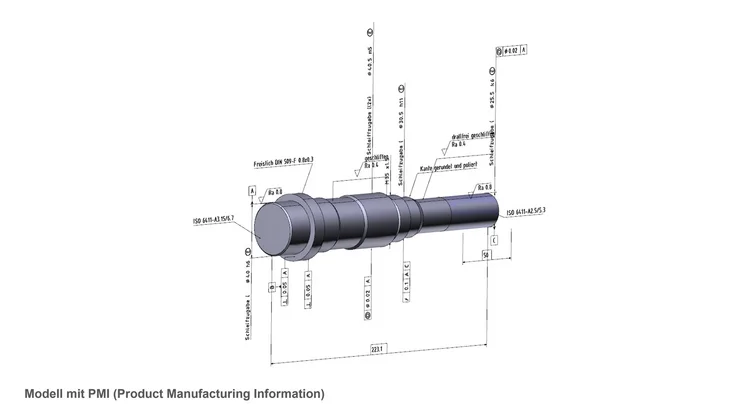
Enhancement of a digital platform for the manufacturing of prototype parts using various production technologies. The platform enables quotation generation within one minute and employs AI-based interpretation of engineering drawings considering geometric dimensioning and tolerancing (GD&T).
expired, 12/2022 - 05/2025
-
certAInty – A Certification Scheme for AI systems (certAInty)
Certification of AI Systems by an accredited body increases trust, accelerates adoption and enables their use for safety-critical applications. We develop a Certification Scheme comprising specific requirements, criteria, measures, and technical methods for assessing Machine Learning enabled…
expired, 11/2022 - 12/2024
-
DISTRAL: Industrial Process Monitoring for Injection Molding with Distributed Transfer Learning
We develop a distributed machine learning system to sort out defect plastic parts during production. Main challenge is the transferability of learnt process know-how from case to case; the solution builds on domain adaptation, continual data-centric deep learning and federated edge computing.
expired, 10/2022 - 03/2025
-
AI powered CBCT for improved Combination Cancer Therapy (AC3T)
The project enables a novel, combined, adaptive cancer therapy combining tumor treating field and radiation therapy due to significantly improved static (3D) and time-resolved (4D) low dose Cone Beam Computer Tomography images based on artificial intelligence image reconstruction algorithms.
expired, 05/2022 - 02/2025
-
AUTODIDACT – Automated Video Data Annotation to Empower the ICU Cockpit Platform for Clinical Decision Support
Monitoring diverse sensor signals of patients in intensive care can be key to detect potentially fatal emergencies. But in order to perform the monitoring automatically, the monitoring system has to know what is currently happening to the patient: if the patient is for example currently being moved…
expired, 02/2022 - 12/2022
-
Good practices for responsible development of AI-based applications in healthcare
This project will identify proven methods, practices and standards that support responsible research and development of AI systems for health. They will be tested in use cases from medical imaging and neurotechnology, publicly released and published as a guideline of recommended best practices.
expired, 09/2021 - 08/2023
-
Pilot study machine learning for injection molding processes

Researchers from the CAI and InES conduct a technical deep dive together to explore the possibilities of capturing process knowledge on injection molding in deep neural networks and transfer the results to novel usage scenarios.The groups of Prof. Stadelmann (Computer Vision, Perception & Cognition,…
expired, 09/2021 - 03/2022
-
Accessible Scientific PDFs for All
PDF is the most popular document format to provide and distribute information on the internet. It was developed by Adobe 1996 but has been an open format since 2008. It was estimated in 2015 that more than 2.5 trillion PDF documents exist on the internet, covering all aspects of life and research,…
expired, 04/2021 - 05/2025
-
Synthetic data generation of CoVID-19 CT/X-rays images for enabling fast triage of healthy vs. unhealthy patients
The automatic analysis of X-ray/CT images through artificial intelligence models can be useful to automate the clinical scanning procedure. Nonetheless, the limited access to real COVID patient data leads to the need of synthesizing image samples. The goal of this project is to use existing CT/X-ray…
expired, 05/2020 - 07/2020
-
Standardized Data and Modeling for AI-based CoVID-19 Diagnosis Support on CT Scans (SDMCT)
Hospitals and research institutes are highly investigating applications of AI in medical imaging. However, developed models and datasets are barely mergeable, and the research results are not reproducible on different datasets due to different CT scanners used. Radiologists told us that “unifying…
expired, 05/2020 - 10/2020
-
DIR3CT: Deep Image Reconstruction through X-Ray Projection-based 3D Learning of Computed Tomography Volumes
Project DIR3CT aims at improving the image quality of CBCT images by deep learning (DL) the 3D reconstruction from X-ray images end-to-end. This enables a novel CBCT product to be used during radiation therapy and will allow the use of these images for adaptive treatment.
expired, 02/2020 - 05/2022
-
Foundations of Trustworthy AI – Integrating Reasoning, Learning and Optimization
The main ambition of TAILOR is to build the capacity of providing the scientific foundations for Trustworthy AI in Europe by developing a network of research excellence centers with a technical focus on combining research excellence in the areas of learning, optimisation and reasoning . The current…
expired, 01/2020 - 12/2021
Publications
-
Iwane, Fumiaki; Iturrate, Iñaki; Chavarriaga, Ricardo; Millán, José del R.,
2021.
Journal of Neural Engineering.
18(4), pp. 046044.
-
Chavarriaga, Ricardo; Carey, Carole; Contreras-Vidal, Jose Luis; McKinney, Zach; Bianchi, Luigi,
2021.
IEEE Open Journal of Engineering in Medicine and Biology.
2, pp. 71-73.
Available from: https://doi.org/10.21256/zhaw-22243
-
Orset, Bastien; Lee, Kyuhwa; Chavarriaga, Ricardo; Millán, José del. R,
2021.
Stopping vs Resting state during motor imagery paradigm.
bioRxiv.
Available from: https://doi.org/10.21256/zhaw-23825
-
Tuggener, Lukas; Satyawan, Yvan Putra; Pacha, Alexander; Schmidhuber, Jürgen; Stadelmann, Thilo,
2021.
The DeepScoresV2 dataset and benchmark for music object detection[paper].
In:
2020 25th International Conference on Pattern Recognition (ICPR).
25th International Conference on Pattern Recognition 2020 (ICPR’20), Online, 10-15 January 2021.
IEEE.
pp. 9188-9195.
Available from: https://doi.org/10.21256/zhaw-20647
-
Stadelmann, Thilo; Würsch, Christoph,
2020.
Maps for an uncertain future : teaching AI and machine learning using the ATLAS concept.
Winterthur:
ZHAW Zürcher Hochschule für Angewandte Wissenschaften.
Available from: https://doi.org/10.21256/zhaw-20885
Other Releases
| When | Type | Content |
|---|---|---|
| 2023 | Extended Abstract | Thilo Stadelmann. KI als Chance für die angewandten Wissenschaften im Wettbewerb der Hochschulen. Workshop (“Atelier”) at the Bürgenstock-Konferenz der Schweizer Fachhochschulen und Pädagogischen Hochschulen 2023, Luzern, Schweiz, 20. Januar 2023 |
| 2022 | Extended Abstract | Christoph von der Malsburg, Benjamin F. Grewe, and Thilo Stadelmann. Making Sense of the Natural Environment. Proceedings of the KogWis 2022 - Understanding Minds Biannual Conference of the German Cognitive Science Society, Freiburg, Germany, September 5-7, 2022. |
| 2022 | Open Reserach Data | Felix M. Schmitt-Koopmann, Elaine M. Huang, Hans-Peter Hutter, Thilo Stadelmann, and Alireza Darvishy. FormulaNet: A Benchmark Dataset for Mathematical Formula Detection. One unsolved sub-task of document analysis is mathematical formula detection (MFD). Research by ourselves and others has shown that existing MFD datasets with inline and display formula labels are small and have insufficient labeling quality. There is therefore an urgent need for datasets with better quality labeling for future research in the MFD field, as they have a high impact on the performance of the models trained on them. We present an advanced labeling pipeline and a new dataset called FormulaNet. At over 45k pages, we believe that FormulaNet is the largest MFD dataset with inline formula labels. Our dataset is intended to help address the MFD task and may enable the development of new applications, such as making mathematical formulae accessible in PDFs for visually impaired screen reader users. |
| 2020 | Open Research Data | Lukas Tuggener, Yvan Putra Satyawan, Alexander Pacha, Jürgen Schmidhuber, and Thilo Stadelmann, DeepScoresV2. The DeepScoresV2 Dataset for Music Object Detection contains digitally rendered images of written sheet music, together with the corresponding ground truth to fit various types of machine learning models. A total of 151 Million different instances of music symbols, belonging to 135 different classes are annotated. The total Dataset contains 255,385 Images. For most researches, the dense version, containing 1714 of the most diverse and interesting images, is a good starting point. |