Bachelor's degree Computer Science: Specialisation
In the final third of the programme, you can shape your studies according to your professional goals and individual interests. You can choose eight modules from a portfolio of more than 50 options. This allows you to develop expertise in areas such as the following.
Artificial Intelligence and Machine Learning
Artificial intelligence has made major technological leaps in recent years, producing remarkable results and impacting virtually every area of business and society. How can this momentum be translated into practical value while building reliable expertise for the years ahead? Building on the algorithmic foundations established earlier in the programme, you receive a comprehensive introduction to methods and applications in artificial intelligence, machine learning and particularly deep learning. You may then specialise further in areas such as computer vision (e.g. for medical image analysis), reinforcement learning (e.g. for controlling games or robots), or the latest approaches to developing and operating machine learning systems in practice (MLOps). You will also learn how to design fair and responsible AI systems and engage with the latest research – or even contribute to it yourself. The specialisation prepares you for roles such as ML Engineer or AI Research Scientist, while also providing valuable expertise for careers as a Software Engineer/Architect or IT Consultant. You may build applications using large language models, analyse medical images or control robotic systems.
Autonomous Systems and Physical AI
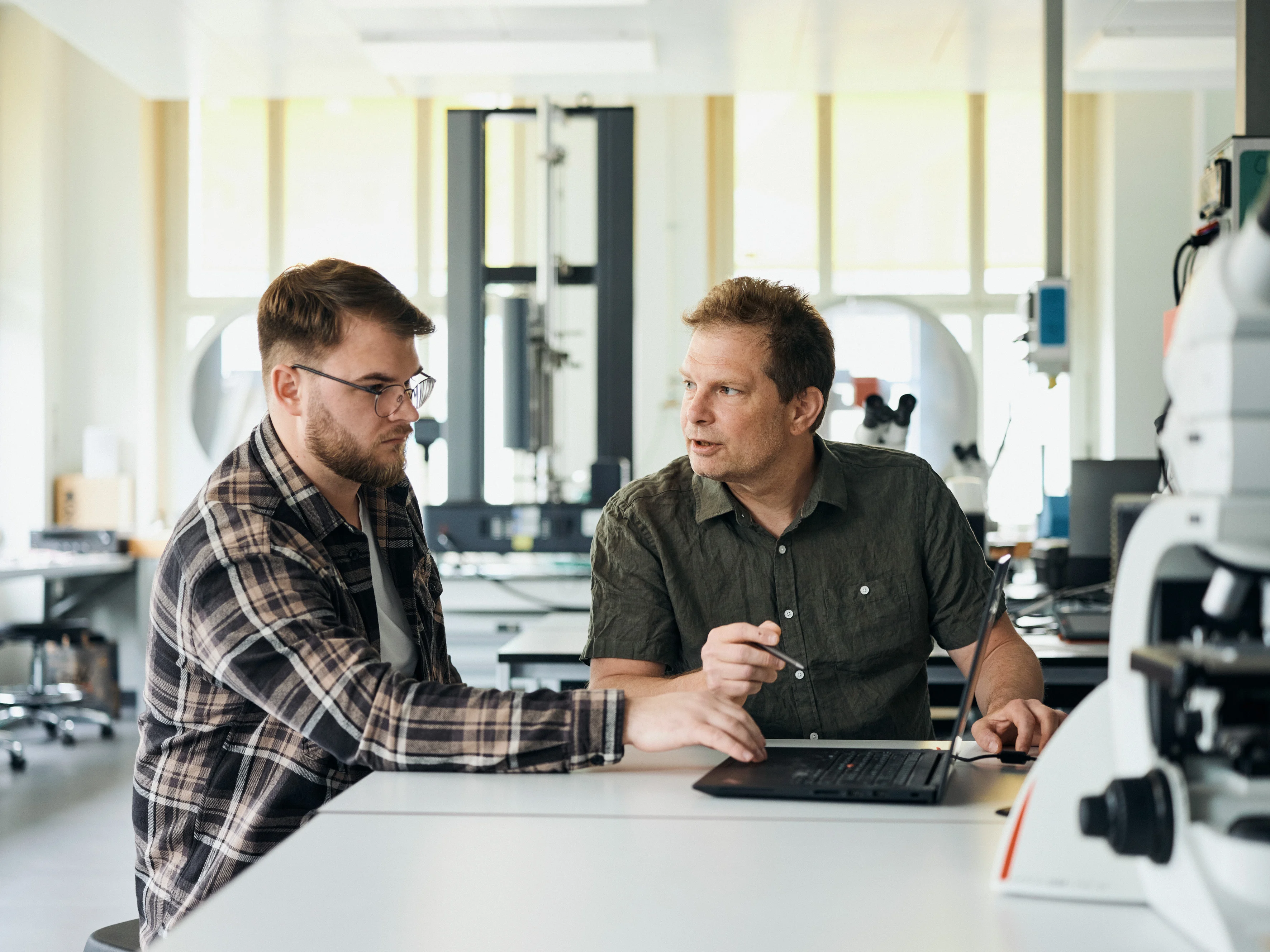
Robotics is a forward-looking, interdisciplinary field that combines computer science with mechatronics, electrical engineering and artificial intelligence to form “Physical AI”. It therefore plays a key role in the automation and digitalisation of modern industry and society. During the foundation stage of the programme, you acquire the essential fundamentals in programming, mathematics, electrical engineering and digital circuit design. These are complemented by introductory modules on sensors, actuators and microcontroller programming. In the advanced stage, students deepen their knowledge through courses on robotic systems, machine learning and real-time processing. Practical projects and laboratory work help translate theoretical knowledge into functioning robotic systems. Graduates of this specialisation may go on to work in areas such as the development of autonomous systems, industrial automation or interdisciplinary teams building intelligent machine solutions.
Cloud Computing
Dynamic and scalable cloud services form the backbone of the development and operation of modern and future applications. During the foundation stage, you acquire the necessary fundamentals in network communication as well as the architecture of computer and operating systems. In the advanced stage of the programme, you gain in-depth knowledge of the virtualisation of IT infrastructure and applications, as well as how cloud services can be automatically provisioned and consumed. You learn how applications must be designed (cloud-native) so they can run optimally in the cloud, enabling the creation of complex services or the development of new applications, for example in robotics or mobility.
Cybersecurity
Attacks on IT systems are no longer the exception but the norm. Software and IT systems therefore need to be developed and operated as securely as possible. In the foundation stage, you acquire competencies in cryptography, secure network communication and access control for systems and applications, together with the underlying fundamentals of computer systems. In elective modules during the advanced stage, you learn how to test systems and applications through penetration testing and explore possible countermeasures. You also learn how to ensure that systems are secure through appropriate measures during the software development process (“secure by design”), and how to monitor networks and systems during operation in order to detect attacks at an early stage.



Embedded Computing
How do smart devices interact with their environment? A drone, for example, is more than just a flying object. Equipped with gyroscopic sensors for orientation detection, motor control via actuators and precise real-time data processing, it demonstrates how embedded computing controls complex processes, makes decisions and enables systems to act autonomously. Embedded systems combine hardware and software for specialised applications. They range from energy-efficient microcontrollers to powerful processors. You will learn programming techniques that allow time-critical tasks to be solved reliably and efficiently across a wide range of applications. Your programs process events, control complex processes and communicate via wired or wireless connections. Applications range from miniaturised battery-powered devices and AI-based robotic components to real-time processing of audio and video streams.
Human-Centred Computing
Technological advances in user interfaces (such as multimodal interaction and VR/AR) have significantly increased users’ expectations regarding usability and user experience, creating a constant demand for new solutions. After acquiring the fundamentals of software development in the first semesters, you will learn in the advanced stage how to design and implement innovative mobile applications in a user-centred and accessible way. You will also explore new interaction concepts such as virtual and augmented reality, as well as the design and development of games and eHealth applications.
Intelligent Information Systems
We live in the information age, and data is becoming central in almost every context. Data must be processed, consolidated and made usable according to specific needs. You acquire the basic knowledge during the foundation stage of the programme. The advanced stage offers a broad range of topics in this area, covering aspects of information engineering and computer science-oriented data science. This includes preparing large volumes of structured and unstructured data (Big Data), making data usable (data warehousing and information retrieval), learning from data (machine learning) and solving problems using data (data mining). You will learn how to work with information to create “intelligent” information systems and extract knowledge from data.
Intelligent Network Communication
How can a message travel halfway around the world in seconds? Communication systems with antennas, protocols and intelligent network technologies make it possible. They connect devices via mobile networks such as 5G, Wi-Fi or fibre optics and ensure that data arrives securely, quickly and reliably. WLAN, LAN, backbone networks and mobile communications connect ever more devices at both physical and logical levels. Communication systems are now a central component of modern infrastructure. In this field, you learn how to plan, build and operate networks – from simple sensor networks to software-defined radio systems. Applications can be found in autonomous vehicles, intelligent power grids or drones that automatically correct their position.


Internet of Things
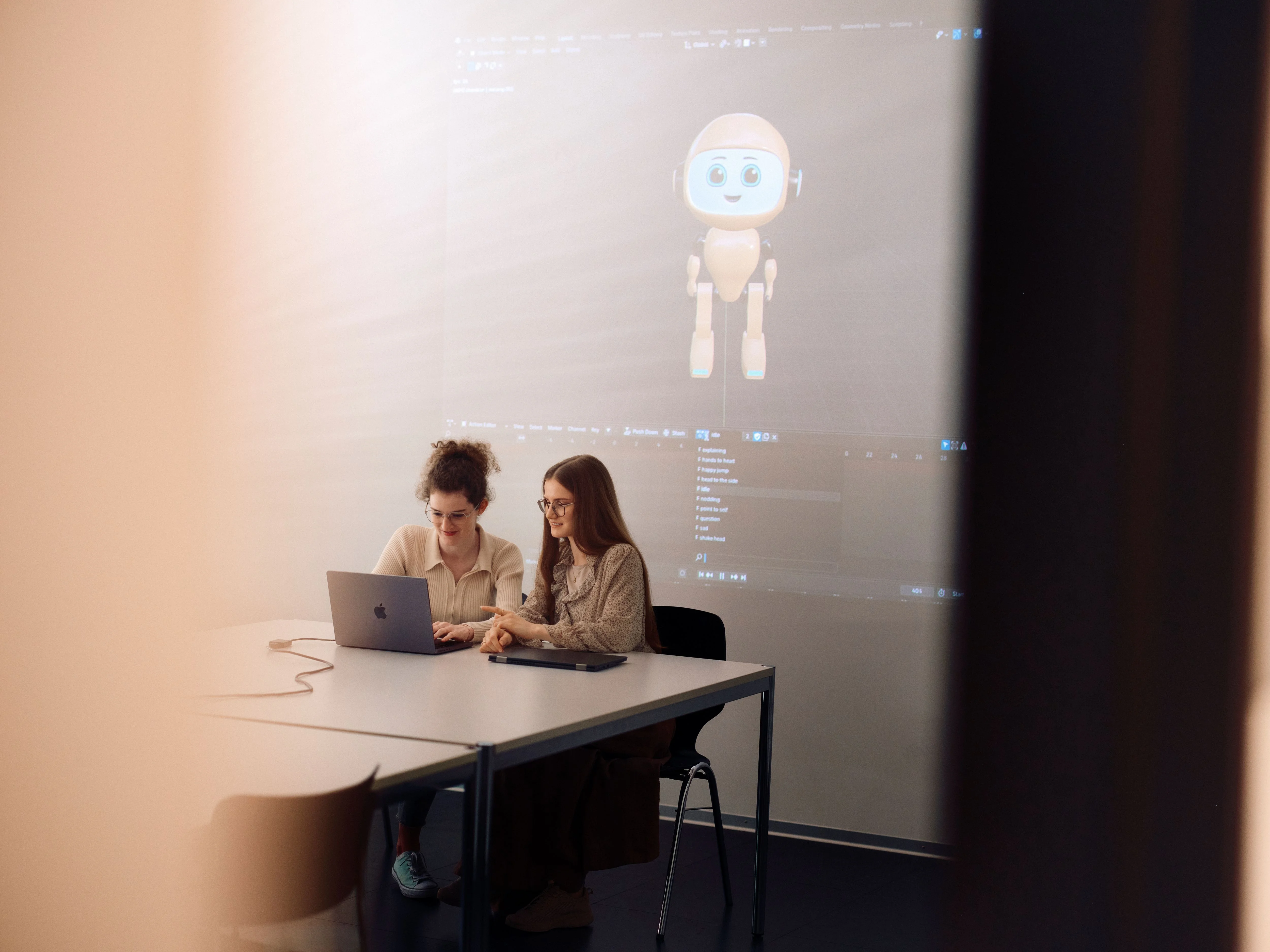
Sensors with intelligence and cloud connectivity: the Internet of Things (IoT). An autonomous water leak detection system, for example, can locate leaks in real time, harvest energy from temperature differences and transmit data wirelessly to a network – without a power connection and without maintenance. This embedded system demonstrates how IoT devices solve real-world problems efficiently and in a connected way. In this specialisation, you learn the fundamentals of programming, network technologies and operating systems, as well as a wide range of specialised programming interfaces. For example, you might design and implement an IoT application with multiple sensors on a mobile crane. This involves implementing IoT communication protocols, storing sensor data in databases, modelling the system and presenting the results on a web platform.
Site Reliability, DevOps and Platform Engineering
This profile is aimed at individuals who want to master the integration of hardware, infrastructure and software in order to deliver scalable, reliable and high-performance systems. With a focus on Site Reliability Engineering (SRE), DevOps, Platform Engineering and Performance Engineering, you acquire the technical skills needed to design, implement and optimise systems that support modern applications and services. Graduates are therefore well prepared to design and manage large-scale, high-performance systems that meet the demands of modern organisations. With expertise in hardware, infrastructure and performance optimisation, they ensure reliable, scalable and cost-efficient systems that deliver outstanding user experiences and achieve business objectives.
Software Engineering
The demands placed on software development continue to grow, driven by shorter time-to-market cycles, increasing data volumes and ever more powerful systems. In the first semesters, you acquire a solid foundation in programming, algorithms and data structures, databases and information systems. Building on this, you learn modern paradigms and methods of software development. In the later semesters, you deepen your expertise through specialised modules such as AI for Software Engineering, low-code/no-code development, requirements engineering, software architecture and testing. You also have the opportunity to obtain internationally recognised certifications in these areas. Alongside the modules, you work in teams on practice-oriented projects and solve real-world challenges. This prepares you to design and implement innovative and robust software solutions.
Curriculum
You may also be interested in
Application for the Bachelor’s degree programme
Apply for the Bachelor’s degree programme today.
Admission requirements
The requirements for admission to the Bachelor’s degree programme at the ZHAW School of Engineering.
How to prepare yourself for the Bachelor’s degree programme
Learn how you can best prepare yourself for the Bachelor’s degree programme.
Application for the Bachelor’s degree programme
Admission requirements
How to prepare yourself for the Bachelor’s degree programme
Apply for the Bachelor’s degree programme today.
The requirements for admission to the Bachelor’s degree programme at the ZHAW School of Engineering.
Learn how you can best prepare yourself for the Bachelor’s degree programme.