Bachelor Studies
The School of Engineering offers 10 different Bachelor degrees. Our instructors are not only academically qualified, they also have a lot of professional experience and a broad network of contacts. Their teaching is practically oriented, enabling you to meet potential future employers while you study.
We are involved in two of these degree programmes, which can be completed either full-time or part-time:
- Bachelor of Science in Informatik: You will gain a solid foundation in machine learning, data mining, artificial intelligence, and a range of specialized topics within the Centre for Artificial Intelligence's areas of expertise.
- Bachelor of Science in Data Science: You will learn the fundamentals of algorithms, machine learning, data mining, artificial intelligence, and a variety of specialized topics within the Centre for Artificial Intelligence's areas of expertise.
We place a strong emphasis on developing our students' scientific and research competencies. As part of the Computer Science program, we offer a limited number of research project opportunities during the final year of study. These projects are distinguished by their dedicated research focus and a higher level of academic challenge. This gives you a competitive advantage as you complete your degree and embark on your professional career.
Examples of student works
Deep learning-based cell segmentation for rapid optical cytopathology of thyroid cancer
Bachelor Thesis (Computer Science)
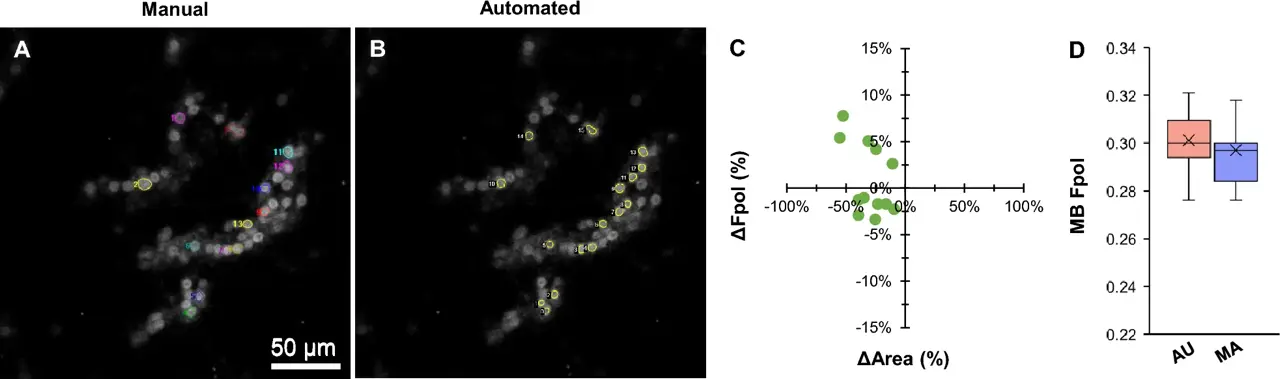
Fluorescence polarization (Fpol) imaging of methylene blue (MB) is a promising quantitative approach to thyroid cancer detection. Clinical translation of MB Fpol technology requires reduction of the data analysis time that can be achieved via deep learning-based automated cell segmentation with a 2D U-Net convolutional neural network. Time required for auto-processing was reduced to 10 s versus one hour required for manual data processing. https://www.nature.com/articles/s41598-024-64855-2
Automatic recognition of Swiss German dialects based on audio data via phoneme transcription
Bachelor Thesis (Computer Science)
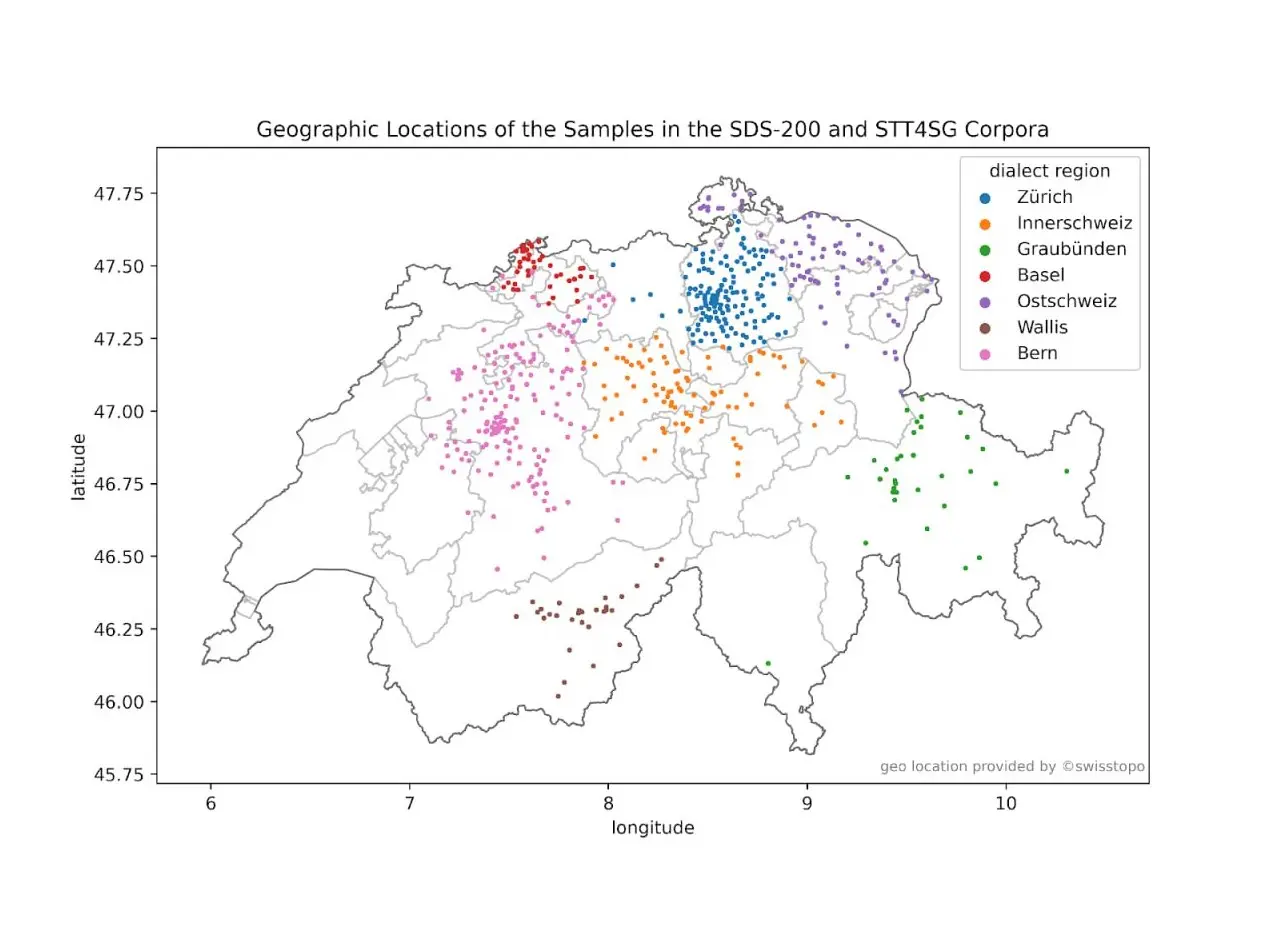
The thesis investigates an approach for the automatic recognition of Swiss German dialects based on audio data. The audio samples are first transcribed into phoneme sequences using the Wav2Vec2Phoneme or MultIPA models, which are then assigned to one of seven dialects using simple classification algorithms such as Logistic Regression.
The complete list of all the student works, which were supervised by an expert at CAI, can be found here.