Bachelor's degree in Natural Resource Sciences
Are you interested in nature and the environment, agriculture, climate change or the energy revolution? Do you want to find solutions to the environmental crises of our time? Join us in shaping the future with our bachelor's degree in Natural Resource Sciences!
At a glance
Degree: Bachelor of Science ZHAW in Natural Resource Sciences
Specialisations: Organic Farming and Horticulture, Renewable Energies and Ecological Engineering, Environmental Systems and Sustainable Development, Nature Management or Urban Ecosystems
Workload: 180 ECTS credits
Admission requirements: Learn more here
Study format : Full-time or part-time
Duration: 6 semesters (full-time), 8 to 12 semesters (part-time)
Studies commence: In September each year
Registration deadline: The registration period for the autumn 2027 semester opens in October 2026.
Language of instruction: German (selected courses are offered in English)
Tuition fees: CHF 720.– per semester and additional, study-related expenses
Follow-on study programme: Master of Science in Environment and Natural Resources
Why study natural resource sciences?
From global warming, resource-intensive agriculture and energy supply to biodiversity loss – the challenges we face are multi-layered and complex. In order to meet them, we are constantly further developing the study programme and training our students for the future world of work.
The programme deals with environmental topics in an interdisciplinary, practice-oriented and scientific way. It combines personal coaching with individual design options, which allows you to tailor your education to your own specific needs. Together with experts from the research groups of our Institute of Natural Resource Sciences, you will work on practical questions during your studies and directly apply what you have learned.
By taking a Bachelor of Science in Natural Resource Sciences you will
-
protect ecosystems and promote biodiversity in urban and rural areas.
-
sensitise and motivate people for necessary changes and work for a future worth living.
-
implement new, resource-saving technologies and systems for environmentally-friendly agriculture and resource-efficient energy systems.
- You determine the structure of your studies. We accompany you with personal advice and professional coaching.
- Project weeks, field trips, internships and the opportunity to realise your own project and business ideas guarantee a rich and varied course of study.
- You benefit from the experience and networks of our teachers, who, as proven experts in their fields, are also active in research, policy and/or practice.
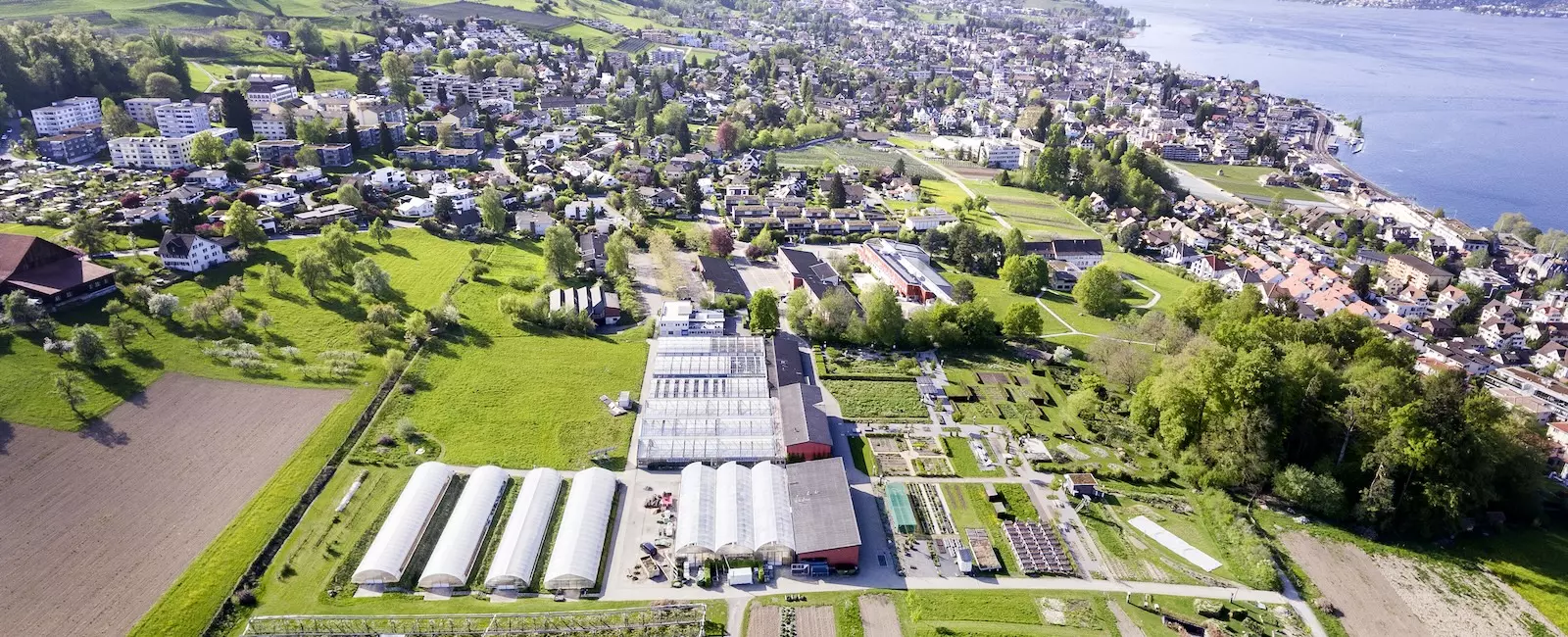
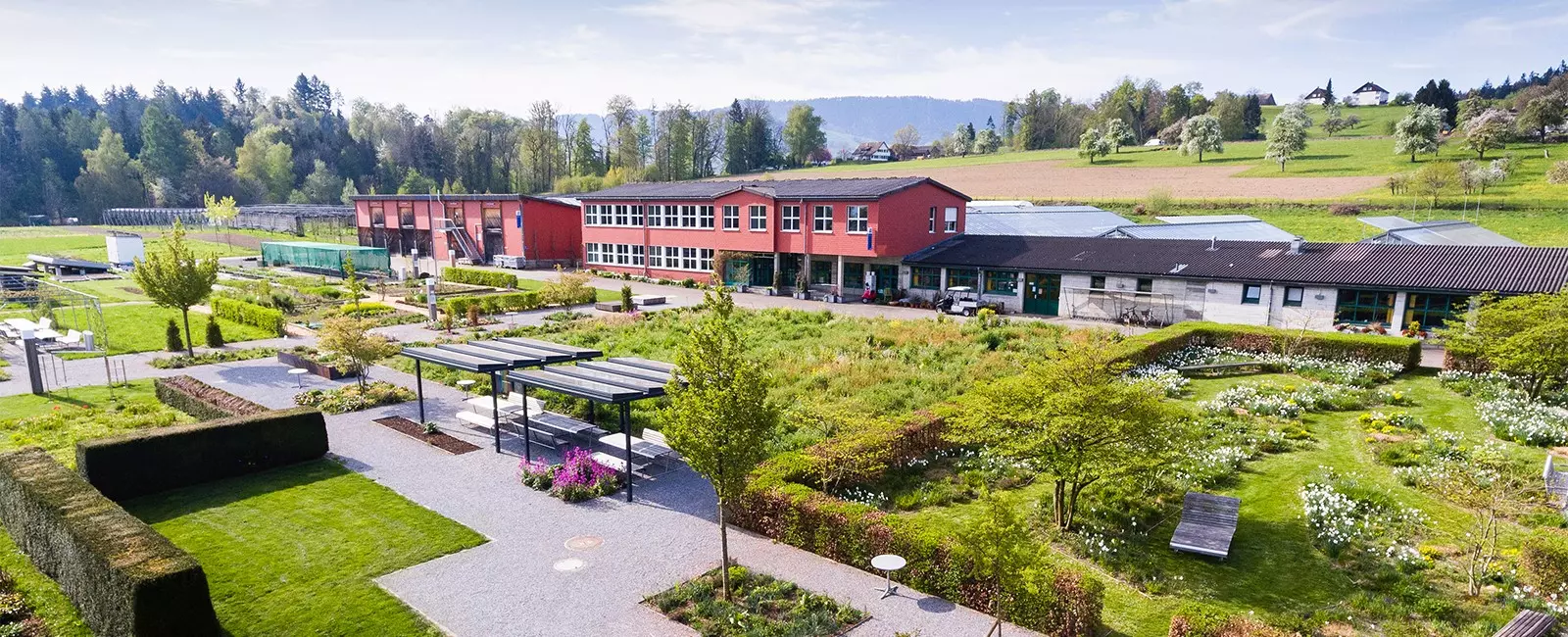
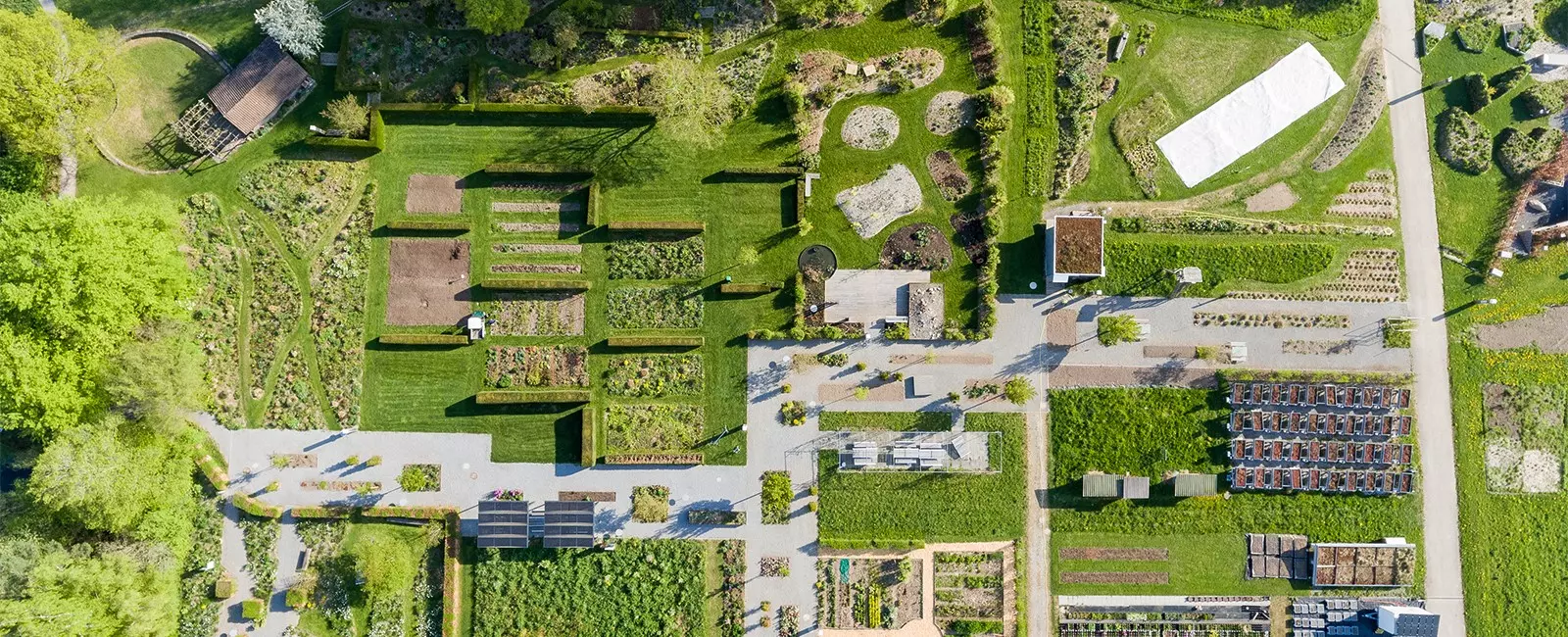
- You get the opportunity to study in the most beautiful location in the middle of the gardens at the Grüental campus, where we cultivate biodiversity and make environmental research tangible.
Environmental projects and scientific foundations
In the first year of study, you will engage with the pressing challenges of our time: rapid climate change, resource-intensive food systems, biodiversity loss and species decline, as well as the issues surrounding the energy transition. Within the framework of four major environmental projects and the complementary scientific foundations, you will learn what in necessary to develop innovative solutions.
Specialisations and electives I
After completing your undergraduate studies, you will set your professional focus in the main course of study by choosing one of five specialisations. Within the specialisation, you will define specialist areas of focus and attend modules of your choice in order to tailor your studies to your personal interests and goals.
Are you particularly interested in where the specialisations overlap? Our new degree programme structure allows you to focus on precisely those areas of expertise. Our team of experienced academic advisors will support you in these decisions during the first year of study and work with you to develop an individual study plan. The following five specialisations are available for you to choose from:

“Organic Farming and Horticulture”
You will utilise the principles of organic farming and plan regenerative agricultural systems that focus on sustainable food production and the promotion of biodiversity.

“Renewable Energies and Ecological Engineering”
You will plan resource-efficient energy systems and cycles in the interests of climate protection. You develop concepts for the use of biogas plants, water-based circulation systems or solar energy.

You will promote biodiversity and protect habitats by planning, implementing and monitoring projects in nature and landscape protection, wildlife and water management and soil protection.

“Environmental Systems and Sustainable Development”
Your contribution to the sustainability transformation is made in environmental communication and education, in protected area management and in tourism and the associated regional value creation. In doing so, you will sensitise society to the sustainable use of resources.

You will plan and support construction projects for the development of green spaces and the networking of urban nature, and design climate-regulating, heat-reducing vegetation systems for the future climate city.
Minors and electives II
In addition to your specialisation, you can choose from 30 different modules, 6 minors and the International Profile, depending on your interests. In this way, you complement your in-depth knowledge with practice-relevant additional qualifications.
- Minor “Aquaculture and Aquaponics”
- Minor “Species and Biodiversity”
- Minor “Education and Counselling”
- Minor “Sustainability Assessment”
- Minor “Spatial Data Science”
- Minor “Environmental Analytics”
- Certificate of International Profile
Open Spaces and Challenges
From the start of the 2024 degree programme, we will offer even more creative freedom for students who would like to contribute their own ideas, apply what they have learned in practice or broaden their professional horizons outside of our range of modules. The Open Spaces and Challenges category includes the following:
- Challenges: Interdisciplinary questions that you work on in student teams from conceptualisation of the idea through to its concrete implementation. The lecturers act as coaches who provide you with advice and support.
- Innovation Lab: The prime focus is on developing and realising your own business idea or project during your studies. Entrepreneurial thinking and action are encouraged throughout.
- Internship: Gain practical experience as part of either your specialisation or a minor, in Switzerland or abroad.
- Self-organised modules: You can supplement your choice of modules with professionally suitable face-to-face and online courses and/or summer and winter schools that you do not find in our degree programme. At home or abroad, it’s up to you; both are possible.
- Social commitment: We support your project idea which has a sustainability claim and social impact. You will develop and deepen your professional and interdisciplinary competencies in clearly defined community-based and non-profit activities.
You decide which Open Spaces and Challenges modules you attend. Our academic advisors will be happy to support you in this. In total, Open Spaces and Challenges modules can account for up to 30 ECTS credits of your studies.
Transferrable skills and Scientific Work
Together with specialised skills, interdisciplinary competencies form the basis for a successful future career as an environmental engineer, and these are expressly nurtured during the degree programme. You will write a term paper and a bachelor's thesis on topics you have either chosen yourself or which are suggested to you, receiving individual supervision in the process. You can write the bachelor's thesis here in Switzerland or abroad, and also in combination with a professional internship.
International Exchange and Mobility
Would you like to add an international flavour to your study programme? We offer various options in this regard. These include an exchange semester, writing your bachelor thesis abroad, an international internship, or shorter period spent abroad as part of a summer or winter school. You can have your international activities certified by the ‘International Profile Certificate’.
Are you studying at another university and would like to spend a semester with us in Wädenswil? We provide exciting modules in German and English.

"Through my semester abroad in Utrecht, the Netherlands, I gained insights into life in a large student city that brings together many different cultural influences. The change in perspective allowed me to develop and reflect on new ideas for my studies. Above all, the new contacts I made and the memorable time I spent there will have a significant impact on my future."
Selina Pfäffli, student
Career
For more than 20 years, we have been training environmental engineers who successfully launch diverse careers after completing their bachelor's degree – in private companies, public administrations, and non-profit organizations, or as independent entrepreneurs.

Anja, Project Manager, Maurus Schifferli Landscape Architecture

Tim, Production Manager Solawi-Halde, Imhofbio AG

Kim, Sustainability Specialist, Canon Switzerland AG
Latest news from the institute
-
LINKEDIN
🍺 Bier-Abwasser gegen Hitzestau? Was ungewöhnlich klingt, könnte Gründächer fit für den Klimawandel machen. Der Hitzesommer hat gezeigt: Wenn Gründächer austrocknen, verlieren sie nicht nur ihre ...
ZHAW Institut für Umwelt und Natürliche Ressourcen IUNR
-
LINKEDIN
Torffrei gärtnern und plötzlich vermehren sich die Trauermücken. Die Ursache liegt möglicherweise nicht in der Erde, sondern im Dünger. Der Verzicht auf Torf schützt wertvolle Moore und ihre ...
ZHAW Institut für Umwelt und Natürliche Ressourcen IUNR
-
LINKEDIN
Mehr Kraftwerke allein lösen das Schweizer Winterstromproblem nicht. Denn entscheidend ist nicht nur, wie viel Strom die Schweiz kurzfristig produzieren kann. Sie muss auch sicherstellen, dass über ...
ZHAW Institut für Umwelt und Natürliche Ressourcen IUNR
-
LINKEDIN
💧 Wem gehört eigentlich das Wasser in den Alpen? Trinkwasser, Landwirtschaft, Energiegewinnung, Tourismus – viele Interessen treffen auf eine begrenzte Ressource. Doch wie lassen sich Wasserschutz ...
ZHAW Institut für Umwelt und Natürliche Ressourcen IUNR
Frequently asked qustions (FAQ)
If you are interested in sustainability, climate action, biodiversity, renewable energy or the protection of natural resources, the Bachelor’s degree programme in Natural Resource Sciences at the ZHAW Institute of Natural Resource Sciences (IUNR) offers a strong practical focus and excellent preparation for the future. The programme brings together natural sciences, technology and societal issues, showing how sustainable solutions to today’s challenges can be developed and put into practice.
A degree focusing on the environment and sustainability is ideal for anyone who wants not only to understand how environmental problems arise, but also to help develop solutions to challenges such as climate change and resource use, contribute to sustainable food systems and help create more liveable cities.
A Bachelor’s degree in Natural Resource Sciences opens up a wide range of career opportunities, including:
- Environmental consulting and environmental management: Developing and implementing environmental concepts, sustainability strategies and measures to address climate change in companies, municipalities and organisations.
- Nature conservation and biodiversity: Planning and managing projects to protect and restore habitats, conserve biodiversity and develop landscapes.
- Renewable energy and environmental technologies: Developing sustainable solutions in energy, resource efficiency and the circular economy.
- Sustainable agriculture and food systems: Working on future-oriented production systems and a sustainable food supply.
- Sustainable urban development: Designing climate-resilient cities, promoting nature in built-up areas and developing sustainable green spaces.
Graduates can pursue careers in environmental consultancies, public administration, research, private companies, NGOs and innovative start-ups – wherever specialists are needed who can combine environmental expertise with practical solutions.
An environmental degree at a university of applied sciences such as the ZHAW provides the knowledge and skills needed to address ecological, technical and societal challenges in a holistic way.
In the Bachelor’s degree programme in Natural Resource Sciences, students learn, among other things:
- how ecosystems function and how biodiversity can be conserved;
- how sustainable energy and technology systems are developed;
- how natural resources can be used responsibly;
- how climate adaptation and sustainable urban development can be put into practice;
- how environmental projects are planned, assessed and implemented.
The programme has a strong practical focus and closely integrates teaching, research and application. Students work on real-world issues and benefit from close links with IUNR research groups.
A distinctive feature of the Wädenswil campus is the Grüental Gardens, which serve as a living lab. Topics such as biodiversity, sustainable land use and urban ecosystems are not only explored in theory, but also researched and applied directly on site.
Projects, fieldwork, field trips and flexible study options create a programme that combines a strong scientific foundation with practical experience.
If you are passionate about nature, the environment, climate action, sustainability, renewable energy, biodiversity or sustainable development, the Bachelor’s degree programme in Natural Resource Sciences at ZHAW IUNR offers the opportunity not only to study these subjects, but also to help address the challenges they present.
The programme is a particularly good fit if you:
- are interested in environmental and climate issues;
- want to develop sustainable solutions to real-world problems;
- want to combine natural sciences with technology and societal perspectives;
- enjoy hands-on work and implementing projects;
- are looking for a career with positive social and ecological impact.
Depending on your interests, you can choose from different areas of specialisation, including Renewable Energy and Ecological Engineering, Organic Farming and Horticulture, Nature Management, Environmental Systems and Sustainable Development, and Urban Ecosystems.
The Bachelor’s degree programme in Natural Resource Sciences at ZHAW therefore provides an excellent foundation for anyone who wants to study sustainability, work in climate action or pursue a career in the environmental sector.
The Bachelor’s degree programme in Natural Resource Sciences at ZHAW IUNR in Wädenswil combines a strong scientific foundation with a pronounced emphasis on practical experience and considerable flexibility to tailor your studies to your own interests.
One of the programme’s particular strengths is the close integration of teaching, research and practice. Students do not simply learn about current environmental issues in theory; they work on real-world challenges and develop practical solutions.
The Grüental Gardens in Wädenswil are a distinctive feature of the campus and serve as a Living Lab. Topics such as biodiversity, sustainable land use, urban ecosystems and environmental management are researched, tested and demonstrated on site. The campus itself becomes a learning and research environment in which knowledge can be put directly into practice.
Other distinctive features of the programme include:
- Practical experience: Projects with IUNR research groups, fieldwork, field trips and real-world assignments give students valuable practical experience from an early stage in their studies.
- Build your own profile: Specialisations, minors, challenges and elective options allow students to tailor their studies to their interests and career goals.
- Interdisciplinary approach: The programme combines natural sciences, technology and societal perspectives to address complex environmental and sustainability issues from multiple angles.
- Direct links between research and teaching: The latest research findings are continuously incorporated into teaching, ensuring that students receive an education at the cutting edge of environmental and sustainability issues.
The result is a degree programme that brings together theory, research and practical application and prepares students to develop sustainable solutions to the challenges of the future.
Yes. The Bachelor’s degree programme in Natural Resource Sciences at ZHAW IUNR offers many opportunities to tailor your studies to your own interests and career goals.
In addition to choosing a specialisation, students can pursue further areas of interest through a minor. The “Freiräume und Challenges” (Open Spaces and Challenges) study model also gives you the freedom to contribute your own topics, projects and research questions.
You can tailor up to 30 ECTS credits to your individual interests. This makes it possible to develop a distinctive academic profile, for example with a focus on innovation, sustainability, entrepreneurship or interdisciplinary collaboration.
Options include:
- Interdisciplinary challenges: Working with students from different disciplines to address complex environmental issues and develop practical solutions.
- Innovation Lab: Developing, testing and advancing your own sustainable business ideas – for example, validating and further developing a green-tech start-up or realising sustainable services.
- Impact projects: Developing and implementing your own projects with positive social or environmental impact.
- External modules: Taking courses at other higher-education institutions and incorporating them into your degree programme.
The Bachelor’s degree programme in Natural Resource Sciences at ZHAW IUNR has a strong practical focus throughout. Students learn not only in lectures, but also by working directly on real-world issues relating to the environment, nature and society. One of the programme’s core strengths is the close connection between teaching, research and practice.
This practical focus is reflected in:
- Direct involvement in research: From the outset, students work alongside specialists on real projects run by IUNR research groups.
- Living labs: Our campus is a unique living lab for sustainable development. Its gardens, experimental plots and laboratories provide spaces where ideas are tested and innovations developed under real-world conditions.
- Fieldwork and field trips: Regular outdoor assignments, project weeks and field trips are an integral part of the programme.
- Internship in Switzerland or abroad: A placement lasting several months at a company, organisation or institution can be incorporated into the degree programme, providing valuable insights into professional practice.
During the main phase of their studies, students in the Bachelor’s degree programme in Natural Resource Sciences at ZHAW IUNR can choose from five specialisations, allowing them to tailor their studies to their interests and future career aspirations:
- Organic Farming and Horticulture: A vision for sustainable food production. Perfect for anyone who wants to develop agroecological systems, help farms transition to organic production or revolutionise the future of food production.
- Renewable Energy and Ecological Engineering: Driving the energy transition. Ideal for technology enthusiasts who want to combine nature and green technology to improve resource efficiency and develop practical technological solutions.
- Nature Management: A voice for wildlife, landscapes and aquatic environments. Tailor-made for analytical thinkers who want to actively contribute to biodiversity conservation and plan ecological restoration projects.
- Environmental Systems and Sustainable Development: Shaping social change. The right choice for systems thinkers who want to bring people together, assess sustainability and make a tangible difference in politics, business and regional development.
- Urban Ecosystems: Shaping the cities of tomorrow. Designed for city lovers and visionaries who want to make cities greener, healthier and more liveable by promoting nature in urban areas, developing and managing green spaces, greening façades and supporting climate adaptation.