Aroma Analysis – because olfaction is the most powerful sense
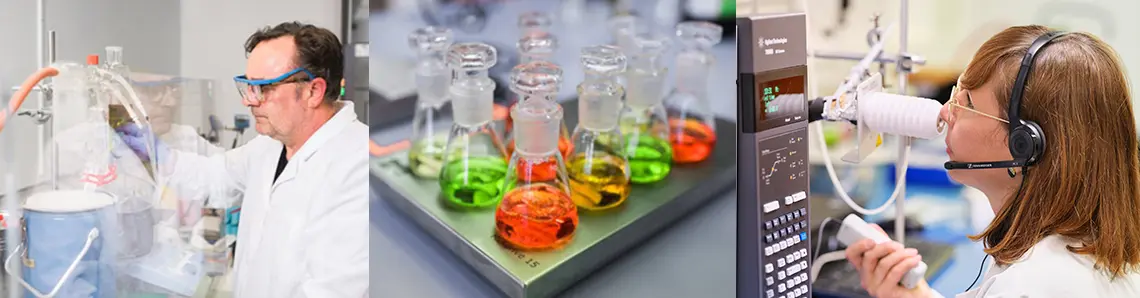
Aroma, as the most important driver for sensory perception, is a decisive quality criterion for food. It is responsible for its acceptance and popularity with consumers. For this reason, we use molecular-sensory analysis methods to investigate the formation of both desirable and undesirable aroma-active compounds and their precursors. This also includes foods that are produced with novel food processing methods as well as from new raw materials along the entire value chain.
In addition, we investigate how the influence of origin, variety, and agronomic conditions can affect the sensory profile of foods and food raw materials at the molecular level, with the further aim of promoting the biodiversity of food raw materials
Methods of analysis
- Isolation of key flavour compounds from different matrices using Solvent Assisted Flavor Evaporation (SAFE), Solid Phase Micro Extraction (SPME) and Twister®.
- One- and two-dimensional gas chromatographic separation of key aroma compounds using different sample injection techniques such as On-column, Split/Splitless and Thermal Desorption and subsequent detection via mass spectrometry (GC-MS), flame ionisation detection (GC-FID) and olfactometric detection (GC-O).
- Quantification of key flavour compounds down to the low ppb range using stable isotope dilution analyses (2H and 13C labelled internal standards).