Subclusters
C²D² is organized into subclusters that form the backbone of our activities. Each subcluster brings together expertise and resources around a specific area of computational laboratory medicine, serving as reference points for collaboration and innovative projects.
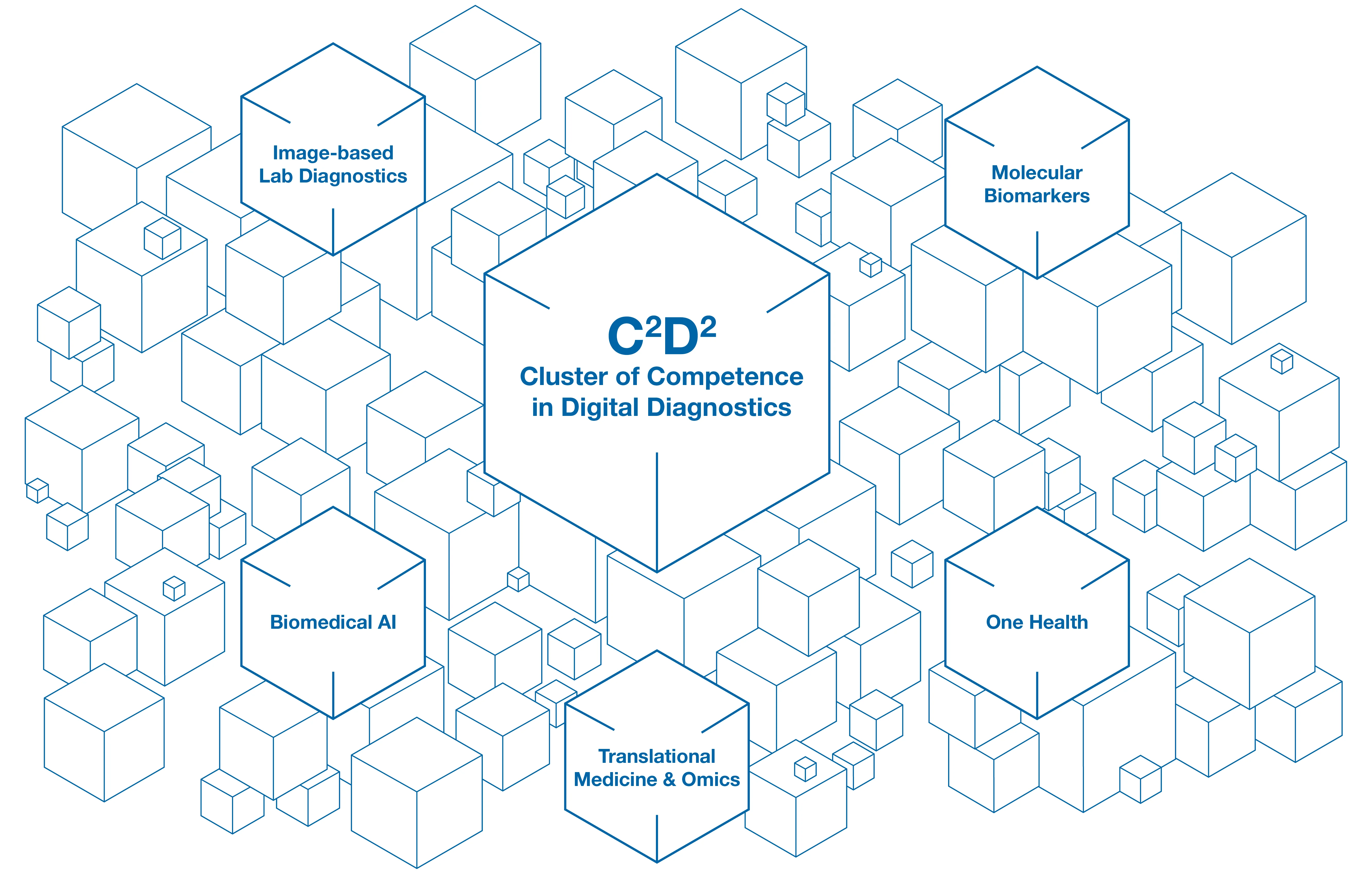
At the core of C²D² are five subclusters that connect different fields. Projects often span multiple subclusters, drawing on combined expertise to address complex questions.
Image-based Lab Diagnostics
Head: Dr. Norman Juchler
This subcluster focuses on the development and application of computational methods for diagnostic imaging, with emphasis on:
/ Exploring novel methods in image acquisition, processing and AI-driven analysis
/ Advancing new applications for laboratory and clinical diagnostics
/ Optimizing diagnostic workflows for precision, speed, and reproducibility
Activities span areas such as digital pathology, hematology and microbiology diagnostics.
Biomedical AI
Head: Dr. Ahmad Aghaebrahimian
This subcluster advances language-based AI methods for biomedical and clinical applications:
- Developing natural language processing (NLP) techniques for biomedical texts and clinical records
- Applying large language models (LLMs) and other NLP techniques for information extraction and decision support
- Creating tools for structured knowledge management and workflow integration
- Assessing reliability, accuracy, and ethical aspects of AI in biomedical applications
Molecular Biomarkers
Head: Prof. Sandro Manni
Research in this subcluster investigates molecular biomarkers for laboratory and clinical diagnostics:
- Identifying and evaluating biomarkers using clinical chemistry, proteomics and computational methods including AI
- Developing biomarker-based approaches for diagnosis, prognosis, disease monitoring and prevention
- Validating biomarkers across diverse laboratory and clinical settings
Translational Medicine & Omics
Head: Dr. Adisa Trnjanin
Laboratory research is linked with clinical practice through omics, next-generation sequencing and translational approaches:
- Handling large-scale and heterogeneous omics datasets across different molecular levels (genomics, transcriptomics, proteomics, metabolomics)
- Developing computational methods for multi-omics data integration and interpretation
- Using Omics insights for disease mechanism analysis, translational diagnostics and patient stratification
One Health
Head: Dr. med. vet. Julia Traversari
At the human–animal–environment interface, this subcluster addresses key health challenges by:
- Developing digital and image-based tools for pathogen detection (e.g. mycobacteria, gram-stained bacteria)
- Establishing standardized digital workflows in microbiology and pathology to ensure precision and reproducibility
- Exploring integration of human, animal and environmental health data to enable future monitoring of infectious diseases and antimicrobial resistance