Research Group for Predictive Analytics

Introduction
«It's hard to make predictions, especially about the future.»
(attr. to Niels Bohr)
Everybody wants to know «what will happen next». We book holidays hoping for fine weather, invest in stocks hoping for good returns, drive another 100km without refuelling expecting that what is left in the tank is still enough to reach the destination. We all engage in speculations and guessing future outcomes, and if we are smart enough, we use additional information to increase our chances of guessing right. And our brains evolved to be exceedingly good at it. But there are limits: we are 3-dimensional creatures, and reasoning in a space exceeding three dimensions is painstakingly hard.
Enter the computer. With the computing power harnessed in silicone, it is now possible to crunch through massive amounts of data, infer missing information, select and extract predictive features and build sophisticated models. It is possible to reason not only in three, but in hundreds and thousands of dimensions, and to discover connections and dependence between variables which could otherwise stay obscure and unnoticed. Equipped with this wealth of knowledge is possible to make predictions – also about the future. Enter the realm of predictive analytics.
Expertise and partners
We bring together the expertise and experience in:
- signal analysis and machine learning in medtech and personalized health
- artificial intelligence for sports analytics
- pattern recognition for environmental monitoring and protection
- predictive and prescriptive maintenance
Together with our industrial partners, we strive to solve exciting applied data science problems in the domains of:
- machine learning in medtech and personalized health
- pattern recognition for environmental monitoring and protection
- predictive and prescriptive maintenance
SRF Einstein report on the project: Non-invasive wearable core body temperature sensor


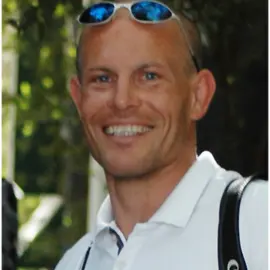
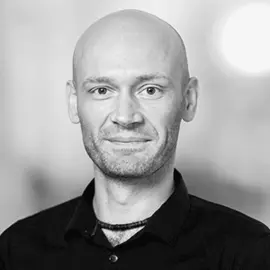
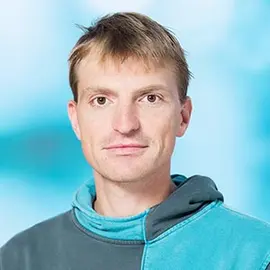
Team
-
ZHAW School of Life Sciences and Facility Management
Institute of Computational Life Sciences
Schloss
8820 Wädenswil -
ZHAW School of Life Sciences and Facility Management
Institute of Computational Life Sciences
Schloss
8820 Wädenswil -
ZHAW School of Life Sciences and Facility Management
Institute of Computational Life Sciences
Schloss
8820 Wädenswil
Links / Partners
