Institute of Computational Life Sciences
Teaching and research at the interfaces of digitisation and life sciences
The ICLS is dedicated to the digital transformation of the life sciences. We bring together data, artificial intelligence, modelling and Life Sciences expertise to tackle some of the major challenges of our time in health, the environment, nutrition and society.
Our strength lies in bringing different worlds together. We bridge the gap between scientific research, technological innovation and practical application. Working in interdisciplinary teams and together with partners from industry, research institutions and the public sector, we develop solutions that have a meaningful impact.
Research, innovation and education form a continuous cycle of knowledge creation and transfer. Insights gained from our projects feed directly into our degree programmes and continuing education.
We equip the next generation of experts to harness the potential of data, AI and computational science for the life sciences.
AI is changing the world – and with it, the life sciences. The key question is not what AI can do, but how we shape it to serve life, rather than the other way round.
This question is at the heart of our mission. We approach it with curiosity, critical reflection and responsibility.
Prof. Dr. Thomas Ott, Director of the Institute

Bachelor of Science (BSc) in Applied Digital Life Sciences
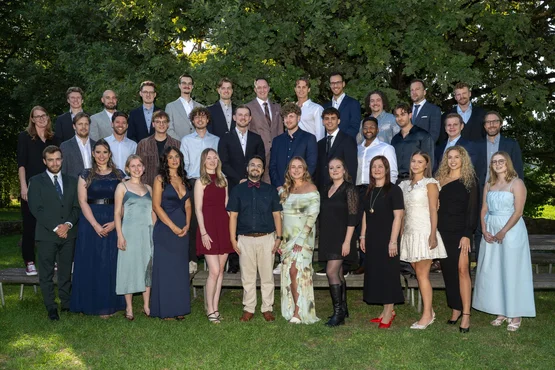
Unique in Switzerland, the Applied Digital Life Sciences programme combines life sciences, data science and digitalization. Scientific competencies are integrated with various digital tools and data-based methods. Students engage in research both in the laboratory and in the environment, concurrently developing skills in programming, artificial intelligence, data engineering, as well as modeling and simulation. The bachelor's programme offers excellent job prospects. Through the interdisciplinary approach, the students gain essential and well-balanced competencies to launch a successful career in the life sciences.
Detailed informationen on the Bachelor in Applied Digital Life Sciences
Master of Science (MSc) in Life Sciences - Specialisation Applied Computational Life Sciences
Specific skills in artificial intelligence, data, modelling and simulation are becoming increasingly important. Algorithms, machine learning, pattern recognition are just a few relevant keywords. Master's graduates in this specialisation are increasingly in demand and work, for example, as specialists or leaders in a wide range of industries, including pharmaceuticals, chemistry, biotechnology, agro-food, environment and medicine.
PhD Programme in Data Science
Students can do a doctorate in Data Science at ZHAW in cooperation with the University of Zurich. Doctoral students receive guidance and supervision from distinguished professors from both universities equally.
Continuing Education
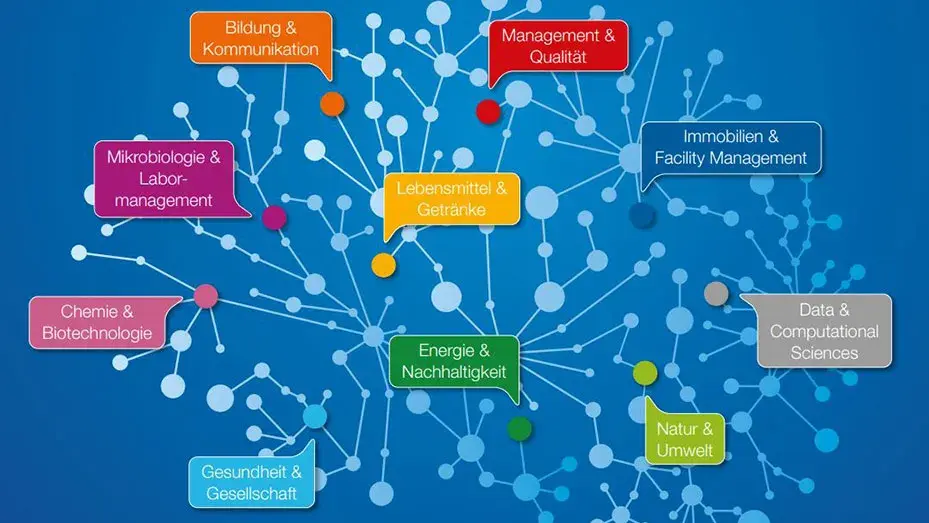
The Institute of Computational Life Sciences offers a wide range of continuing education courses. The annual conferences also offer interesting platforms not only for keeping up to date, but also for exchanging ideas and networking.
Research and Services
In our four research centres, we offer application-oriented research, development and services on issues concerning digitalisation and data science in the life sciences. Our overarching goal is to pioneer innovative solutions that push the boundaries of scientific knowledge.
Bioinformatics
In the Centre for Bioinformatics, we develop practical solutions at the interface of biology, medicine and computer sciences.
Co-lead: Prof. Dr. Maria Anisimova and Dr. Manuel Gil

Cognitive Computing in Life Sciences
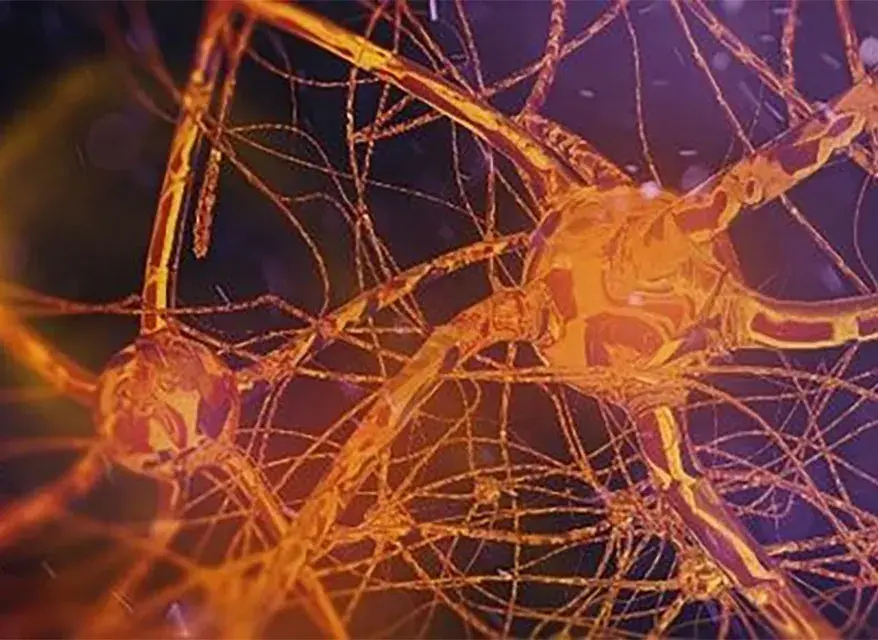
In the Centre for Cognitive Computing in Life Sciences, we offer new solutions for the life sciences that are based on the fundamental understanding of human and machine as an learning integrated system.
Lead: Prof. Dr. Yulia Sandamirskaya
Research groups
- Advanced Signal Analytics
- Computational Environment
- Neuromorphic Computing
- Predictive Analytics

Computational Health
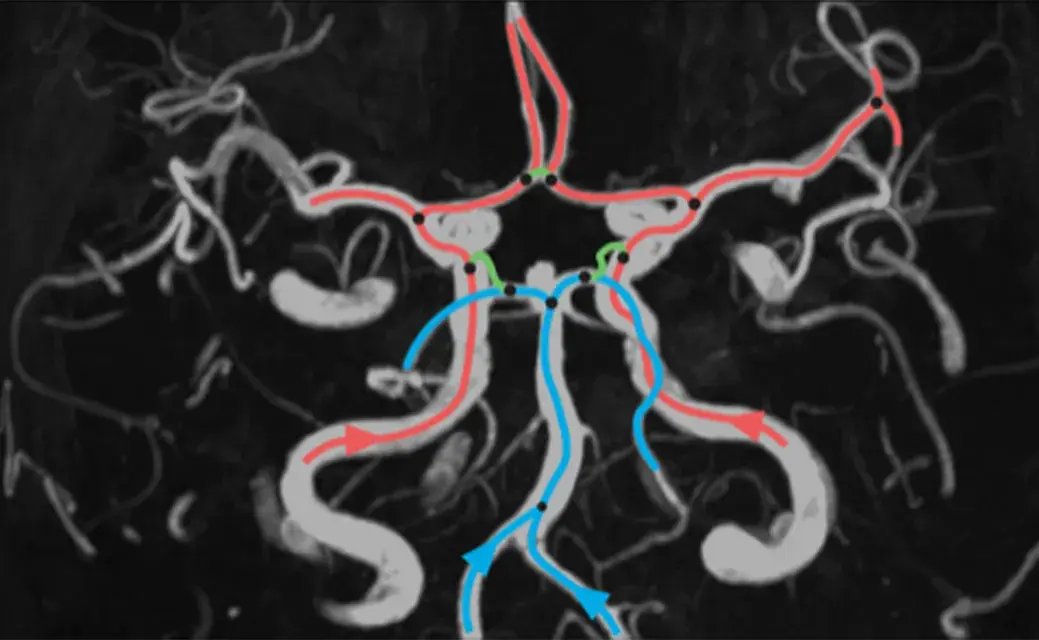
The Centre for Computational Health addresses fundamental questions in biology and medicine using computer-assisted, data-driven methods. Important tools are machine learning for image and signal analysis, parameter estimation for differential equation systems and multiphysics simulation.
Lead: Prof. Dr. Sven Hirsch
Research groups
- Biomedical Simulation
- Medical Image Analysis & Data Modelling
- Biosensor Analysis & Digital Health

Digital Labs & Production
In the Centre for Digital Labs & Production, we bring people, spaces and processes together. From mixed reality digital twins to progressive web applications and machine-to-machine interfaces, we connect physical with digital worlds through data and analytics.
Co-lead: Prof. Dr. Lukas Hollenstein and Prof. Dr. Robert Vorburger
Services: Advice and Training
We provide support for research and professional practice in areas including experimental design, data analysis, data management, AI-enabled web technologies and app development. Our expertise spans AI development and application, modelling, simulation and optimisation, as well as the creation of data-driven solutions. We also share our expertise through specialised continuing education programmes.
ZHAW Digital Health Lab
The ZHAW Digital Health Lab brings together experts from the fields of biomedicine, health, technology and business, who together create innovations for digitisation in healthcare.
ZHAW Datalab
Datalab is a virtual organization at Zurich University of Applied Sciences, spanning several departments and institutes. Our goal is to be a nationally leading and internationally recognized center of excellence for research, teaching and services in the area of data science. The Datalab closely cooperates with industry, enabling innovation and technology transfer.
