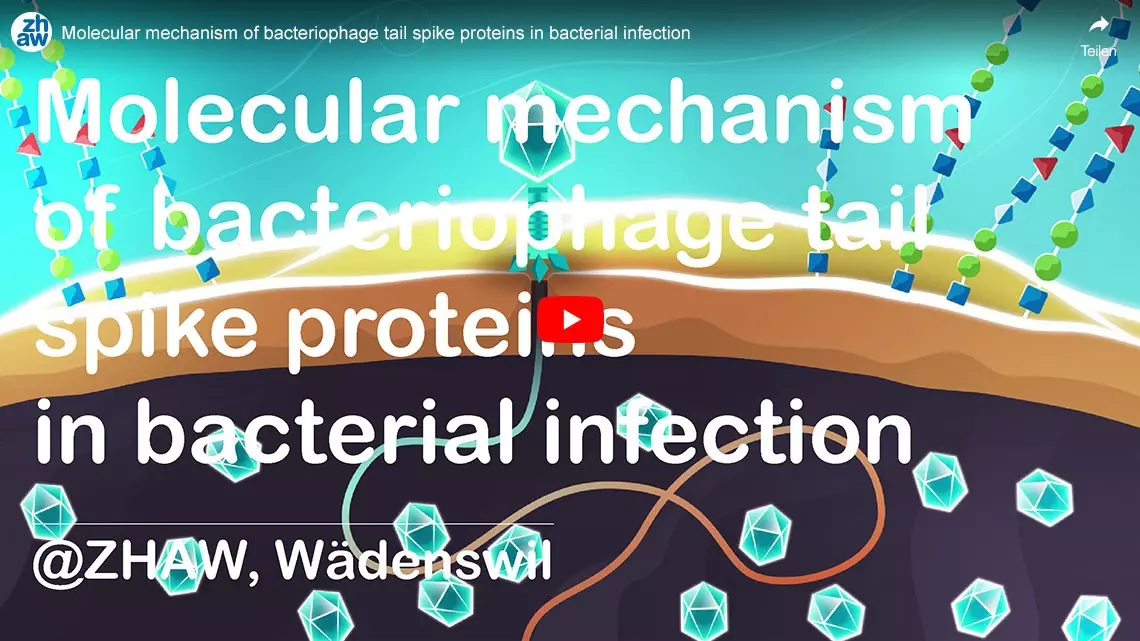
Bacteriophage tail spike proteins: attractive molecular tools for applications in food technology and in medicine
The increase in antibiotic resistance in human pathogens is a cause of great concern. Bacteriophages (phages) that infect bacteria and inactivate them in a highly specific manner are a promising alternative.
Bacteriophage tail spike proteins are attractive potential molecular tools for applications in food technology and in medicine. However, the molecular basis of infection is incompletely characterized, complicating the development of phage-based solutions.
Two research groups in our department - the Bioanalytics Research Group and the Food Microbiology Research Group - are characterizing the properties of phage tail spike proteins to improve the understanding of their hydrolytic specificities and catalytic performance. Currently, activities are being tested in vivo and quantification methods of catalytic events are being developed in vitro.