Early detection of lymphedema
A team of researchers led by Mathias Bonmarin participated to the development of a method for detecting lymphedema without complex examination. This enables those affected to receive early therapy. In the future, such devices should also be available as wearables.
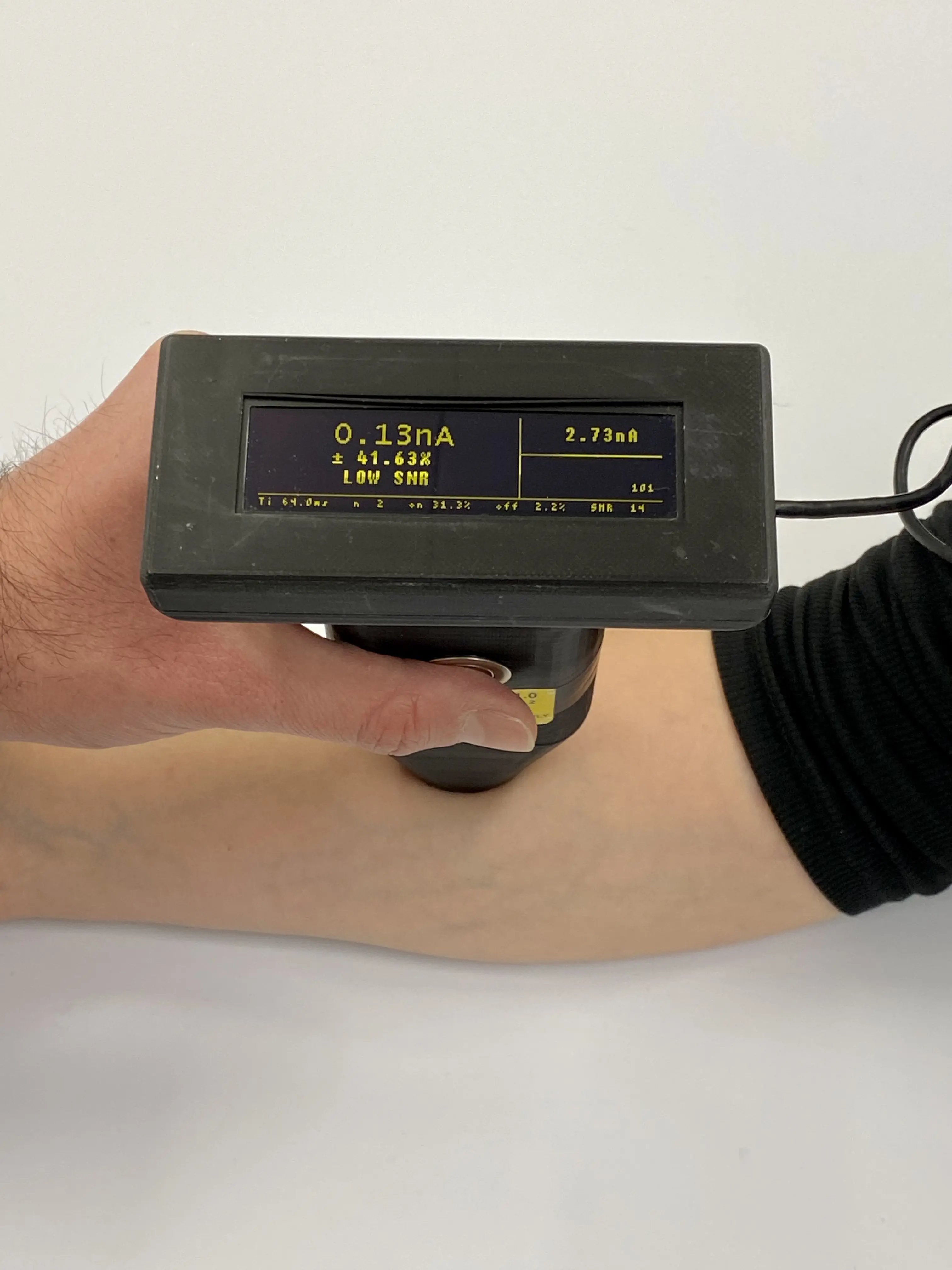
In the human body, the lymphatic system performs the important task of removing unwanted substances from the tissues. However, this function can be disturbed, for example by cancer therapies or accidents. As a result, toxins and fluids accumulate in the arms and legs. The swelling called lymphedema can lead to hardened tissue, inflammation and a weakened immune system. Mathias Bonmarin and his team of researchers of the ZHAW Institute of Computational Physics (ICP) supported a project financed by the Swiss National Science Foundation. In this project Michael Detmar of the ETH Zürich and researchers from the ETH and Universitätsspital Zürich developed a method to detect lymphedema at an early stage without complex examinations. In an experiment, the researchers injected a non-toxic, fluorescent dye. "With the measuring device that we developed at the ZHAW, we were then able to determine how quickly the fluorescence decreased," Mathias Bonmarin explains his contribution to the research project. "This shows how effectively the lymphatic system removes the dye." In a next project step, Mathias Bonmarin's team wants to develop a wearable device – similar to a smartwatch – that enables those affected to monitor the function of their lymphatic system themselves.