Projects
Flagship-Projekt «Circulus»

Competence Center at the IPP: Circular Economy Design
Areas of Expertise/Application Fields: Circular economy, sustainability, MEM industry
Project Goal: The «Circulus» project aims to identify concrete steps for transforming the MEM industry in Switzerland into a circular industry.
Project Abstract: In the flagship project «Circulus», four research institutes and five implementation partners from the companies V-Zug, Thermoplan, Bystronic, Almer and Planzer Synergistics are working closely together to pave the way for a circular MEM industry and to implement it. The research institutes are taking on different tasks throughout the product life cycle. These range from developing new business models that enable circularity, to redesigning supply chains with a focus on the sustainability of returns of used equipment, to developing efficient and, where possible, automated solutions for demanufacturing.
The IPP is looking at how products and processes themselves can be designed to be circular. The focus is on circular principles such as repairability, modularity and upgradability.
Customer/Partner: Together with INE (project management), the ZHAW Institute of Product Development and Production Technologies (IPP), the Swiss Institute for Entrepreneurship (SIFE) at the University of Applied Sciences of the Grisons (FHGR), Switzerland Innovation Park Biel/Bienne (SIPBB) and, as implementation partners, the companies V-Zug, Thermoplan, Bystronic, Almer and logistics coordinator Planzer Synergistics also involved as implementation partners.
Transportation Container USZ

Competence Center at the IPP: Circular Economy Design
Areas of Expertise/Application Fields: User centered Design, Hygienic Design, Automation, Logistics
Project Goal: Development of a hygienic, automated transport container for the efficient and safe distribution of patient meals within hospital operations.
Project Abstract: As part of a development initiative for the university hospital, an innovative transport container was designed to enable the automated distribution of patient meals via a conveyor system. The goal was to create a hygienic, functional, and economically manufacturable solution that integrates seamlessly into hospital operations.
The result is a deep-drawn container with a geometry optimized for stacking and minimal space requirements. It meets key criteria such as dishwasher compatibility, food safety compliance, ease of use in clinical environments, manufacturability, and cost efficiency.
Customer: USZ Zurich University Hospital
Flow sensor for cryogenic plants
Competence Center at the IPP: Circular Economy Design, Manufacturing Laboratory
Areas of Expertise/Application Fields: Industrial Design, Prototyping, Visualisation
Project Goal: Innovative Housing Design for Enhanced Functionality and Efficient Production
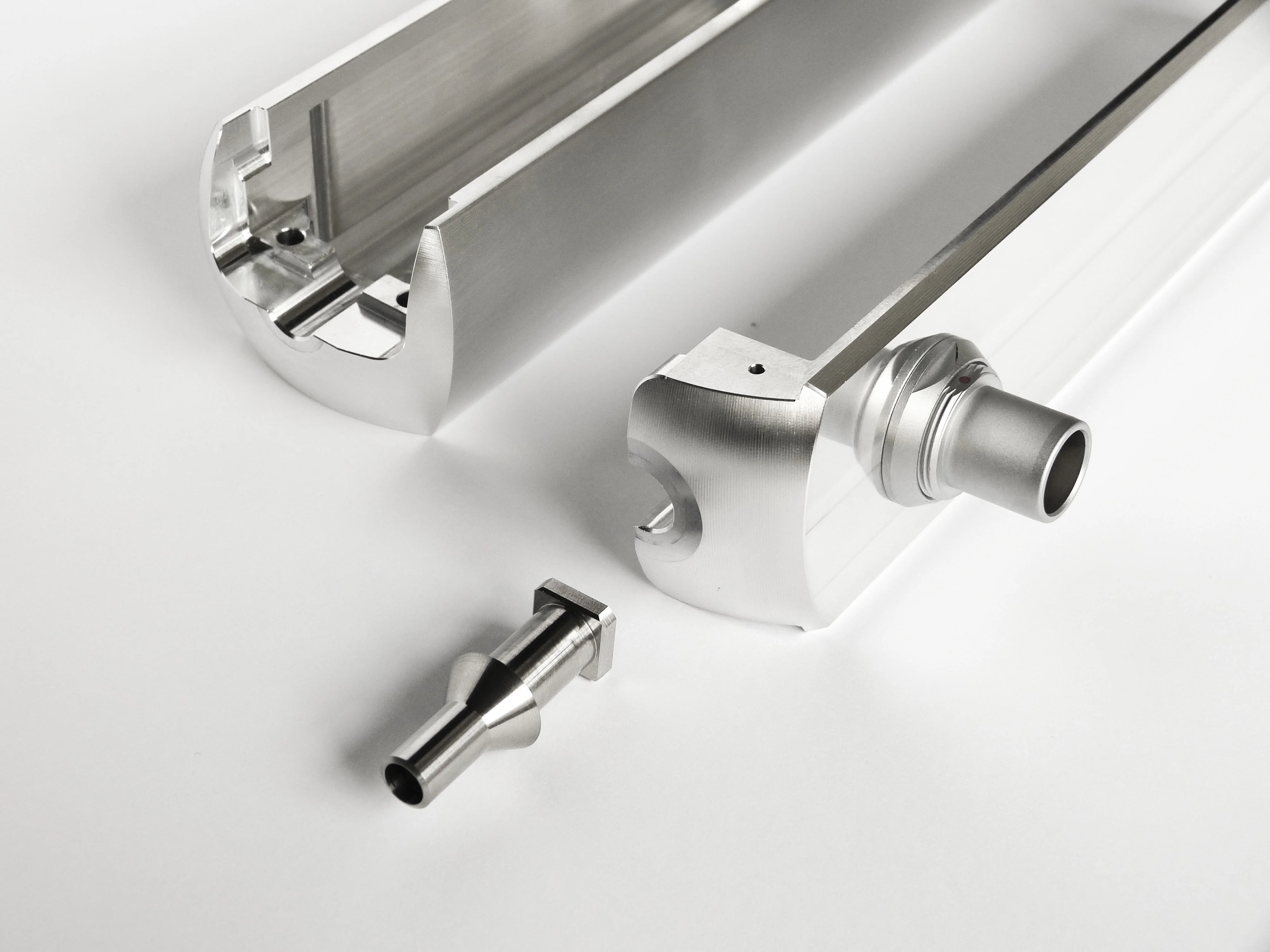
Project Abstract: As part of our research project, the sensor housing was fundamentally redesigned to achieve both aesthetic and functional improvements. The result is a visually appealing and assembly-friendly enclosure that sets new standards.
The redesign expanded access for assembly to three sides, significantly simplifying handling. Despite this openness, the sensor remains precisely positioned thanks to the lateral flange components—requiring only a minimal number of screws.
For trade fair presentations, the side panels can be replaced with transparent Plexiglas elements, allowing the technical sophistication inside to be showcased and the product’s innovative character to shine through.
Another highlight is the asymmetrical mounting of the sensor within the housing. This clever design saves space and reduces material usage—contributing to resource efficiency and cost reduction. Overall, the new design led to a significant decrease in manufacturing costs.
Customer: WEKA AG
Drive system for yarn feed
Competence Center at the IPP: Product Development
Areas of Expertise/Application Fields: Product development, automation, prototyping
Project Goal: Development of a novel drive concept for weaving machines
Project Abstract: Stäubli Sargans AG manufactures and distributes weaving preparation systems for the textile industry. To prepare for the weaving process, the individual warp threads are drawn into the lamellae, the healds and the reed. The warp thread is drawn in dynamically and at a high frequency.
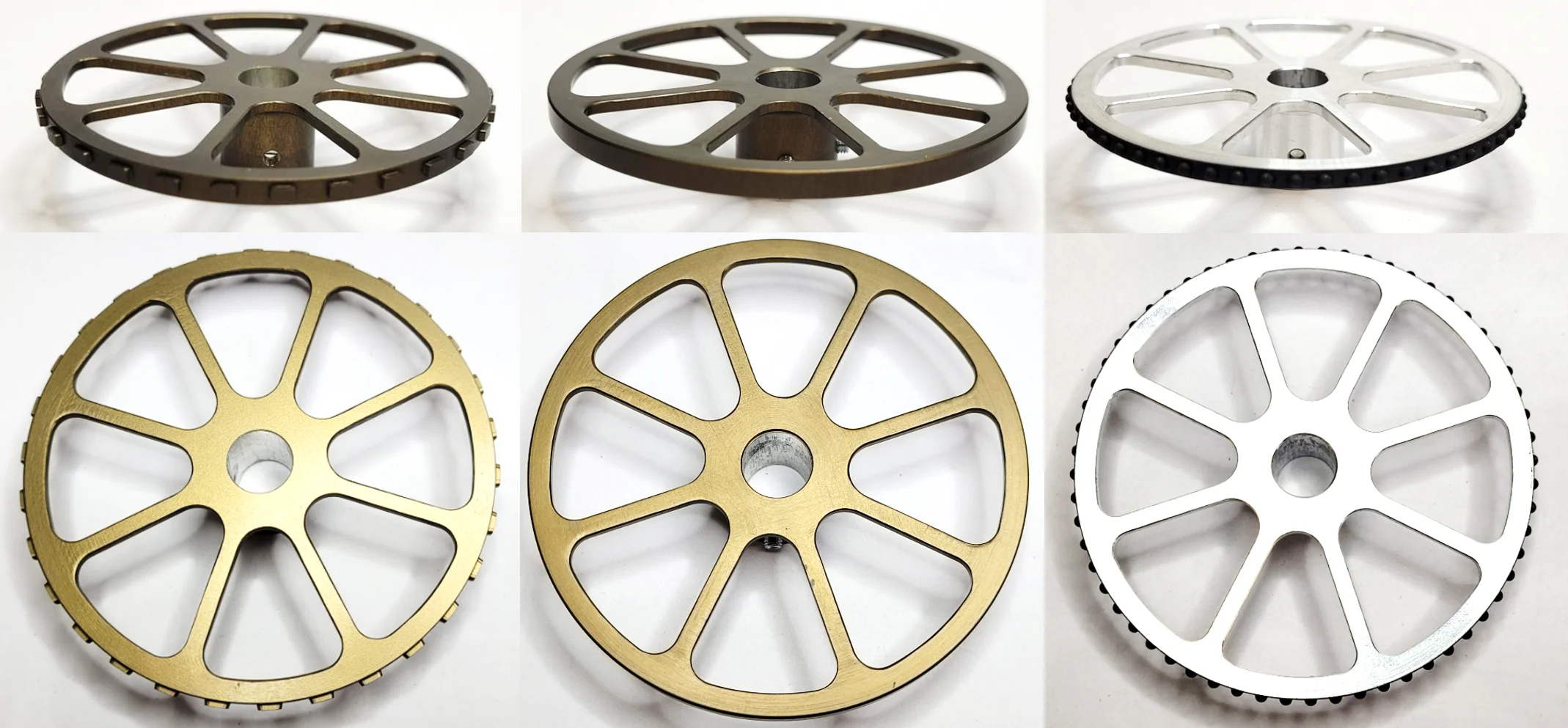
Together with Stäubli, alternative drive solutions for yarn feeding were investigated that meet the increased performance requirements of the new machine generation. The yarn is fed by a feeding hook that is attached to a belt. The belt and hook are moved back and forth cyclically by a drive wheel.
The innovative design has significantly increased the service life.
Financial support by: Innosuisse / Customer: Stäubli Sargans AG
Acoustic analysis on a tubular bag machine
Competence Center at the IPP: Product Development
Areas of Expertise/Application Fields: Packaging industry, product development, acoustic
Project Goal: Analysis of noise emissions and development of measures to reduce them in tubular bag machines
Project Abstract: Syntegon Packaging Systems AG specialises in high-speed, highly automated packaging machines for the food and pharmaceutical industries. This project involved a packaging machine that packs food (e.g. chocolate, biscuits,
bars), non-food products (e.g. detergent tablets) or medical products into tubular bags. According to the Machinery Directive, machines and systems must be designed in such a way that noise emissions are minimised.
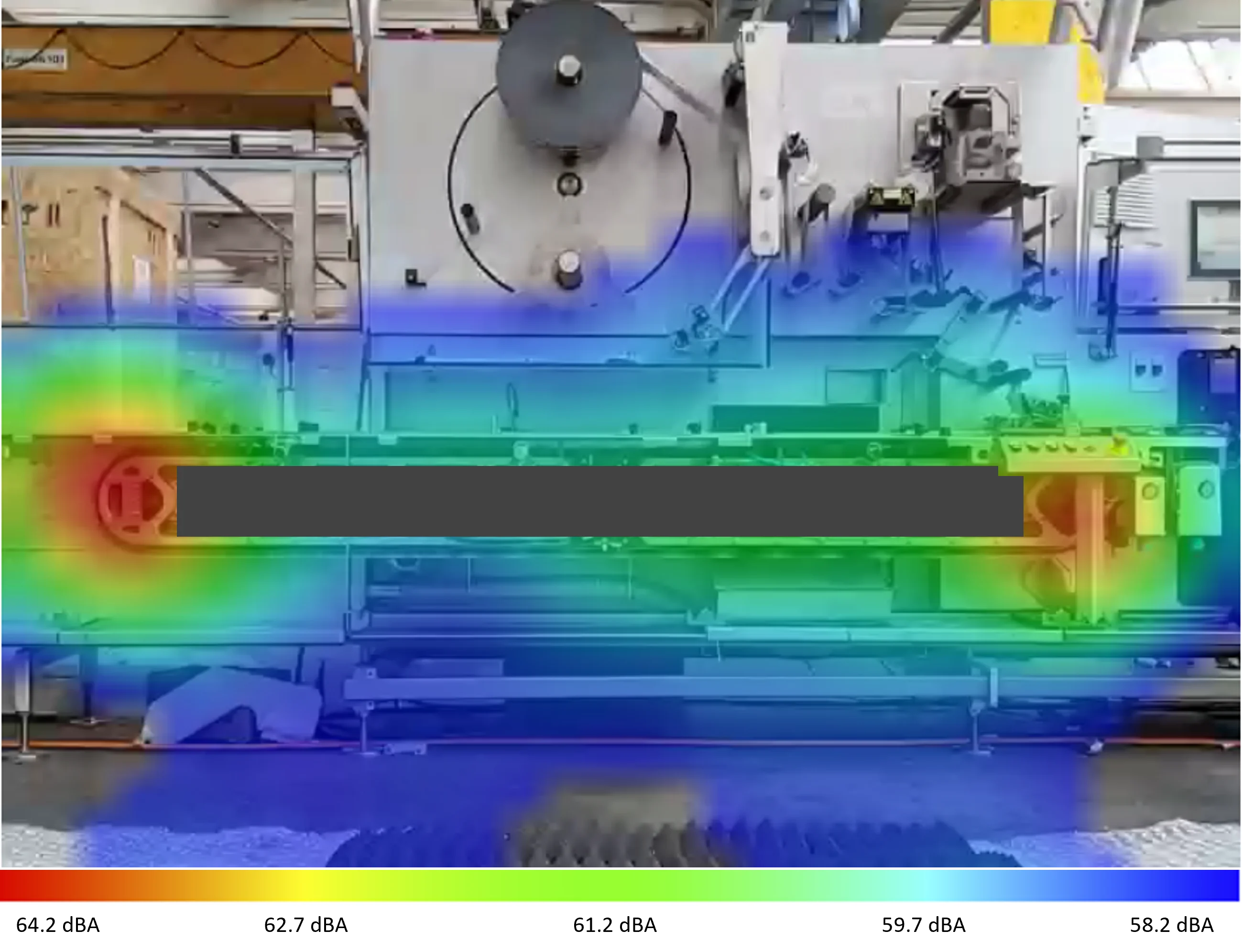
A student thesis analysed the drivers of noise generation on a tubular bag machine. This required studying the fundamentals of technical acoustics. The frequency and sound pressure level of the main noise sources were determined by measurements taken with a microphone and an acoustic camera.
It was found that the product transport system is the main source of noise in the tubular bag machine. The sound pressure level depends on the dynamics and speed of the product transport system. Analysis of the frequency spectrum shows that the highest sound pressure level amplitudes are in the same frequency range and are constant over time.
Based on the measurements taken, sound-optimised cladding was designed and tested. Through the targeted use of absorption mats, the sound pressure level at the flow-wrapping machine was reduced by approximately 10 dB(A). Reducing the sound pressure level makes working conditions at the flow-wrapping machine quieter and more pleasant
Customer: Syntegon Packaging System AG (Student research project)
On the road with a sustainable mobile home
Competence Center at the IPP: Circular Economy Design
Areas of Expertise/Application Fields: Creativity methodologies, Industrial Design, Innovation
Project Goal: Proof of concept for a mobile home made of wood-based materials compared to conventional construction methods.
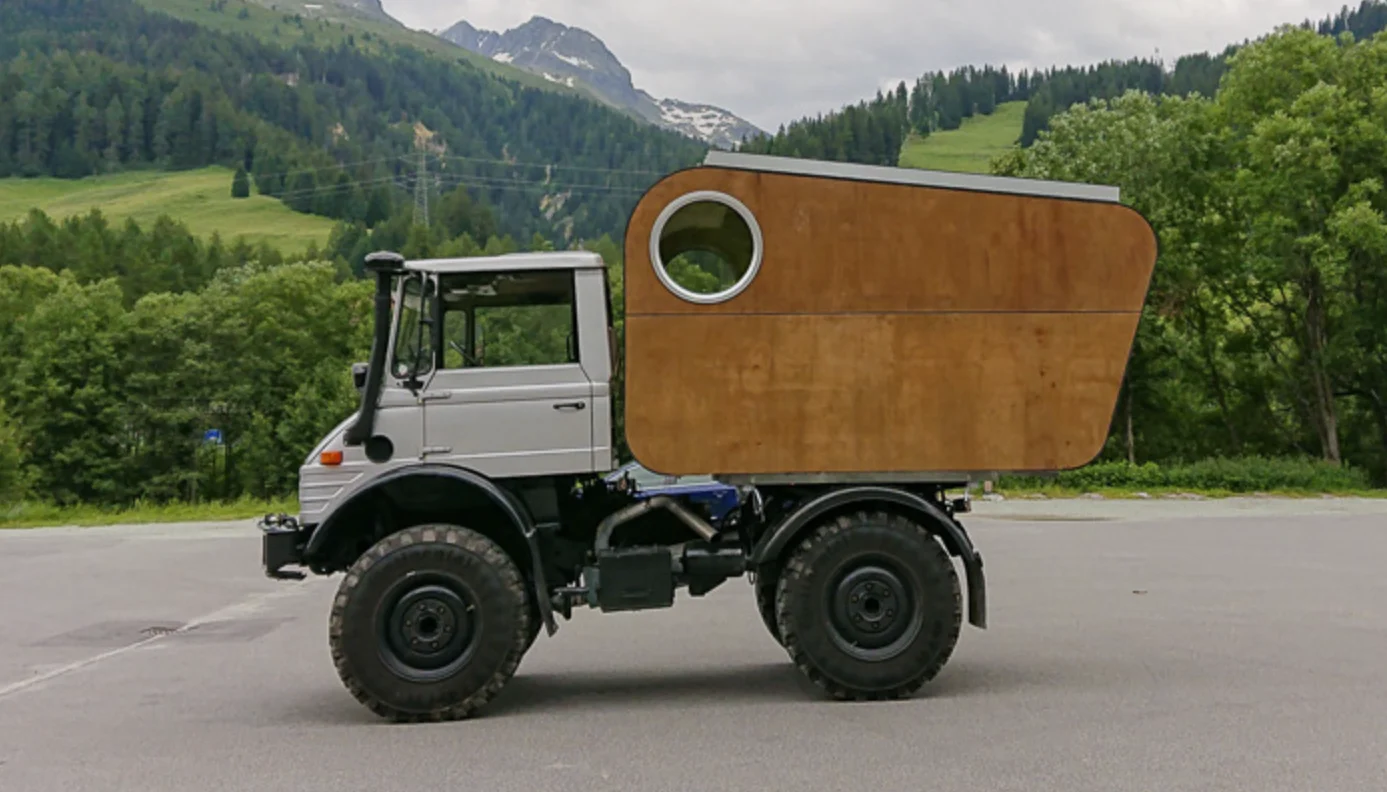
Kurzbeschrieb dieses Projekts: In collaboration with CLB Switzerland, a new type of living cabin for expedition vehicles has been developed that sets new standards thanks to its low weight and sustainable construction. The prototype is impressive not only in terms of functionality but also in terms of design: with its striking appearance, it is a real eye-catcher and impressively demonstrates the potential of the modern timber industry.
The cabin deliberately highlights the wood material, thus communicating the innovative materials and manufacturing techniques that were used. Particularly noteworthy is a specially developed composite material for the side walls, which combines stability and lightness. Impregnated aircraft plywood provides weather protection – a material that ideally combines robustness and sustainability.
The project shows how technical expertise, design quality and ecological responsibility can merge to create a forward-looking product.
Customer: CLB Schweiz
Innovation Booster Applied Circular Sustainability
Competence Center at the IPP: Circular Economy Design, Product Development
Areas of Expertise/Application Fields: Open Innovation, Circular Economy, Funding Program
Project Goal: Four-year programme to promote radical innovations on the topic of circular economy in Switzerland
Project Abstract: The Innovation Booster Applied Circular Sustainability (2021–2024) was an Innosuisse funding program that specifically advanced the development of radical, fully circular product and system solutions in Switzerland. Its goal was to unite business, research, and society within a strong network to enable sustainable innovations for a consistent circular economy.
At the forefront of the program was interdisciplinary exchange: start-ups, established companies, and research institutions collaborated on pioneering solutions that go far beyond incremental improvements, aiming to create tangible ecological, economic, and social value.
A notable strength of the Innovation Booster was the broad consortium led by the Institute of Product Development and Production Technologies (IPP) at the ZHAW. Over 15 experts from fields such as life cycle assessment, material science, business modelling and product and process development supported participants with targeted consulting, individualized workshops, and co-creation formats.
During the funding period, more than 50 teams were accompanied in advancing their radical innovations. Highlights include projects featuring novel technologies like DNA-based material traceability and biotechnological recycling processes, which make the circular economy practically tangible.
Financial support by: Innosuisse
Partner: ZHAW (IPP, INE, IMPE), FHNW (Institut für Unternehmensführung, Institut für Kunststofftechnik), ETH (Institute for Building Materials), BFH (Architektur, Holz und Bau), Materialarchiv, Studiocolony, Tribecraft, EPEA Switzerland, Impact Hub Zürich, Bern, Basel
Biodegradable bicycle helmet
Schwerpunkt IPP: Circular Economy Design
Competence Center at the IPP: Circular design strategies, sustainability assessment, cradle to cradle
Project Goal: Building expertise in product development for the biological cycle
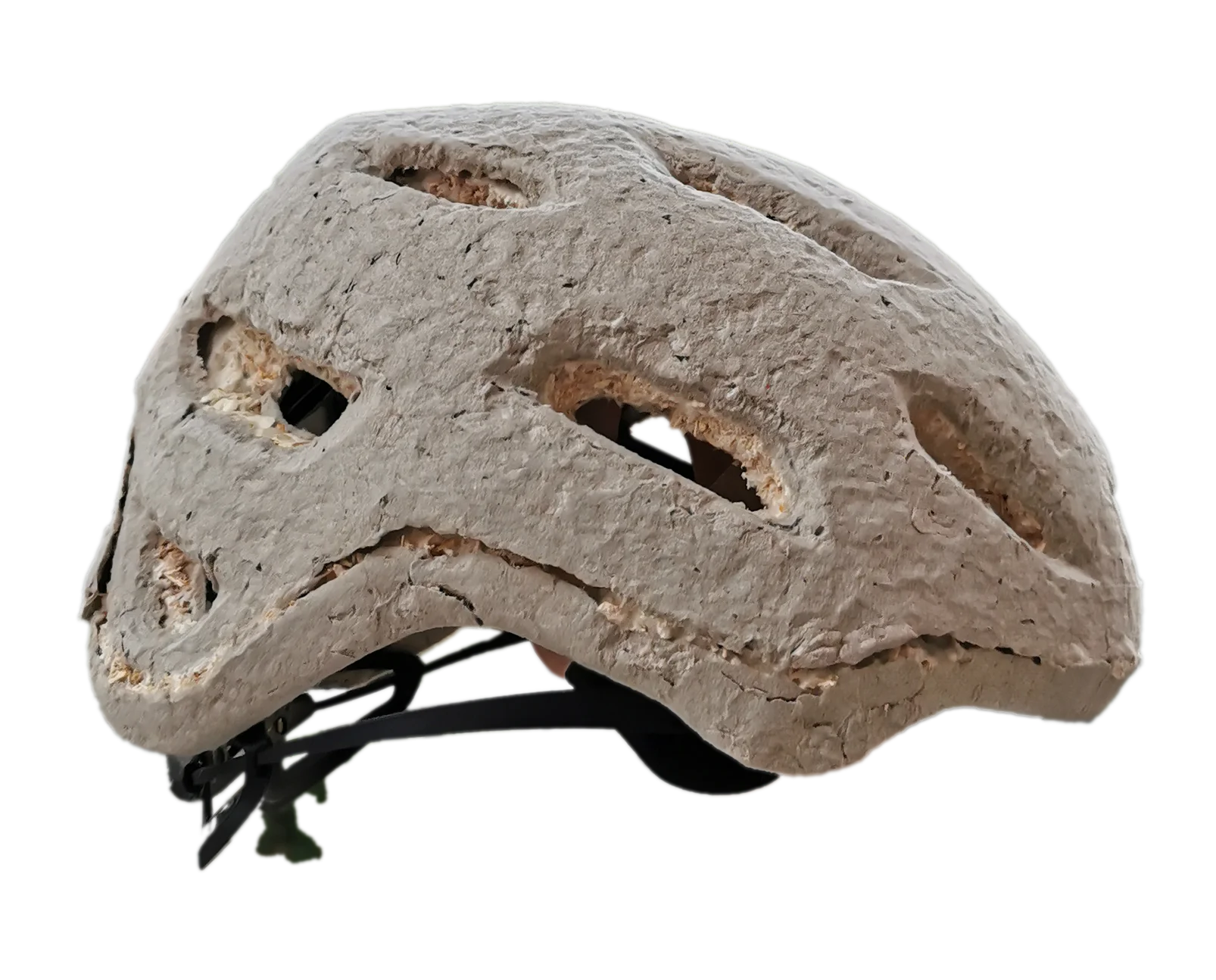
Project Abstract: Is it possible to design a bicycle helmet that can be returned to nature at the end of its life – and still provide reliable protection?
This question was at the heart of our research project, aimed at expanding our expertise in product development for the biological cycle based on the Cradle-to-Cradle principle.
We chose mycelium as the shock-absorbing material – a root-like network of fungal threads that, when combined with agricultural by-products such as hemp or sawdust, forms a moldable, bio-based composite. The main challenges lay in developing a scalable manufacturing process and ensuring protection against external influences while meeting high technical and aesthetic standards.
In close collaboration with the INE and IMPE institutes, we succeeded in adapting the material to the complex shape of a helmet. The resulting prototype passed various impact tests and was evaluated through life cycle assessments. The outcome: a functional, circular bicycle helmet – and a compelling proof of concept for sustainable product innovation.
Magnet test bench for heart pumps
petence Center at the IPP: Product Development
Areas of Expertise/Application Fields: Mechanical Development, Automation, Testing and Measurement Technology
Project Goal: The manual inspection of permanent magnets for Abbott’s heart pumps was automated to boost efficiency and reliability.
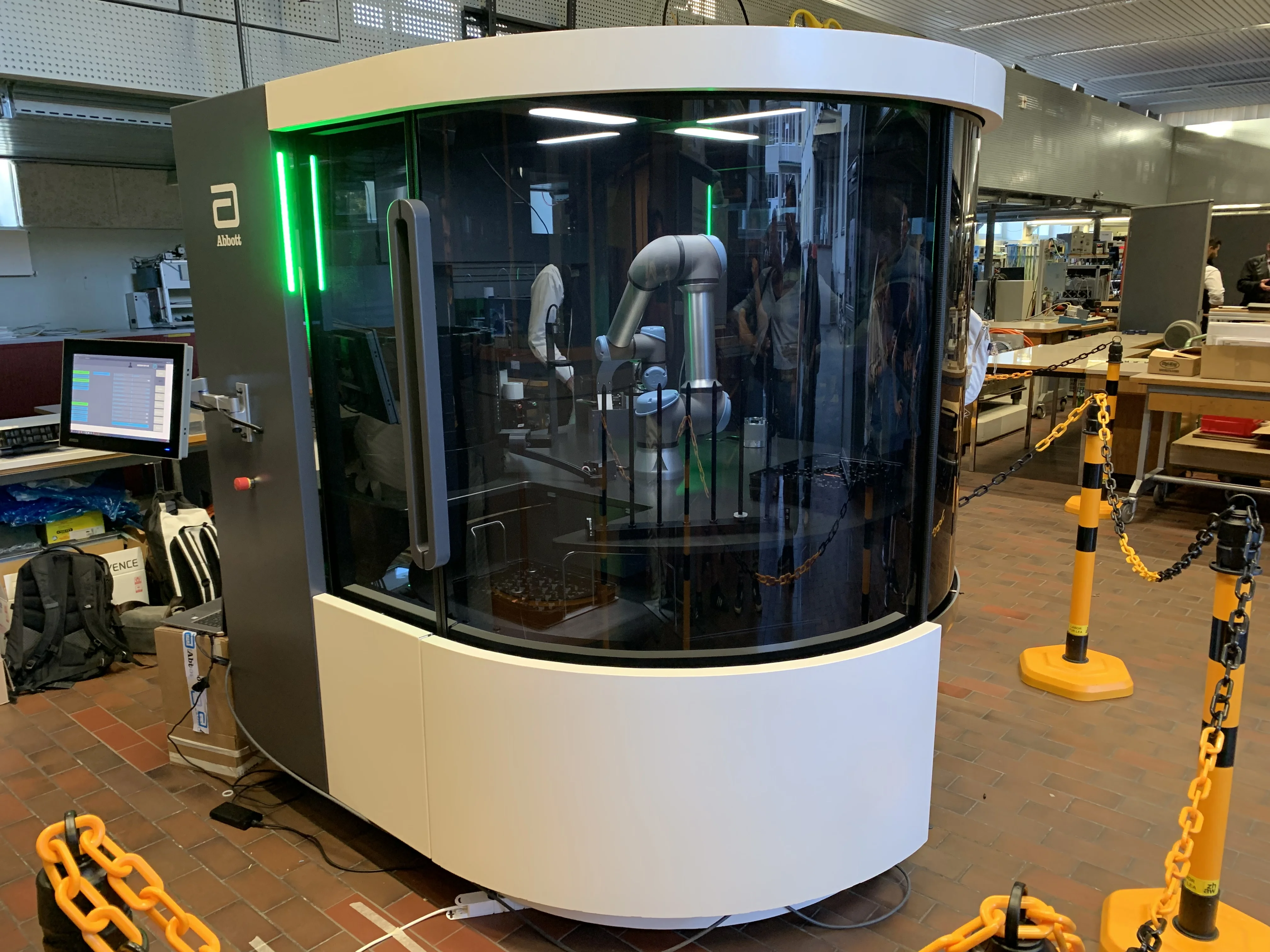
Project Abstract: As part of an interdisciplinary research project, a fully automated inspection system was developed for permanent magnets used in Abbott’s heart pumps. The goal was to transform a previously manual and time-consuming process into one that is more efficient, reliable, and scalable.
The system autonomously performs all inspection steps: it separates the delivered magnets, checks dimensional accuracy, detects surface defects, and evaluates magnetic properties – all without human intervention. The tested magnets are then packed into specially designed trays.
In addition to the technical development, industrial design played a key role. The machine was not only engineered for functionality but also designed to be ergonomic and visually appealing, with a focus on intuitive operation, clean design language, and seamless integration into modern laboratory environments.
To bring the system to life, mechanical components were designed, manufactured, assembled, and commissioned. The control system is based on a programmable logic controller (PLC), and modern manufacturing techniques such as turning, milling, laser cutting, and deep drawing were employed.
In Cooperation with: Abbott - Thoratec Switzerland GmbH
Steasy - Steamer to go
Competence Center at the IPP: Circular Economy Design, Product Development
Areas of Expertise/Application Fields: Industrial Design, Design Concepts, Development, Prototyping, Molding
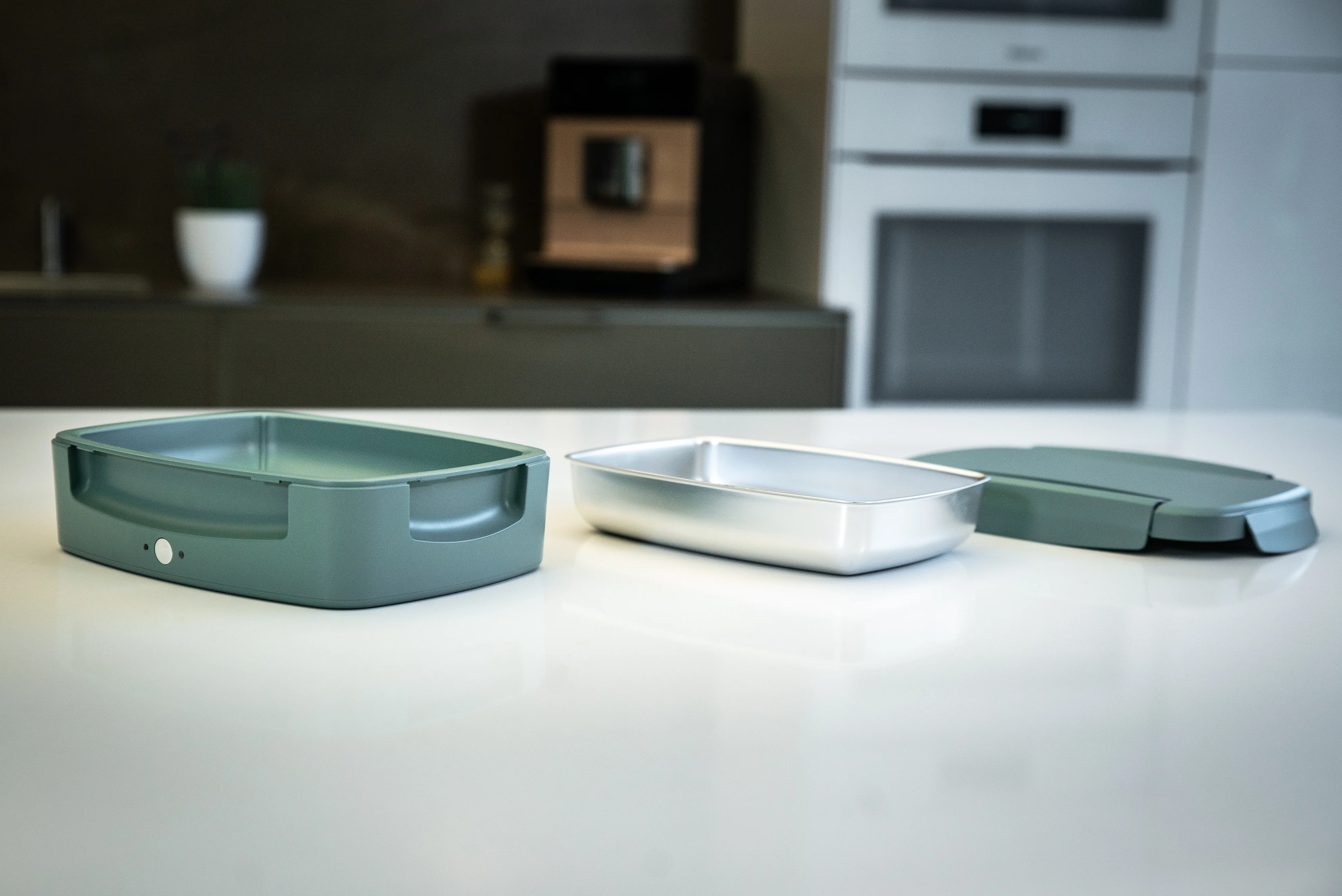
Project Goal: The vision of the Winterthur-based start-up Nexenic AG: a smart lunchbox that gently reheats home-cooked meals on the go using steam – no microwave needed. The result: Steasy – the first portable steam-heating lunchbox with an integrated battery, combining healthy eating with mobile convenience.
In close collaboration with Nexenic, we developed a key innovation: a double-sealed housing that ensures safe transport in a bag while enabling steam heating with the box fully closed. This technical solution was essential to combine functionality with everyday usability.
In addition, the product design was reimagined from the ground up. The form features a clean, distinctive design language and a flat silhouette – ideal for mobile use. Steasy fits easily into bags and integrates seamlessly into a modern lifestyle.
This project brought together technical development, user-centered design, and hands-on research – a compelling example of how an idea can evolve into a market-ready product.
Customer: Nexenic AG
Click here for Steasy
Planet carrier designed for additive manufacturing
Competence Center at the IPP: Additive Manufacturing
Areas of Expertise/Application Fields: Topology optimization, machining, 3D printing, PBF-LB/M (Laser Powder Bed Fusion), hybrid manufacturing
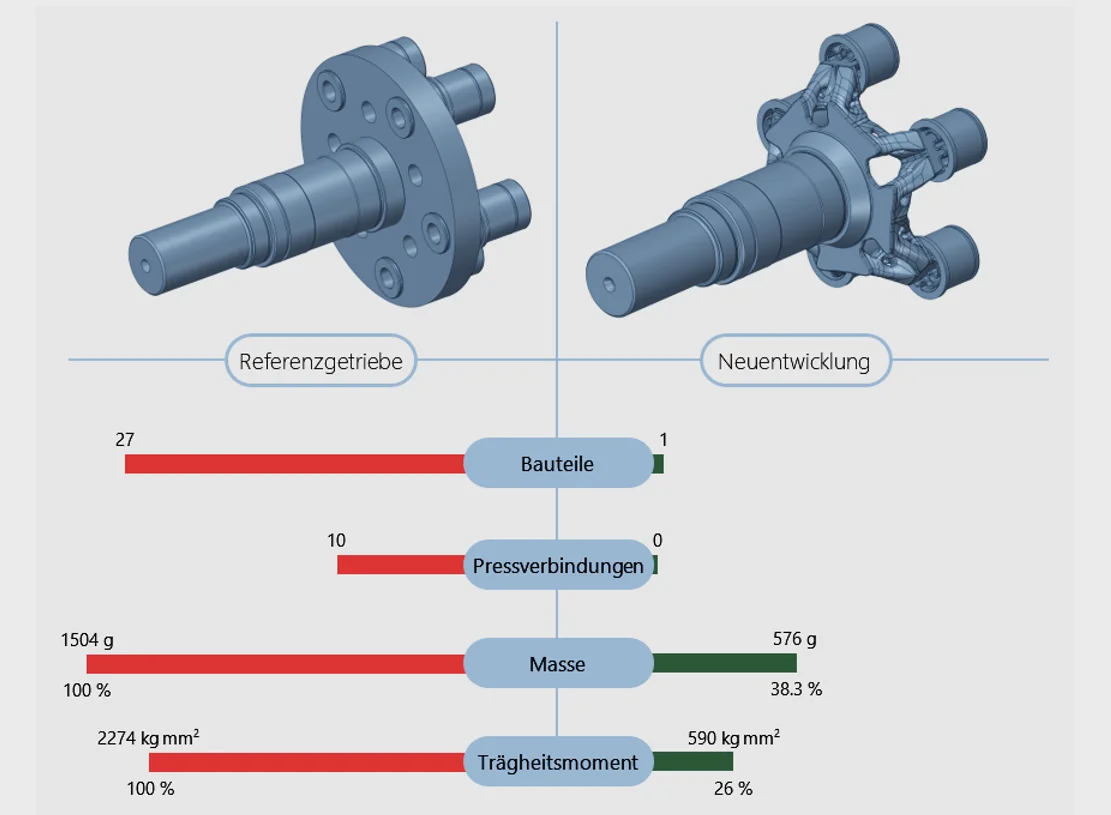
Project Goal: The aim of the study was to demonstrate the potential for performance improvement of transmission components through hybrid manufacturing – i.e., the combined use of turning and additive manufacturing. The component geometry was designed to optimally integrate the respective strengths of each manufacturing process. This approach achieved a 74% reduction in moment of inertia.
Project Abstract: In an R&D project at the IPP, a planet carrier for a planetary gear system was fundamentally redesigned through topology optimization and the consistent application of Design for Additive Manufacturing (DfAM) principles. The component was manufactured using Laser Powder Bed Fusion (PBF-LB/M). The planet carrier was realized as a hybrid part: The complex functional section – consisting of the carrier itself, including flexpins for planetary gear mounting – was produced additively and built directly onto a conventionally manufacturable shaft stub. Final machining was then performed on a turn-mill center.
The project delivered remarkable improvements:
- Significantly increased load-bearing capacity of the gearing through optimized geometry and load-path-aligned structures
- Reduction in part count and inventory from originally 27 individual elements to a single component
- Significant reduction in assembly time by eliminating complex subassemblies
- Reduction in mass and moment of inertia, improving the dynamic performance of the transmission
- Elimination of the critical interface between sleeve and pin, resulting in a substantially more robust and reliable overall system
Financial support by: Internal ZHAW funding
Handee - Sustainable hand protection
Competence Center at the IPP: Circular Economy Design
Areas of Expertise/Application Fields: Circular design concept, feasibility study, sustainability assessment
Project Goal: Feasibility study for sustainable hand protection.
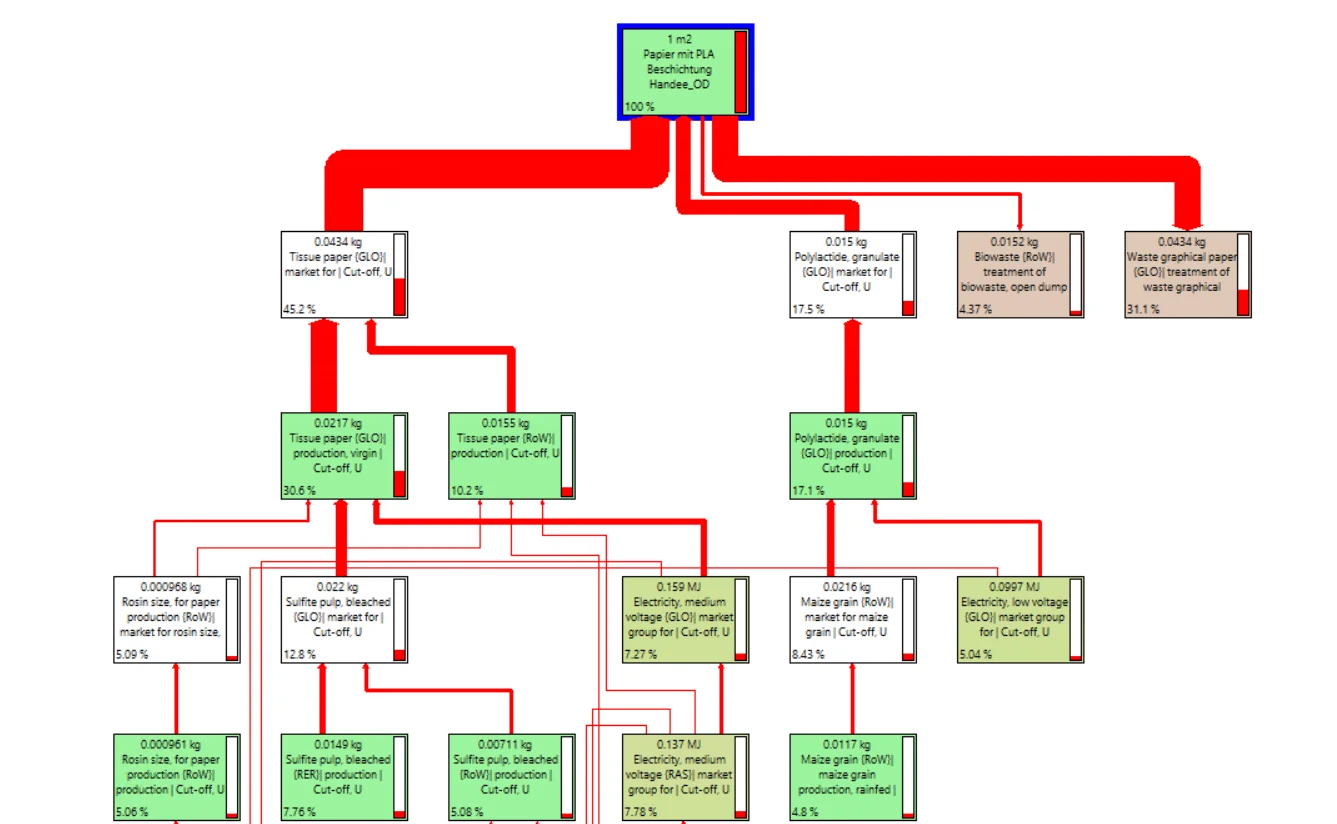
Project Abstract: As part of a research project, the vision of a sustainable, user-friendly hand protection solution for use at gas stations and fresh food counters was examined for feasibility. The study included the evaluation of suitable materials, the development of shape and dimensions, a packaging concept, manufacturability, and cost estimation.
Based on life cycle assessments (LCA), expert and manufacturer input, and the client’s vision, the optimal material was identified. Using literature data and test cycles, a design was developed that fits both the left and right hands of a 5th-percentile female and a 95th-percentile male, ensuring comfortable use.
An innovative packaging and dispensing solution was created that allows intuitive, one-handed handling. The concepts were validated through functional prototypes and optimized for potential manufacturing processes.
The study concluded with a detailed cost analysis and initial discussions with potential cooperation partners and manufacturers.
Parametric Jewelry Design
Competence Center at the IPP: Additive Manufacturing
Areas of Expertise/Application Fields: Design for Additive Manufacturing (DfAM), Metal 3D Printing (Laser Powder Bed Fusion - PBF-LB/M), Post-Processing Techniques
Project Goal: The collaboration aimed to support Digimorphé in adopting metal additive manufacturing, with particular emphasis on: Design guidelines for metal additive manufacturing (DfAM), Pre- and post-processing workflows, Material selection strategies.
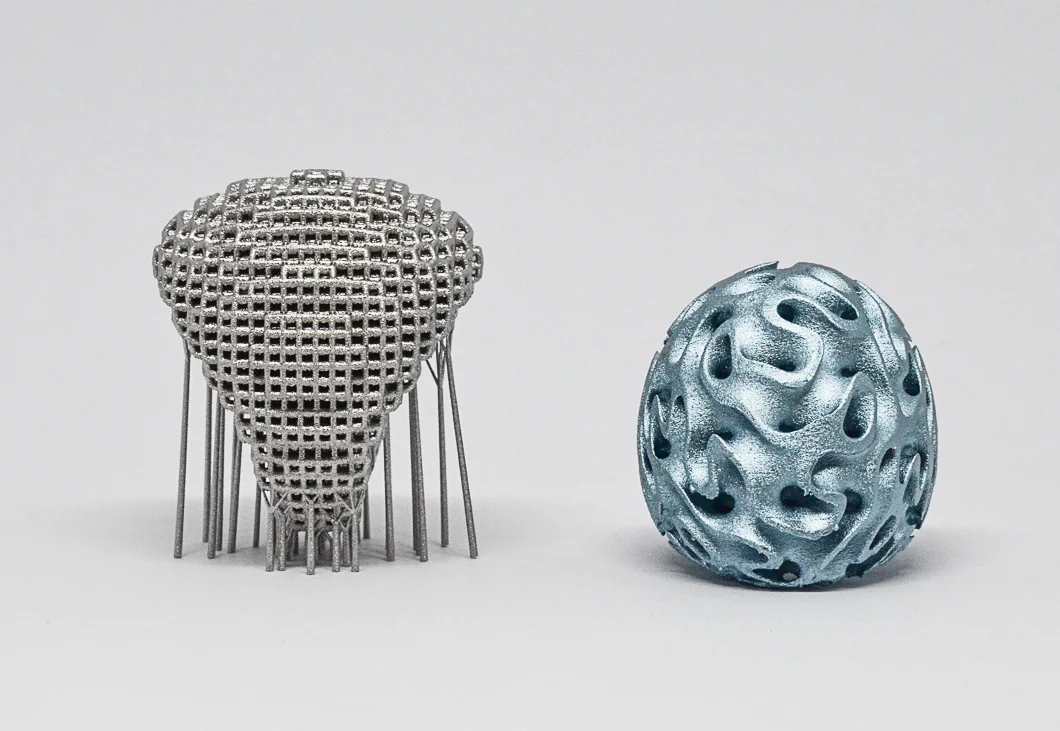
Project Abstract: Digimorphé creates unique jewelry by merging digital design and manufacturing processes with traditional craftsmanship. The distinctive characteristics of these manufacturing processes are also employed as aesthetic elements. The joint research by ZHAW-IPP and Digimorphé focused on lattice structures and the optical effects of surfaces produced via Laser Powder Bed Fusion (PBF-LB) in Ti6Al4V titanium alloy. The project systematically analyzed various post-processing methods and their impact on surface texture.
A key innovation was the use of implicit modeling software for form finding and generation, enabling the creation of structures that would be impossible to achieve with conventional CAD tools. This approach allowed for the exploration of new formal languages uniquely realizable through additive manufacturing.
The project impressively demonstrated the groundbreaking possibilities that emerge at the intersection of digital design, additive manufacturing, and surface finishing - not just for jewelry but with potential applications across industries.
Financial support by: Innosuisse / Customer: Digimorphé
Share Your Bicar – The Future of Mobility
Competence Center at the IPP: Product Development, Circular Economy Design
Areas of Expertise/Application Fields: Electromobility, Automotive Technology, Industrial Design
Project Goal: ZHAW showcases BICAR – a next-generation mobility concept for inner-city short trips.
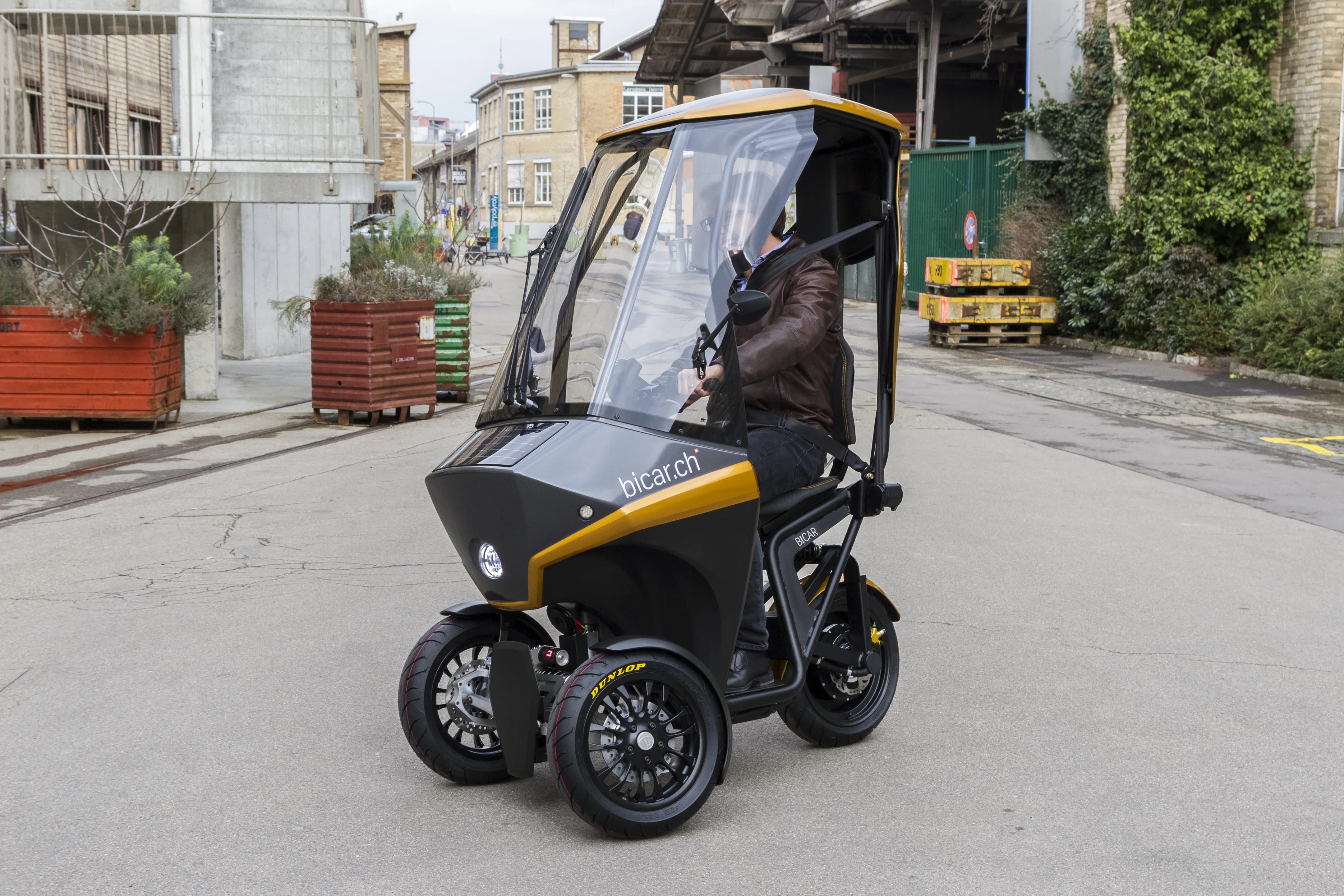
Project Abstract: Developed as part of an interdisciplinary research project with experts in traffic engineering, sustainability, and product development, BICAR is a pioneering flagship project in mobility.
The resulting spin-off further developed BICAR to market maturity and launched the vehicle under the name “roo.” The vehicle has attracted significant international interest, allowing urban planners, mobility managers, and commuters to experience a new form of transportation. Weather-protected, safe thanks to a three-point seatbelt, and stable with three wheels, BICAR offers an easy ride from A to B. With integrated solar panels on the roof, the battery is automatically charged, and its compact design allows parking in standard motorcycle spaces.
The idea of BICAR has been adopted by numerous companies, and the goal of transforming mobility through this flagship project has been achieved.
Customer: Share your Bicar AG
Additional Information: YoutTube-Video
SmartBoard – Intelligent cardboard
Competence Center at the IPP: Product Development
Areas of Expertise/Application Fields: Packaging industry, product development, automation
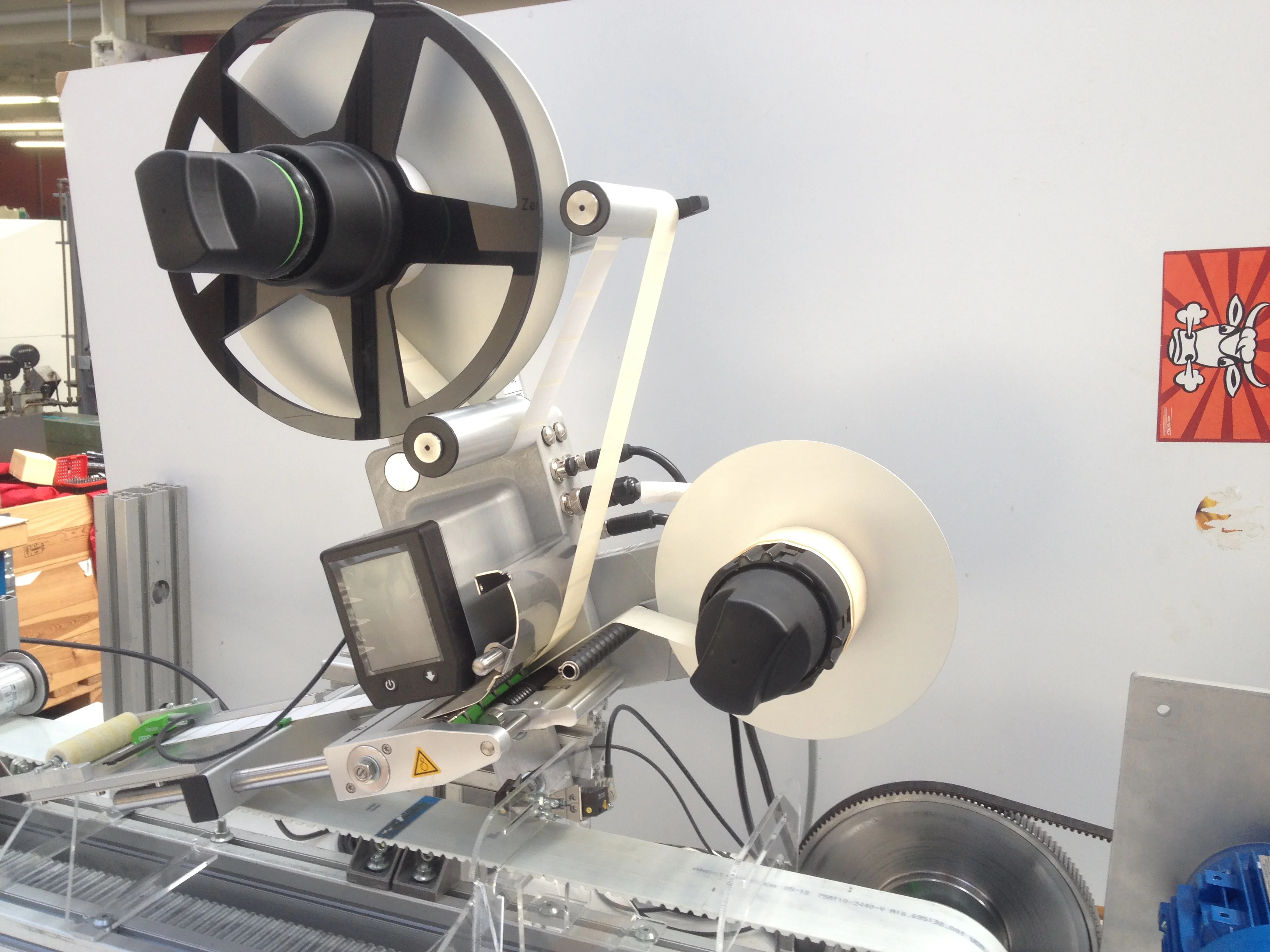
Project Goal: Feasibility study on increasing production when applying labels in the packaging industry
Project Abstract: The feasibility study examined the question: How do high process speeds of a paper web affect application accuracy during labelling? The aim was to find out which parameters influence accuracy and to what extent, and what level of accuracy can be achieved in the best case scenario. A test setup was designed, constructed and used to investigate application accuracy. The tests were carried out at the IPP.
In summary, the following conclusion can be drawn: The greatest influence on accuracy is the setting or alignment of the dispensing edge (also known as the release edge) of the dispenser. The most sensitive process parameters were found to be the angle at which the label hits the web and the length of the label protruding from the carrier web at that point.
Parallel to the testing, a concept for the entire system was developed and visualised in CAD.
Financial support by: HTZ Aargau / Customer: KAPAG Karton und Papier AG
Hackathon with Helbling Ltd
Competence Center at the IPP: Circular Economy Design
Areas of Expertise/Application Fields: Open Innovation, Hosting, Hackathon, Moderation
Project Goal: Innovation at High Speed: Hackathon with Helbling Wil AG at IPP
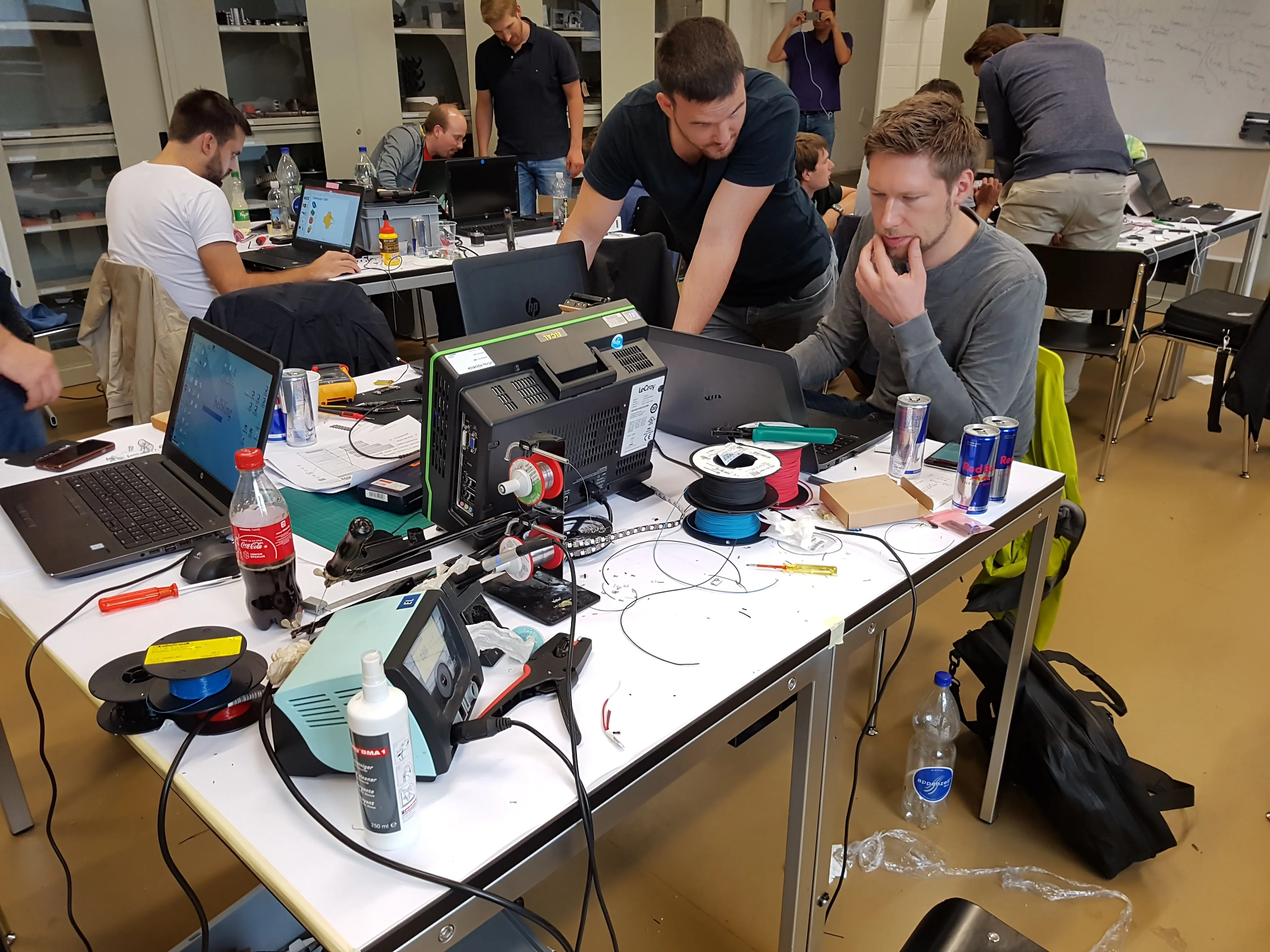
Project Abstract: For the second time, we had the pleasure of hosting a multi-day hackathon in collaboration with Helbling Technik AG at their Wil location, held at the Institute for Product Design, Development and Construction (IPP). Over 30 engineers came together in interdisciplinary teams to develop innovative product ideas—from initial concept to functional prototype—in just three days.
The event once again demonstrated how much creative energy can be unleashed in a short time when expertise, team spirit, and an inspiring environment come together. The modern infrastructure and open atmosphere at IPP provided the perfect setting for this dynamic exchange.
The outcome speaks for itself: five novel product concepts realized in just 72 hours - and a group of enthusiastic participants who left the hackathon with fresh ideas and valuable experience.
Customer: Helbling Wil AG
Efficiency Meets Innovation: Standardization and Digitalization of Steel Supports in Gas-Insulated Switchgear
Competence Center at the IPP: Digitalisation in Machines, Product Development
Areas of Expertise/Application Fields: Digital Engineering, Standardized Steel Solutions, Process Automation
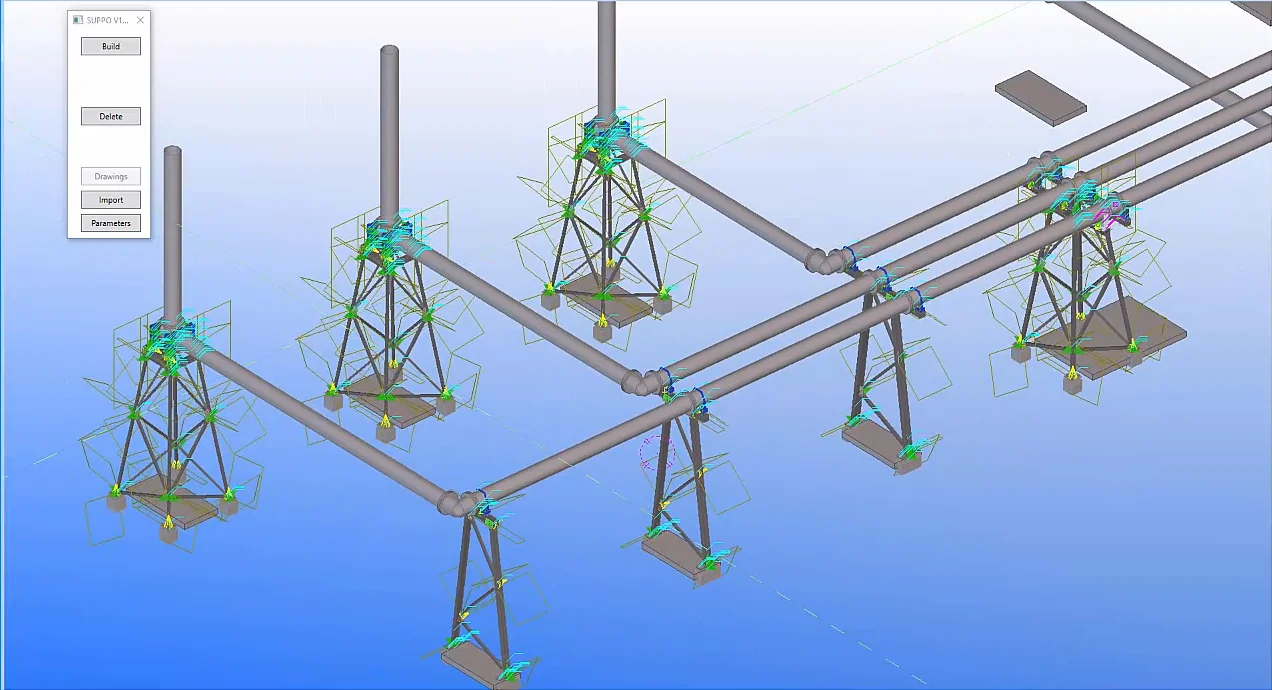
Project Goal: Through parameterization of the CAD design, a large number of variants of the overall structure could be generated fully automatically in the CAD system, based solely on the input of boundary conditions. The automated design generation and the weight‑optimized solution result in time and cost savings of 40 to 60 percent.
Project Abstract: In gas‑insulated high‑ and medium‑voltage systems, steel supports play a central role: they carry the external conductors and must meet a wide range of requirements in terms of size, function, and load capacity. Despite this high degree of variability, it was possible to standardize the design of the supports while simultaneously achieving significant optimization.
Through an innovative redesign, material costs were reduced by up to 40 %—without compromising quality or functionality. Building on this technical advancement, a dedicated software solution was developed that integrates seamlessly into the customer-specific development process. It enables end‑to‑end digitalization and process optimization, ensuring a high level of information consistency throughout all project phases.
Today, parametric models and drawings of the steel supports can be generated with just a few mouse clicks. This automation not only saves valuable development time but also reduces lead times and enables cost savings of up to 60 % during the development phase.
This project demonstrates impressively how technical expertise, digital tools, and creative engineering can be combined to create sustainable and cost‑efficient solutions for complex requirements.
Customer: ABB Schweiz AG
Test bench for chassis stress test
Schwerpunkt IPP: Product Development
Areas of Expertise/Application Fields: Test bench development, endurance testing, structural dynamics
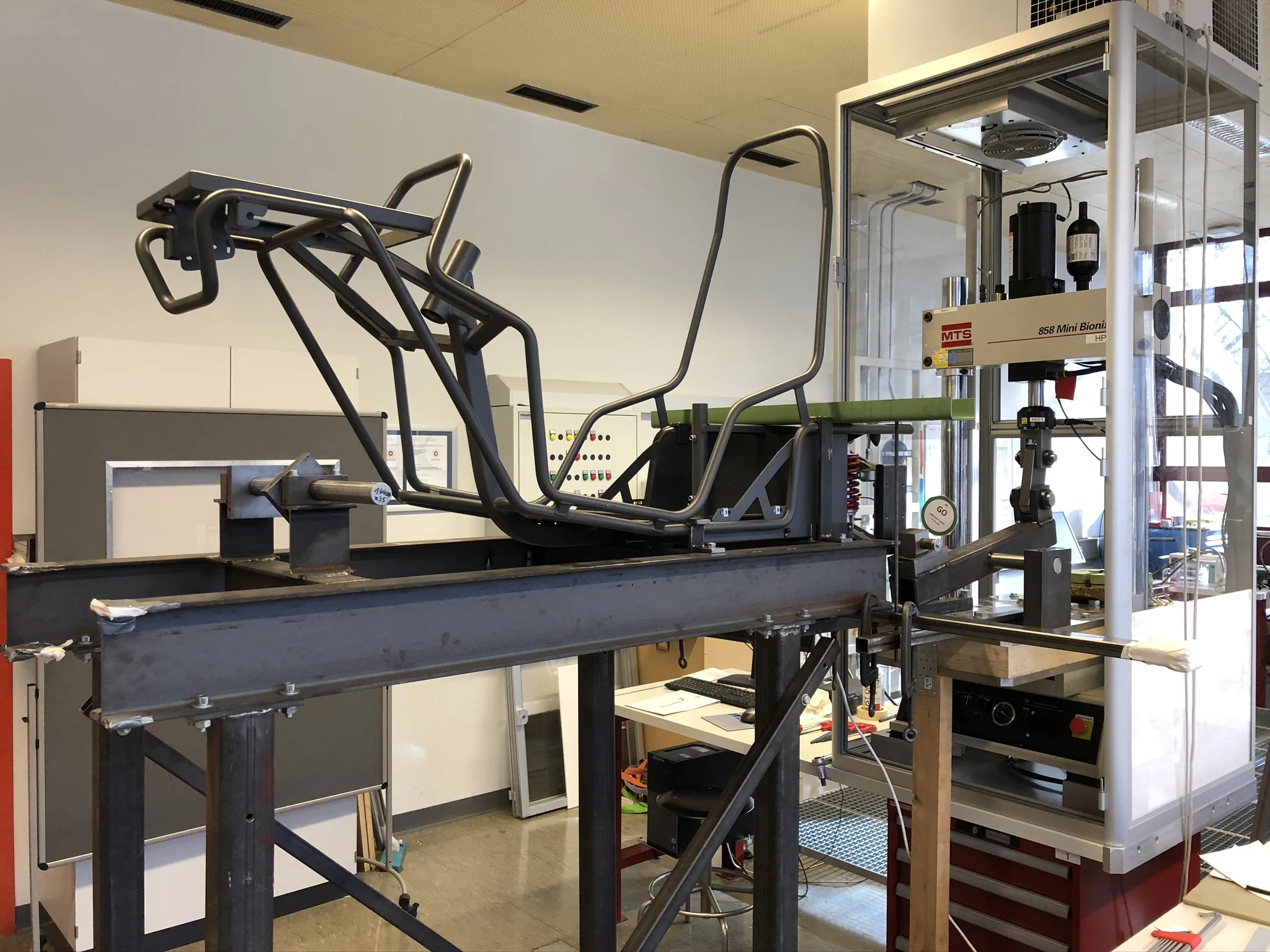
Project Goal: As part of a research project, a customised test bench was developed to systematically analyse and improve the mechanical load capacity and service life of Kyburz's three-wheeled delivery vehicle. The aim was to test and optimise both individual components and the overall system under realistic conditions.
Based on a hydraulic testing machine, the test bench enables the targeted simulation of maximum and continuous loads on the front and rear axles. With the aid of a lever mechanism, forces of 5 to 15 kN occurring during daily operation are transmitted at frequencies of 2 Hz and above, which corresponds to several million load cycles and allows for realistic simulation of the service life.
Of particular note is the continuous monitoring of the test parameters: Force, deflection and critical components are measured and documented in time-lapse. This enables precise analysis of damage mechanisms and their propagation.
These findings are then used to make design adjustments to the chassis, which can be validated again, forming an iterative development process that combines efficiency and innovation.
Customer: Kyburz AG
Click here for: Chassis Prüfung Dauertest / Kyburz Stresstest Hinterradaufhängung
Material data for plastic gears

Competence Center at the IPP: Product Development
Areas of Expertise/Application Fields: Gear test bench, plastic gears, material testing according to VDI 2736
Project Goal: The objective is to employ test methods that adhere to industry standards to ascertain the material-specific service life and precision of plastic gears in actual operating conditions.
Project Abstract: The performance and service life of plastic gears depend largely on the materials' composition—and this varies from manufacturer to manufacturer. In addition, the elastic modulus changes with temperature, significantly influencing the behaviour of the gears during operation.
To ensure a reliable design, engineers require comprehensive material data corresponding to real-world operating conditions. At the IPP, this data can be obtained in accordance with the VDI 2736 standard.
First, the tests determine the gear accuracy. This is followed by a service life analysis on the test bench, in which the gears are tested for common failure types such as tooth root fracture, wear and pitting.
This practical methodology enables a well-founded assessment of material quality and provides valuable insights for developing durable, resilient plastic gears — a decisive step towards increasing the efficiency of modern drive systems.
Additional Information: Zahnradtests IGUS I3 VDI 2736 / TOP GEAR - Industrial manufacturing of gears, based on thermoplastic high performance composite materials Hochleistungsfaserverbundwerkstoffen
Science-Toys - Aero

Competence Center at the IPP: Product Development, Circular Economy Design
Areas of Expertise/Application Fields: Ideation, Prototyping, Agile Product development, Testing
Project Goal: Air to Inspire – An Interdisciplinary Research Project for Playful Exploration of Physical Phenomena
Project Abstract: This interdisciplinary project explored how air-related phenomena such as flow, pressure, force, and density can be made tangible in a playful yet scientifically rigorous way. The goal was to spark curiosity and foster a deeper understanding of the underlying physical principles—not through dry theory, but through hands-on experimentation and discovery.
Numerous prototypes were developed and tested in workshops with children and young adults. Insights from these sessions were used to evaluate key criteria for an engaging science toy: clarity, joy of experimentation, creative openness, and scientific relevance.
One of the standout results of this development process is the Aero – a compact dual-fan device that serves as a versatile tool for experimentation. It enables impressive demonstrations of physical effects such as hovercraft motion, air towers, or smoke flow. At the same time, the Aero offers ample space for creative ideas and further development – a true instrument for exploratory learning and innovative science communication.
Customer: Technorama Winterthur, Kooperationsprojekt mit der ZhdK Zürcher Hochschule der Künst
Financial support by: Gebert Rüf Stiftung
Click here for Video
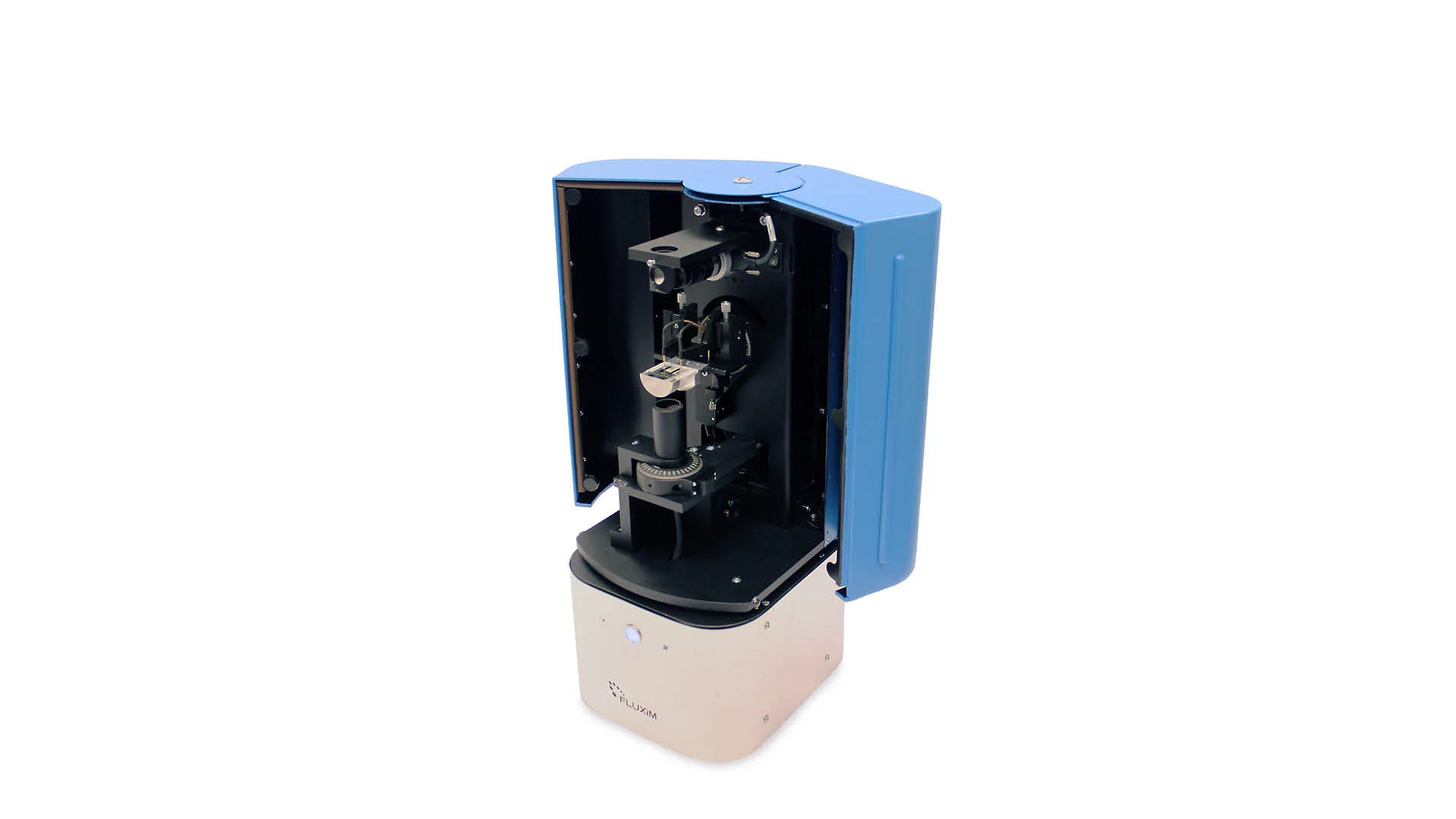
User-optimised tabletop device - Phelos
Competence Center at the IPP: Circular Economy Design, Product Development
Areas of Expertise/Application Fields: Industrial design, ideation, construction, prototyping
Project Goal: Enclosure design for a sensitive laboratory device for testing OLED and LED components, including structural implementation.
Project Abstract: As part of this research project, the Phelos laboratory device from Fluxim AG underwent significant further development. This highly specialised tabletop device is used to analyse LED and OLED components and places the highest demands on functionality and user-friendliness.
The IPP took on the design of the functional outer casing and defined the optimal integration of the electronic components. The focus was not only on technical aspects such as light-tight shielding, but also on the needs of the users. A targeted user analysis provided valuable insights: maximum access to the test chamber and a compact footprint were identified as key requirements for ensuring efficient and comfortable operation.
Based on these requirements, the project team developed well-thought-out design concepts, which were tested and validated in the form of functional prototypes. The result is a device that combines technical precision with intuitive handling – a successful example of the connection between research, design and practice.
Customer: Fluxim AG
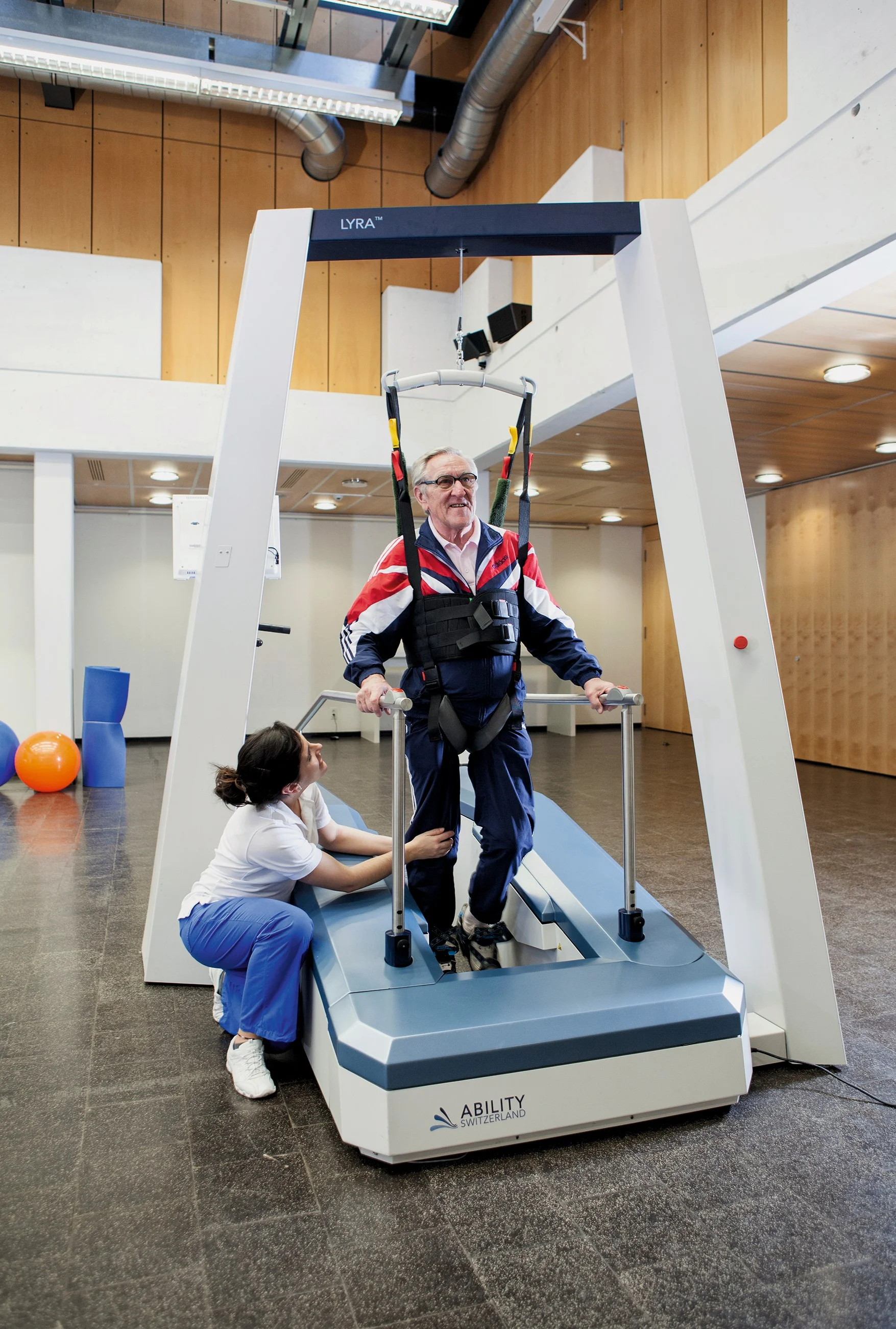
Intelligent mechanics help patients with walking difficulties during therapy
Competence Center at the IPP: Product Development
Areas of Expertise/Application Fields: Product development, healthcare, robotics
Project Goal: Development of a novel gait trainer for neurological therapy
Project Abstract: Patients with neurological disorders (e.g. stroke) must relearn their natural gait pattern through complex therapies. Thanks to the gait trainer launched by Ability, patients can learn to walk again independently and without therapists.
The IPP took up Ability's initial product idea. A research project investigated the technical and physiological feasibility. The product was developed, designed and partially manufactured into a prototype “Lyra” ready for series production.
Financial support by: Innosuisse / Customer: Ability Switzerland AG /
THERA - Trainer