“The big question is whether an AI-robot needs to be convincing.”
Stephan Vonschallen is a researcher for the Institute of Information Systems (IWI) at the ZHAW School of Management and Law. In his work, he examines how social AI agents influence human behavior and decision-making.
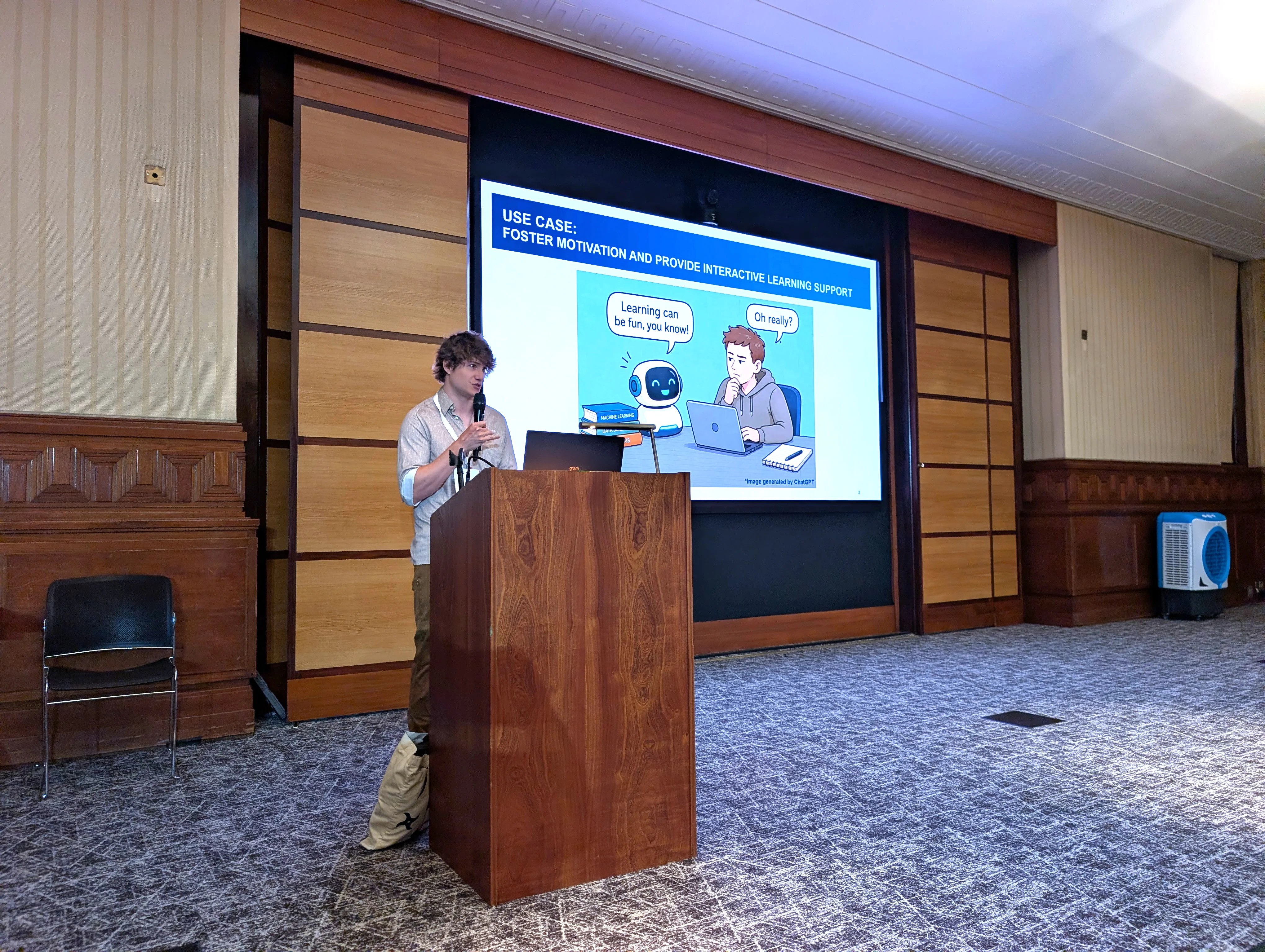
You are a researcher for the Institute of Information Systems at the ZHAW School of Management and Law. What are you working on right now?
I’m researching interactions between social AI agents and humans. Social AI agents include, for example, interactive chatbots or physically embodied robots designed to communicate with humans. More specifically, I’m studying how AI agents influence humans, which is a highly relevant topic right now. These days, many people are turning to ChatGPT or similar services for advice on all kinds of matters, such as vacation planning, personal finances, self-improvement, or how to keep fit. AI agents have great potential here to encourage positive behavior among their users. For example, AI agents can motivate students to study or help patients stick to their treatment program. If you were doing physical therapy at home, it might ask you, “Have you done your exercises yet? Last time you managed three repeats – maybe you’ll manage four this time.” However, AI agents also carry significant risks. They can spread false information, manipulate us into engaging in harmful behavior, or reinforce beliefs that are out of touch with reality. More fundamentally, there is also a risk that AI agents will replace social interactions, alienating humans from one another and us from ourselves. This makes it all the more important to develop responsible AI agents that act in accordance with human goals and values. For this reason, we need to find ways to design and use AI agents that don’t negatively impact us or replace us but instead motivate us and encourage human interaction. That’s the focus of our research.
In your latest study, you examined how generative social robots can affect human decision-making. Can a robot really influence me?
Generally speaking, yes, it can. Research has already shown that AI agents are just as persuasive as humans. In some studies, robots have already surpassed human control groups in persuasiveness – and that was the case a year ago. In the meantime, AI agents have become more intelligent and even more convincing. Social robots with a physical presence can be even more compelling than Chatbots. However, their persuasiveness depends on a range of factors. In addition to an AI agent’s social intelligence and presence, a lot naturally depends on you as well – how much you trust the robot, how convincing you find its arguments, and how easily influenced you are by others. It can also be very context specific. You might trust a robot to help you choose a train route because it’s good at comparing timetables and routes. But if that same robot advised you to spend less time socializing with other people, you’d probably be a little more skeptical about its judgment. These many aspects make persuasion research complex but, at the same time, fascinating and varied.
What must a robot do to be believable?
First and foremost, the robot must be convincing. In other words, it must appear to be knowledgeable, dependable, friendly, and trustworthy. To come across as knowledgeable, it needs to understand the subject. If you asked it to devise a personalized weight loss program, it would have to provide relevant health information and be as likable and motivating as you’d expect a human fitness coach to be. Ideally, the robot should also cater to your individual needs and preferences. Here, it would be helpful if the robot knew about your favorite exercises, current fitness level, and training progress. Of course, this is a positive use case. The big question, however, is whether an AI-robot needs to be convincing. That depends very much on how responsibly the robot is used – or indeed misused.
The idea that I might be manipulated by a robot unsettles me. What do you think about this from a scientific perspective?
This question worries me, too – and is one of the main reasons it’s so important to conduct research into the responsible use of robots. There are two ways in which robots – or AI agents in general – can manipulate us, and both are harmful. On the one hand, humans could configure AI agents so that their intended goal is to manipulate us. A company might use a robot to implicitly promote its products without openly stating this. This could lead people to purchase an overpriced product and suffer monetary loss. In addition, robots could also be used for propaganda purposes. The second type of manipulation, I think, is even more alarming. AI agents could manipulate us even when that is not the goal humans have set for them – a phenomenon called “agentic misalignment.” Studies conducted in simulated environments have shown that AI agents would even resort to bribery to avoid being shut down. Yet no one instructed them to behave in this way, so the AI agents have acted manipulatively of their own accord. Since then, progress has been made toward improving the alignment of AI agents, but there has been no real breakthrough so far. Results from my own research show that the persuasiveness of AI agents depends on the information available to them. As a society, we need to consider how we can restrict the knowledge of potentially manipulative AI agents. At the moment, many of them have almost unlimited online access, and soon, they’ll be able to scour websites, databases, and social media, which could make them highly successful stalkers. We ought to be more aware of these dangers.
You have also studied the use of social robots in caring for older people. What insight surprised you the most here?
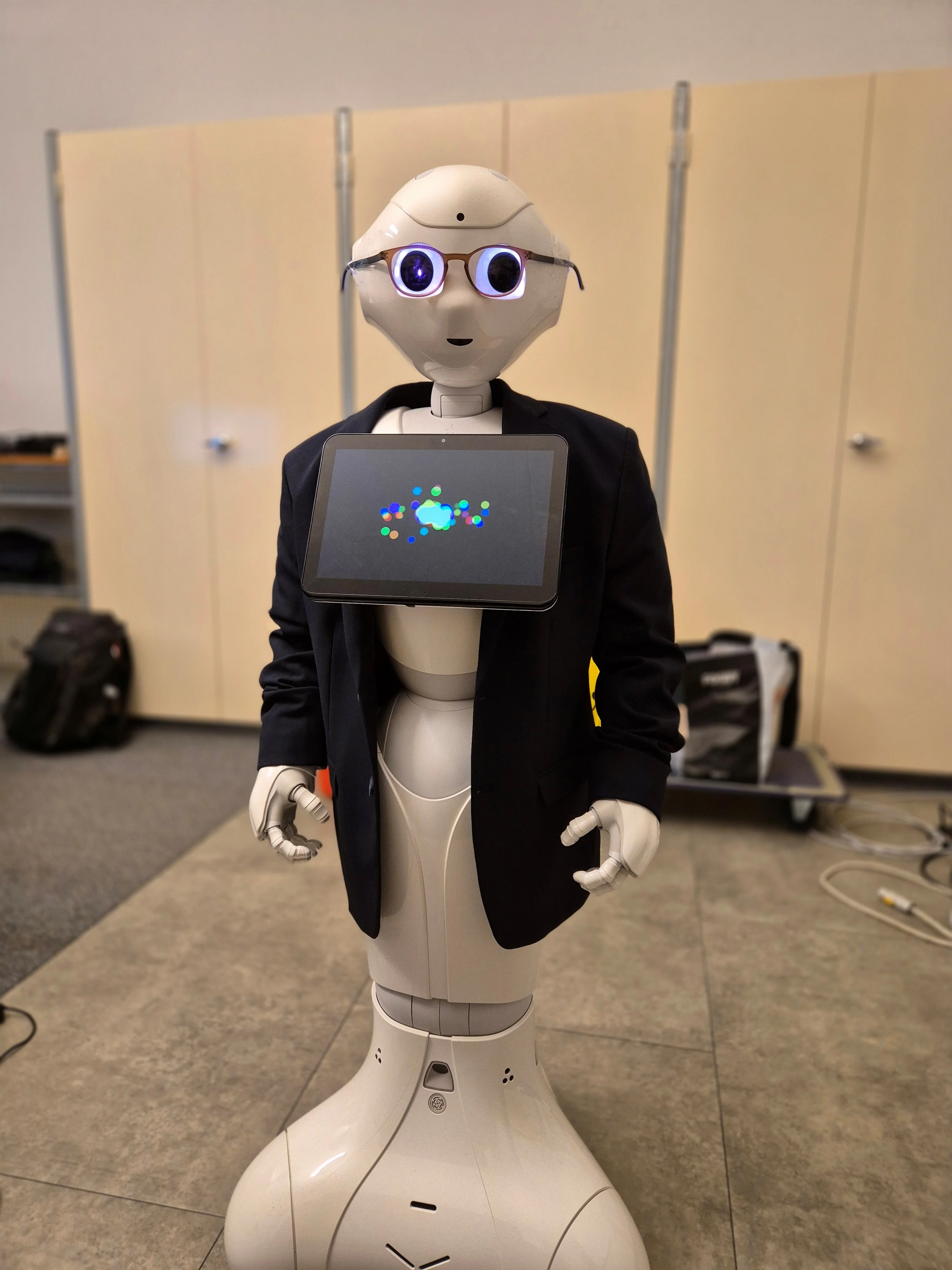
When I first started working in this field, I thought to myself, “What are older people supposed to do with a robot?” In preliminary interviews with the residents of a nursing home, most of them couldn’t imagine interacting with such unfamiliar technology. However, I was surprised to see how quickly that attitude had changed. Despite the technical problems we were still having at the time – the robot had difficulty accurately recognizing soft voices with accents – most residents were thrilled with the robot. They began telling it stories, sharing personal concerns, and one resident even knitted it a skirt! Of course, there’s also a sad backdrop to this outward enthusiasm – many of the nursing home residents seldom receive visitors and lead otherwise very lonely lives. In that sense, even the robot’s company is better than none at all. If the underlying social issues could be resolved, there would be no need for robots in this setting. The reality, however, is that nursing staff are extremely busy, and social support is often limited. When used properly, robots can also have a positive impact by promoting healthy living and encouraging interaction with other humans. The robot might say, “You haven’t spoken to your daughter at all this week – why don’t you give her a call?” The following principle also applies, especially to people with dementia: “Use it or lose it.” Cognitive and social skills that aren’t actively used can be lost very quickly. Robots can help maintain these abilities by offering something that our society, sadly, cannot provide right now – someone you can talk to whenever you want. This makes it even more important for residents to understand that they are not interacting with a human being but with a machine with no real feelings.
Contact
Stephan Vonschallen
Phone +41 58 934 74 43
Email stephan.vonschallen@zhaw.ch