Bachelor's degree Electrical Engineering: Specialisation
Mathematics and physics form the scientific foundation of electrical engineering. Building on this, you will acquire a solid grounding in areas such as electronics, digital technology, signal processing, control engineering and computer science. In your final year, you can tailor your studies to your professional interests.
Industrial Automation and Controls
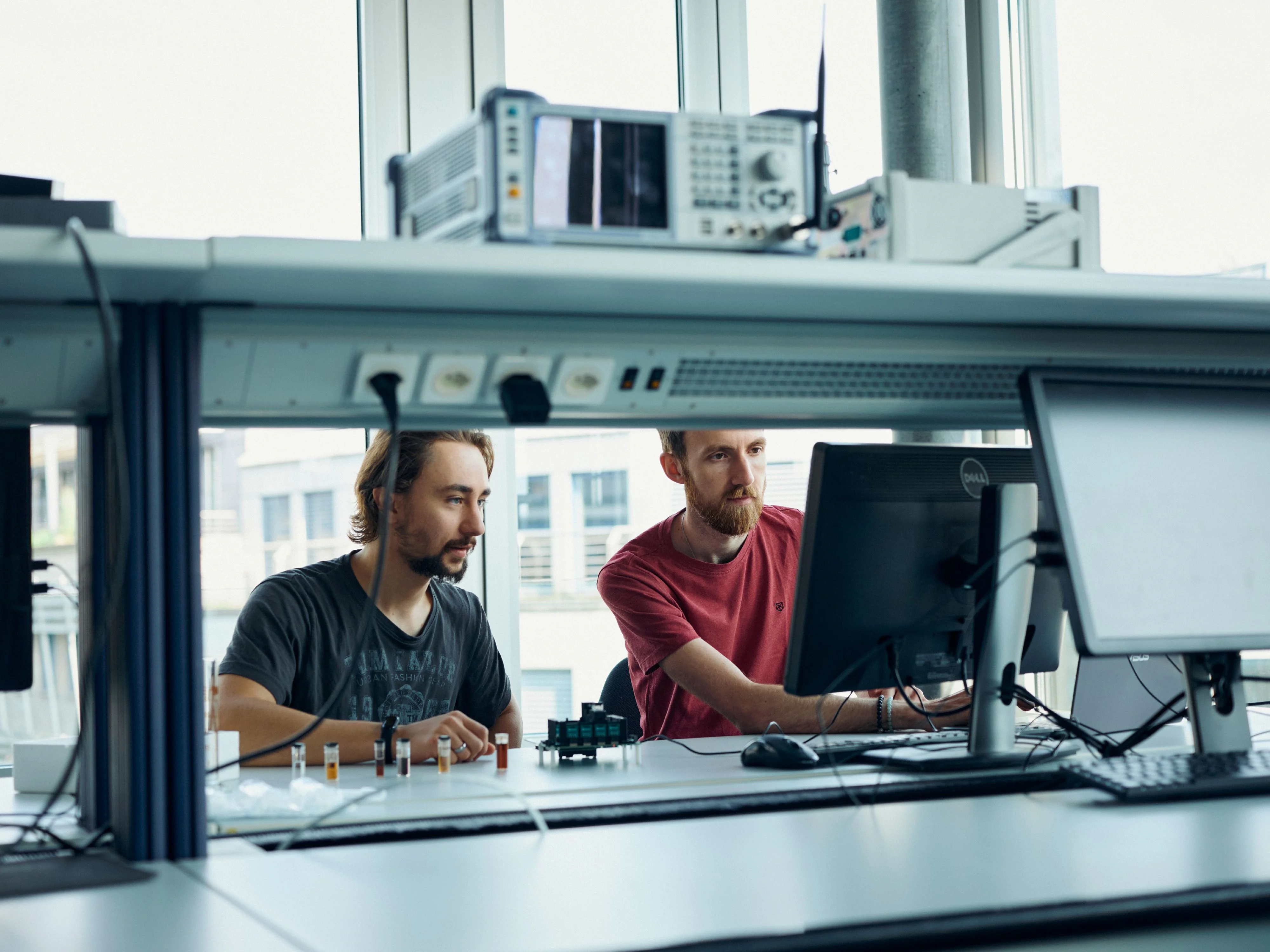
Modern production systems, industrial plants and vehicles depend on the precise interaction between sensors and intelligent control systems. In this specialisation, you learn how machines move, make decisions and operate autonomously. You design electrical drives, develop control strategies and implement them on microcontrollers or PLC systems. Sensors provide the data needed to operate machines reliably and efficiently. You also design control and electronic components and integrate them into machines, vehicles and industrial installations.
Working with robotics, automated transport systems and autonomous production environments, you help develop industrial technologies that are more efficient, safer and more sustainable.
Electrical Power Systems
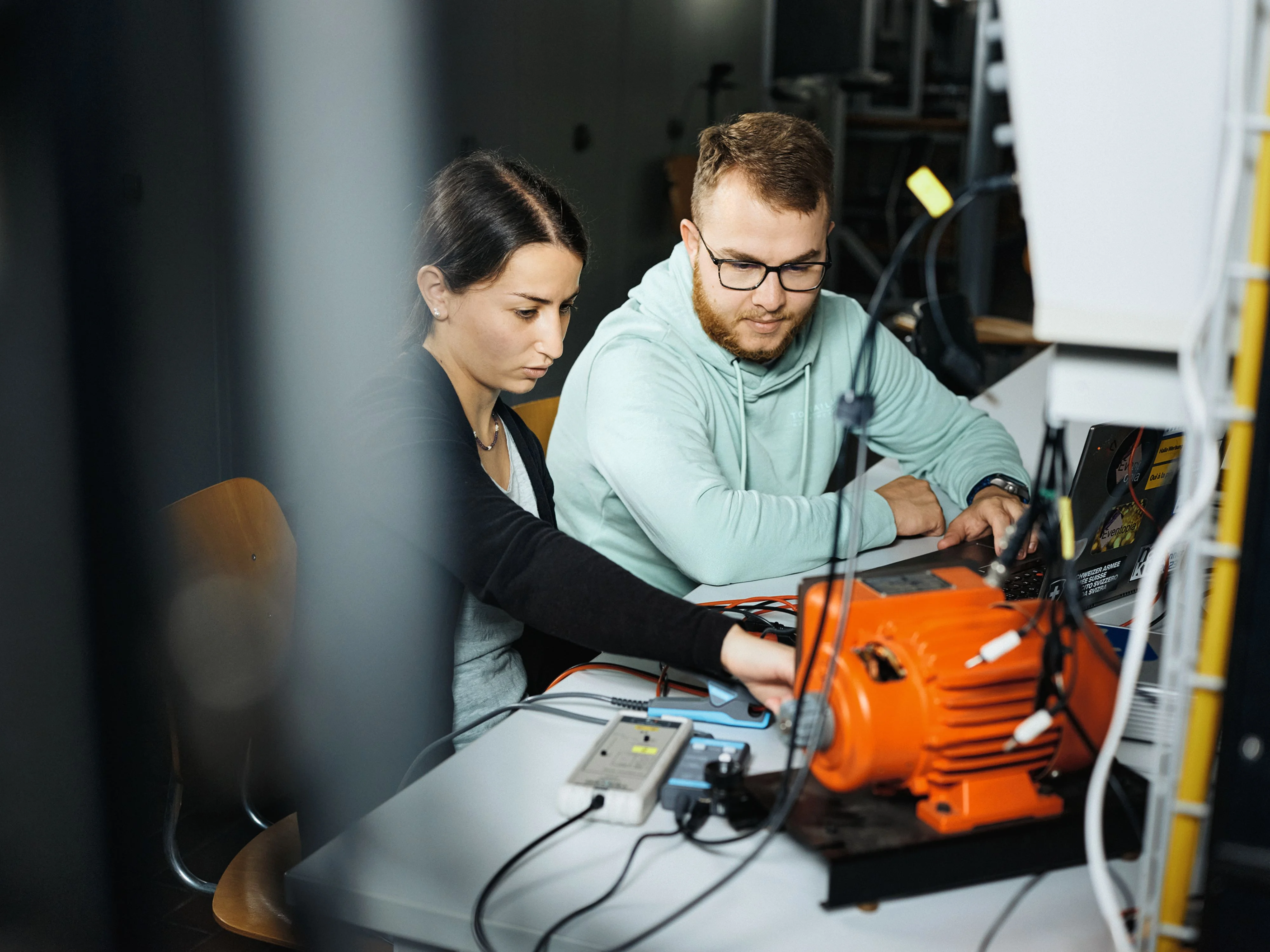
This specialisation focuses on the generation, transmission, conversion and efficient use of electrical energy. You combine fundamental physical principles with modern engineering technologies to design reliable and sustainable energy systems. A key focus is power electronics, where advanced semiconductors and intelligent circuit designs enable highly efficient energy conversion. Using inverters, you control electric motors that convert electrical energy into motion — from small drives to megawatt-scale systems. You learn how to dimension power stages, manage thermal behaviour and design systems for reliable operation in real-world environments.
Applications range from electric mobility to large-scale energy infrastructure, helping to integrate renewable energy and enable smarter energy systems.
Computer Engineering

Computer engineering combines hardware design with system-level software development and forms the technological foundation of many digital innovations. In this specialisation, you learn how embedded systems capture information, process data and respond in real time. At the same time, you design systems that operate reliably, energy-efficiently and within connected environments. You study modern processor architectures and understand how computing units, memory hierarchies and peripheral components interact. By combining hardware development, communication technologies and software engineering, you design systems optimised for specific applications.
Typical applications include robotics, autonomous systems, mobile devices and intelligent sensing technologies.
Embedded AI
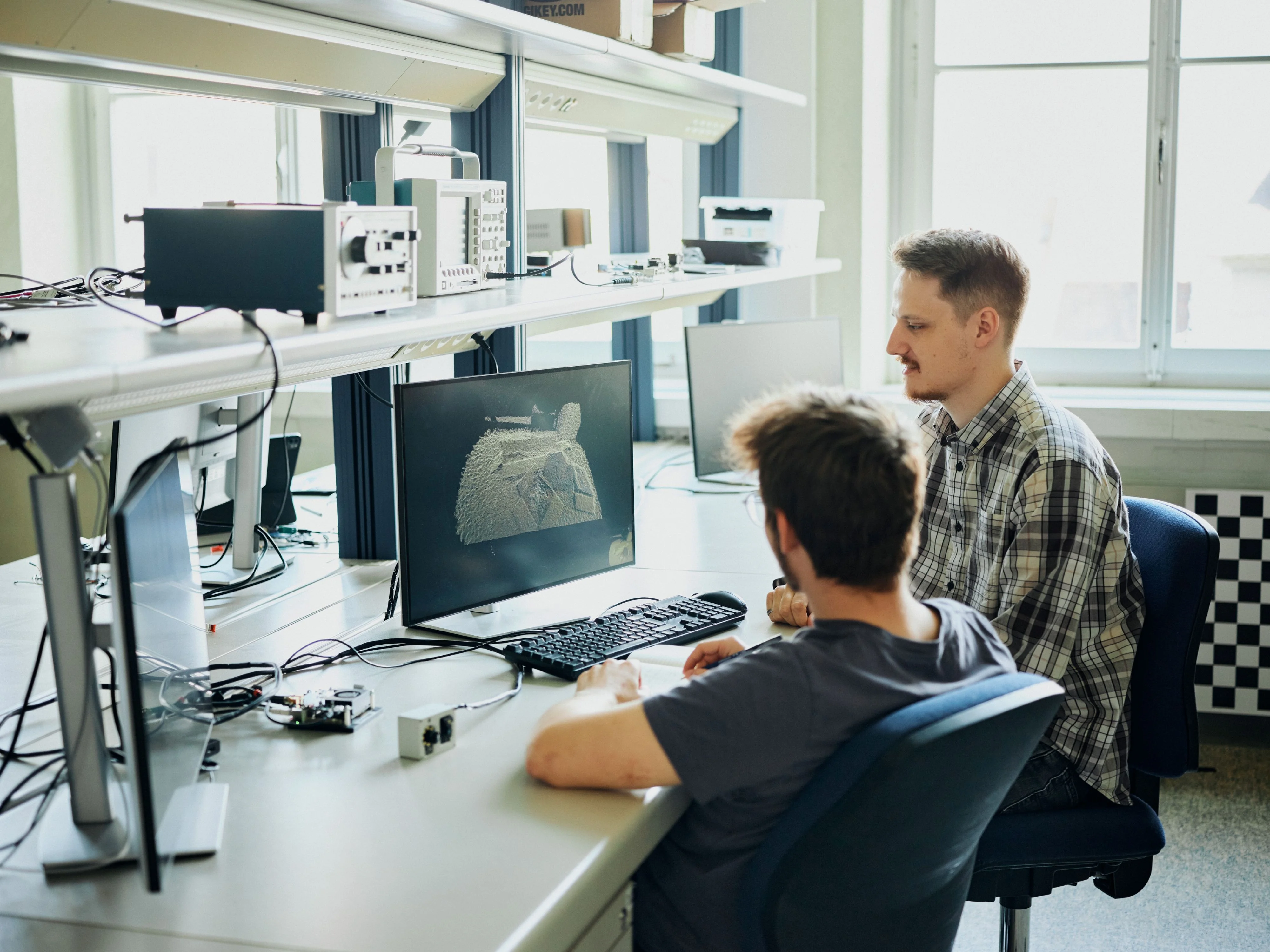
Embedded AI brings artificial intelligence to compact and energy-efficient hardware, enabling devices to perceive their environment, make decisions and act autonomously. In this specialisation, you learn how to develop and optimise AI models so they can run efficiently on resource-constrained embedded systems. You work with AI-supported sensing, computer vision and real-time data analysis. You select suitable hardware platforms, optimise algorithms for limited computing resources and integrate sensors, AI models and embedded Linux systems into complete applications. Energy efficiency, robustness and responsible technology design play a central role.
Applications include industrial monitoring, smart mobility, robotics, medical technology and autonomous systems.
Electronics, Signal Processing and Wireless

Electronic systems form the basis for precise sensing, reliable communication and intelligent data processing. In this specialisation, you follow the entire signal chain – from high‑performance, top‑quality electronics to wireless technologies and modern signal and image processing. You develop top-notch, energy‑efficient circuits and apply wireless transmission technologies such as Wi‑Fi, Bluetooth or LoRa. You also design and implement signal and image processing methods – for example filtering, classification or image analysis – on a variety of hardware platforms.
In doing so, you help shape technologies used in medical engineering, smart energy systems, robotics, industrial condition monitoring and autonomous systems.
Curriculum
You may also be interested in
Application for the Bachelor’s degree programme
Apply for the Bachelor’s degree programme today.
Admission requirements
The requirements for admission to the Bachelor’s degree programme at the ZHAW School of Engineering.
How to prepare yourself for the Bachelor’s degree programme
Learn how you can best prepare yourself for the Bachelor’s degree programme.
Application for the Bachelor’s degree programme
Admission requirements
How to prepare yourself for the Bachelor’s degree programme
Apply for the Bachelor’s degree programme today.
The requirements for admission to the Bachelor’s degree programme at the ZHAW School of Engineering.
Learn how you can best prepare yourself for the Bachelor’s degree programme.