Speaking a language correctly with Spelly
Two master's students at ZHAW School of Engineering developed Spelly, an application that specifically promotes pronunciation in language learning. Spelly also impressed in the Entrepreneurship Initiative and was accepted into the mentoring program.
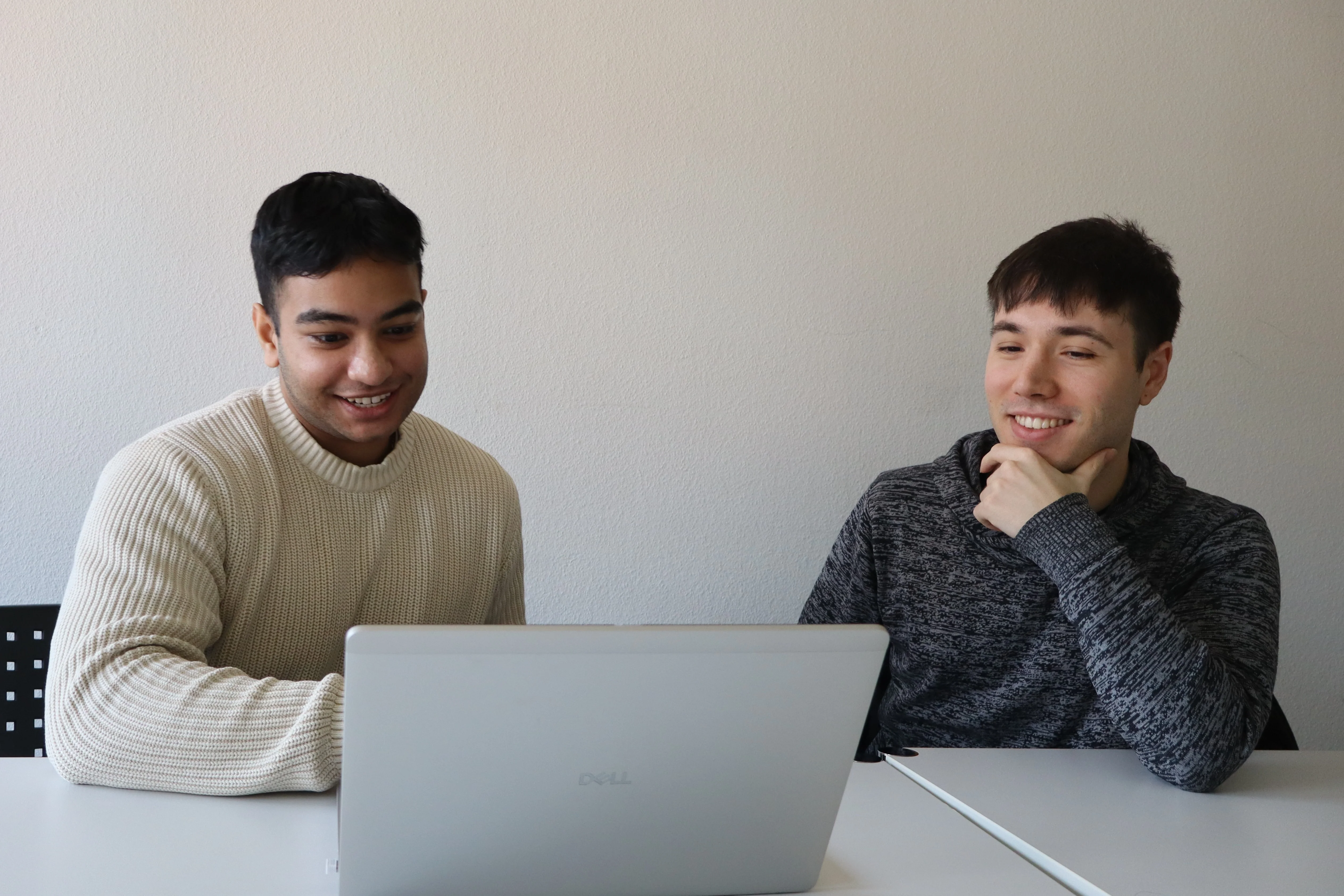
A year and a half ago, Zobaer Ahmed and Alex Fustagueras came to Winterthur from their university in Spain, where they were studying aerospace engineering, to complete their master's degrees in data science. In addition to studying at the ZHAW School of Engineering, both work as research assistants, Zobaer Ahmed at the Institute for Data Science (IDS) and Alex Fustagueras at the Center for Aviation (ZAV). After their arrival, they began learning German using familiar tools. They quickly felt comfortable with the basics of the language, but something was missing. “We tried to say ‘Grüezi’ like the people in Switzerland and failed,” they say, “we lacked the correct pronunciation when learning the language.”
Created their own solution
They started looking for tools that would help improve pronunciation in a specific way, but only found expensive options. So Zobaer Ahmed and Alex Fustagueras decided to create an application themselves. They created “Spelly” and programmed a tool that records audio, evaluates it using AI, and provides feedback. With Spelly, users can hear how a word or sentence sounds in the target language and how the mouth needs to be positioned for pronunciation. After recording, Spelly provides individual feedback on each phonetic part of the sentence, indicating whether it was pronounced correctly or not, and how pronunciation can be improved. Spelly is currently available in six languages.
Support from the Entrepreneurship Initiative
In December 2025, Spelly was accepted into the mentoring program of the Entrepreneurship Initiative at the ZHAW School of Engineering. “I found out about the Entrepreneurship Initiative from posters at the ZHAW, and Helmut Grabner is my supervisor at the IDS,” says Zobaer Ahmed. “I contacted him and pitched Spelly. He was interested, and we were allowed to start looking for mentors for the program.” In this role, too, they found what they were looking for in Helmut Grabner himself. “As a mentor, he brings valuable business expertise to the project, supporting us in areas beyond product development such as business ideas, soft skills, business planning, and preparing pitches. He also motivates us to keep going.”
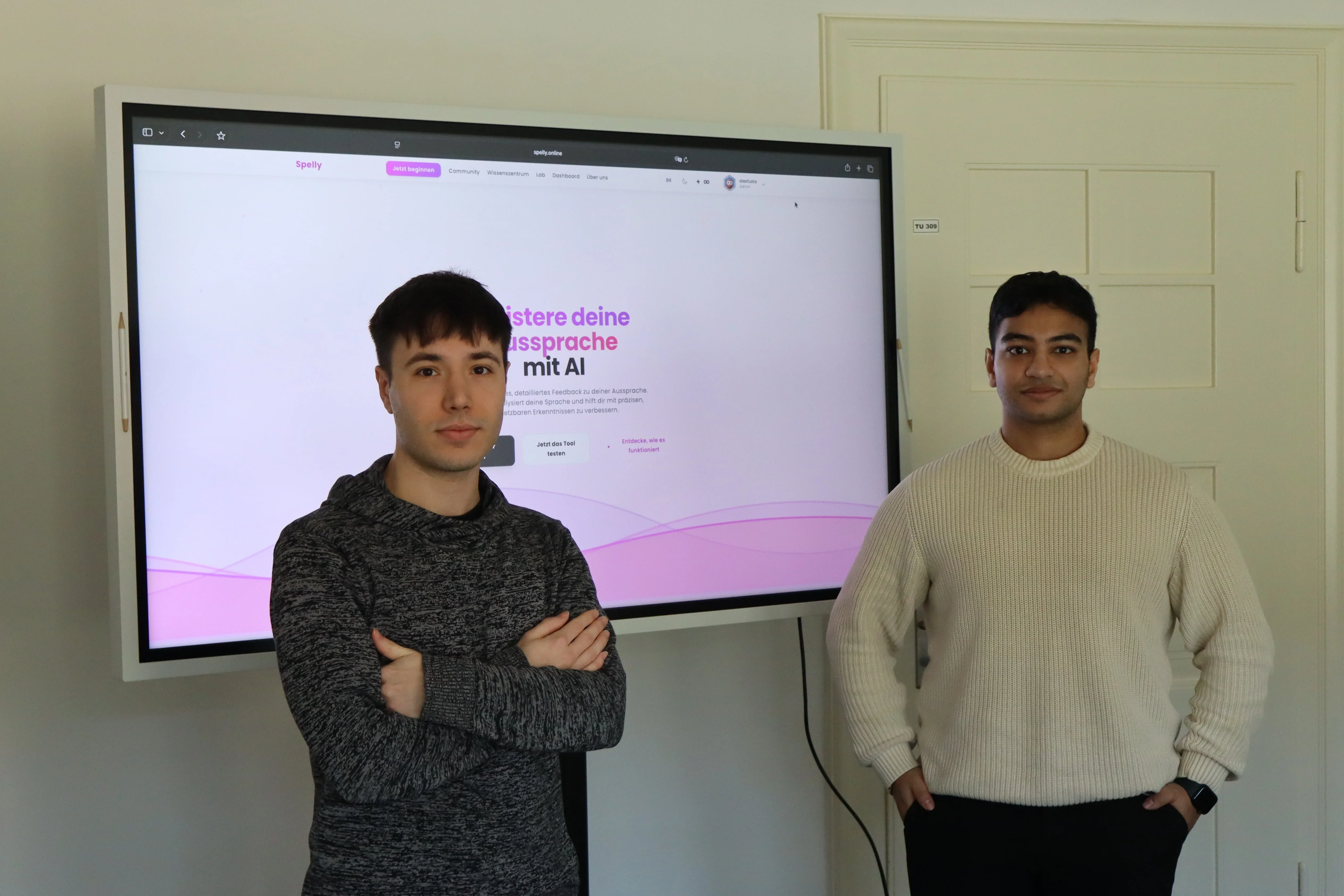
“We want to improve the experience”
Zobaer Ahmed and Alex Fustagueras now want to launch Spelly on the market: “We are contacting language schools to test Spelly. We are also talking to companies and looking for possible applications within the ZHAW.” The product itself is also to be further developed. “The basic architecture is in place, now we want to improve the learning experience. To do this, we are integrating gamification approaches and a role-playing option that reenacts real-world scenarios.”
The exact plan for the future of Zobaer Ahmed and Alex Fustagueras also depends on the success of Spelly. “We need to sort out the financing and be able to sell the product on the market.” They are applying to various start-up programs and venture organisations for funding, but in the long term they want to generate income through sales of the product. “Our goal is to eventually be able to work full-time for Spelly, have established partnerships, and earn money in the process. We want to be top of mind when it comes to improving pronunciation.”