ZHAW Center for Geopolitics presents study on the US-China decoupling
The ZHAW officially launched its new Center for Geopolitics and Competitiveness (CGC) on April 30, just in time for the International Trade Forum 2025.
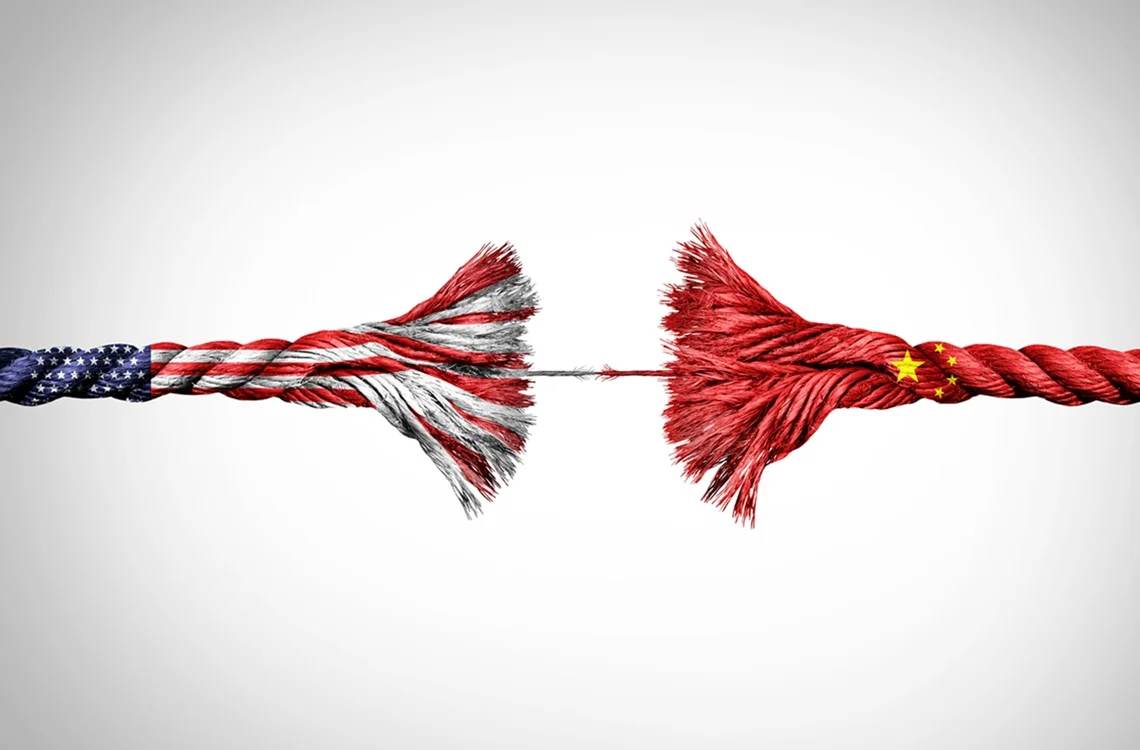
A recent Innosuisse research project was presented at the annual S-GE International Trade Forum at the Basel Congress Center, outlining six scenarios for possible future developments in relations between the USA and China. These range from a cautious easing of tensions with renewed cooperation between the two countries to a sustained phase of economic tensions and an escalation with potential military conflict (war).
Based on these scenarios, the geopolitical resilience of the business models of the participating partner companies was examined, which ultimately led to a (free) stress test that allows companies to assess the risk they are exposed to in the shortest possible time: US-China Economic Fragmentation Stress Test (via S-GE). Further details on the project were published in “Die Volkswirtschaft” (in German and French).
Newly created Center for Geopolitics and Competitiveness (CGC)
This project was also the kickoff for the new Center for Geopolitics and Competitiveness, which bundles continuing education, strategy development and research at the interface of geopolitics and competitiveness. The CGC is also responsible for the continuing education portfolio with the DAS Applied Diplomacy, the CAS Foreign Affairs & Applied Diplomacy, as well as the WBK on Digital Diplomacy and Information Security. Further courses with a focus on geopolitics and business strategy are currently in preparation.