Sponsoring Defies the Pandemic
The sponsoring budgets of Swiss companies have remained relatively unchanged during the pandemic. While sports continue to be the most prevalent target, cultural engagement has increased, as a recent ZHAW study shows.

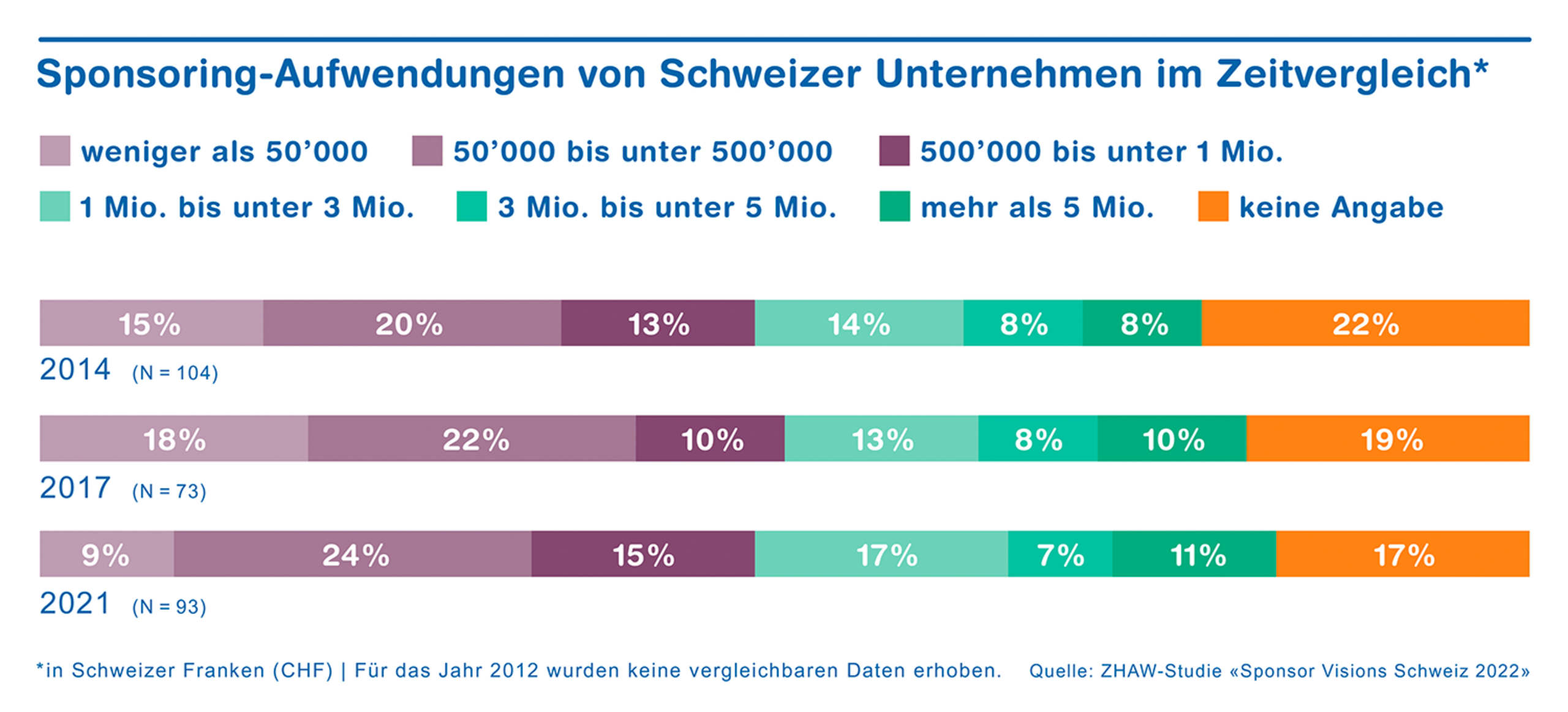
Despite the pandemic, companies in Switzerland have not reduced sponsorship commitments: On average, they allocated a quarter of their marketing communications expenditure to sponsorship in 2021. This figure is slightly more than in previous years (2017: 23 percent; 2014: 22 percent). Around a quarter of companies invested between CHF 50,000 and CHF 500,000. These are the results of the latest “Sponsor Visions Switzerland” study by the Center for Arts Management at the ZHAW School of Management and Law (SML). It was compiled in collaboration with the Professional Association for Sponsorship and Special Forms of Advertising (FASPO) and is based on a survey of more than 90 companies.
Satisfied with their level of engagement
“Overall, the results show a Swiss sponsorship market that has remained stable even during the pandemic,” says Jean-Baptiste Felten, Vice President of the sponsorship trade association FASPO. In about three-quarters of the companies surveyed, sponsorship is firmly established as a communication tool and is not re-evaluated even in times of crisis. The majority of companies are satisfied with their sponsorship activities and plan to continue them in the coming year.
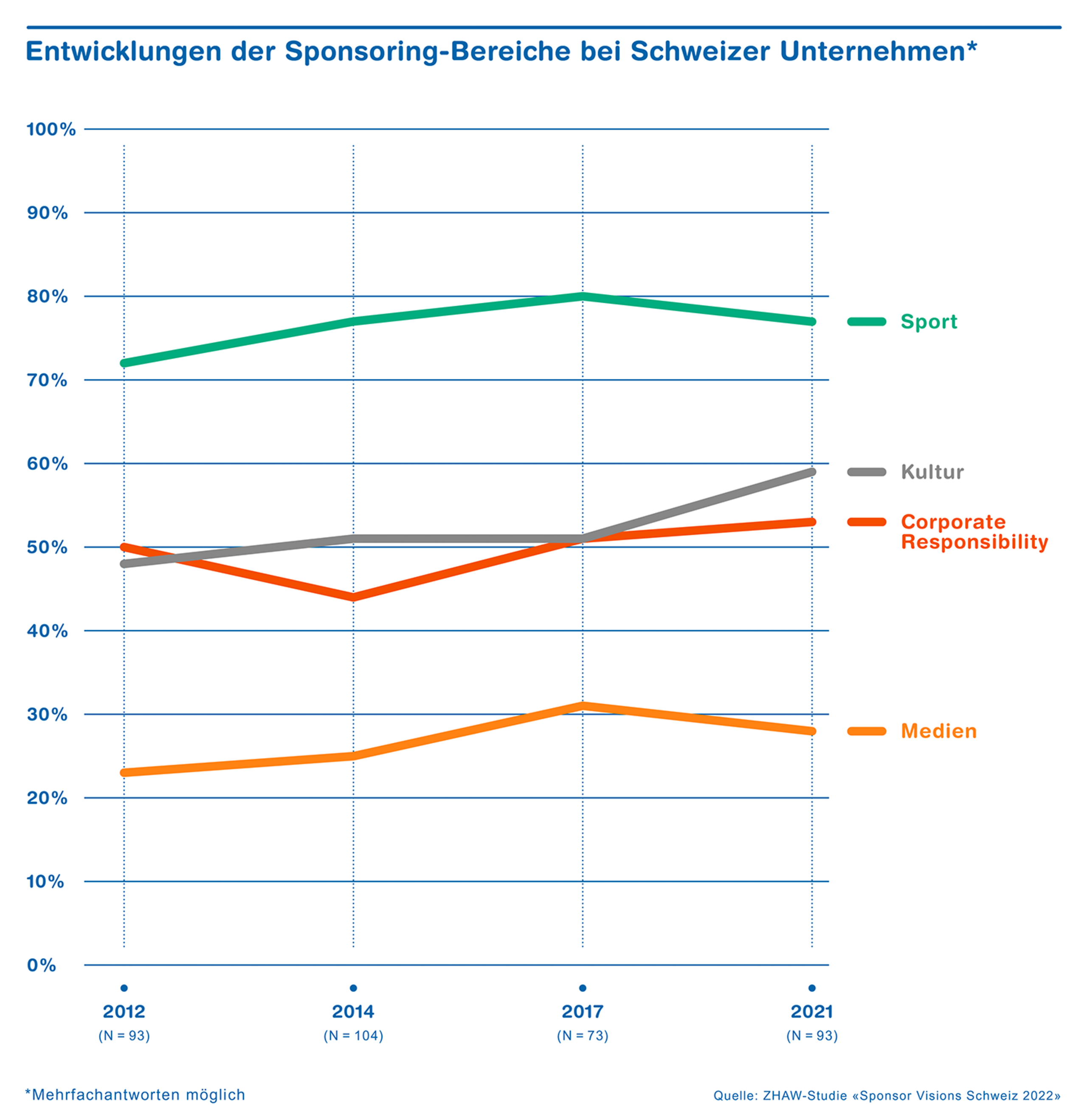
As in previous studies, sports sponsorship is the most widespread form of social engagement, which involves 77 percent of the companies surveyed, mostly football and ice hockey. In addition, 59 percent of respondents sponsor the arts, 53 percent corporate responsibility, and 28 percent the media. Cultural sponsorship has experienced the greatest growth over the last 10 years: In 2012, 48 percent of companies were active in this area. According to Leticia Labaronne, Head of the Center for Arts Management at ZHAW, this growth is related in part to a shift from sponsorship of high culture to more popular formats such as cultural festivals, concerts, and outdoor music festivals. “Broader segments of the population can be reached via such events. In general, however, cultural sponsorships provide an excellent platform for cultivating relationships locally.” Rock and pop music events receive the most support.
Increased professionalization
Swiss companies increasingly use planning and control tools when choosing and analyzing sponsorship activities. “This speaks for a more professionalized approach, which we also see in the demand for suitable continuing education programs,” says Fabienne Schmidli, Continuing Education Coordinator at the ZHAW Center for Arts Management. For example, around two-thirds of companies base their sponsorship planning on target group analysis, and 70 percent use social media monitoring to review the success of their activities. The latter, in particular, has been used more frequently in recent years.
Social media play a crucial role in communicating about sponsorship activities: All the companies surveyed use at least one social media platform, most frequently LinkedIn. More than two-thirds of the companies engaged in sponsorship consider the benchmark to be the achievement of their awareness and image goals.
An overview of the last 10 years
With its study “Sponsor Visions Switzerland,” the ZHAW Center for Arts Management has surveyed developments and trends in the Swiss sponsorship market since 2012. Its fourth edition contains findings on the development over the last ten years as well as the latest results. For their study, the researchers conducted an online survey of 93 companies that are active in sponsorship. In addition, they interviewed selected company representatives and experts. The survey was conducted in September 2021.
Contacts
Damaris Fischer, Center for Arts Management, ZHAW School of Management and Law, Phone +41 (0)58 934 78 23, email: damaris.fischer@zhaw.ch
Fabienne Schmidli, Center for Arts Management, ZHAW School of Management and Law, Phone +41 (0)58 934 41 85, email: fabienne.schmidli@zhaw.ch
Frederic Härvelid, Communications, ZHAW School of Management and Law, Phone +41 (0)58 934 51 21, email: frederic.haervelid@zhaw.ch