ICT-Accessibility
Forschung
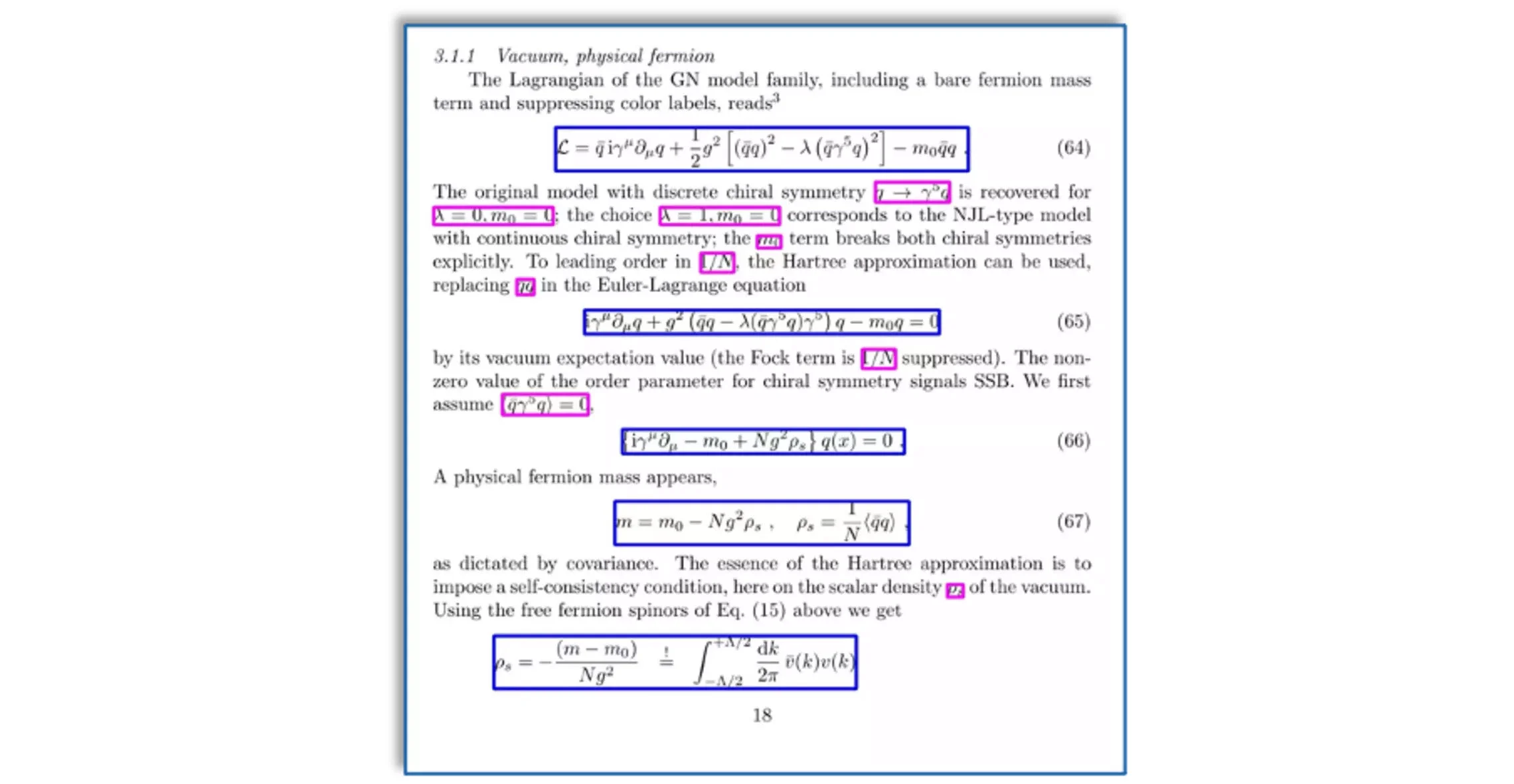
Im Projekt „Accessible Scientific PDFs for all“, das vom Schweizerischen Nationalfond und Innosuisse gemeinsam finanziert wird, erforschen wir, wie wissenschaftliche PDF-Dokumente barrierefrei gemacht werden können, damit die wissenschaftliche Forschungsliteratur auch für Menschen mit Seheinschränkung zugänglich gemacht werden kann. Dabei werden innovative Deep-Learning-basierte Ansätze erforscht, um Formeln in PDFs zu erkennen und in eine lesbare und navigierbare Form umzuwandeln.
Im jüngsten Projekt "Accessible Graphics" befassen wir uns mit der automatischen Generierung von Beschreibungen für wissenschaftliche Grafiken in PDF-Dokumenten mit Hilfe Deep-Learning-basierter Ansätze.
Wir erforschen in verschiedenen Projekten im Bereich „Accessible Mobility“, wie Menschen mit Mobilitätseinschränkungen einfach barrierefreie Wege von einem Ausgangspunkt zu einem Zielort finden und unterwegs sicher auf diesem Weg geleitet werden.
Im Rahmen zweier durch swissuniversities finanzierten Projekte befassen wir uns damit, wie das Studium für Menschen mit Beeinträchtigungen durch den Einsatz digitaler Technologien barrierefrei gemacht werden kann. In Zusammenarbeit mit Universitäten führen wir gemeinsame PhDs im Bereich Accessibility durch.
Wir evaluierten Websites und mobile Applikationen bezüglich Barrierefreiheit und entwickelten Tools und Plugins, um digitale Dokumente barrierefrei zu machen.
Projekte
- KI für Hindernisfreiheit von Lehrmitteln (04/2025 - 01/2026)
- Barrierefreie Grafiken: Semantische Grafikbeschreibung in PDFs für sehbehinderte Menschen (01/2024 - 09/2025)
- Cybathlon 2024 (01/2023 - 12/2024)
- ETH Accessible Video Player (10/2021 - 12/2022)
- Lehrveranstaltungen für Alle – Barrierefreier Unterricht an Hochschulen (09/2021 - 04/2025)
- Accessible digital map and navigation for pedestrians with disabilities (09/2021 - 09/2023)
- Accessible Scientific PDFs for All (04/2021 - 05/2025)
- Mastering Accessibility of Open Educational Resources (01/2021 - 06/2025)
- Barrierefreie Fussgängerwege (08/2020 - 02/2023)
- Barrierefreiheit Videoportal ETH (01/2020 - 06/2021)
- ZKB: Barrierefreie digitale Kanäle (11/2019 - 12/2020)
- Barrierefreier Tourismusraum Bodensee (03/2018 - 12/2022)
- Lehren und Forschen an der Hochschule – barrierefrei! (01/2018 - 12/2020)
- Multimodales Interaktionskonzept für Swisscom TV Box 3.0 (BATS) (11/2017 - 02/2018)
- Living Lab AAL Internationale Bodenseehochschule (11/2016 - 11/2020)
- MOSSEW – Von der Notruf-Uhr zum Personensicherheits-System (03/2016 - 02/2017)
- Altersgerechte Gestaltung von mobilen Applikationen (05/201 - 05/2016)
- Screenvideo-Tutorial für den PDF-Checker PAVE (12/2014 - 01/2015)
- AgeWeb – Altersgerechte Webseitengestaltung (02/2012 - 12/2014)
- MS Powerpoint Accessibility AddIn (03/2011 - 03/2012)
- Hindernisfreie Hochschule (03/2010 - 11/2012)
- MS Word Accessibility AddIn (03/2010 - 03/2011)
Publikationen
- Sight Guide demonstrates robotics-inspired vision assistance at the Cybathlon (2025)
- Perceived risks and benefits of disclosing ADHD to AI-based educational technologies : semi-structured interviews (2025)
- Accessibility barriers in teaching and research : a survey in Switzerland (2025)
- Chart accessibility : a review of current alt text generation (2025)
- Towards more accessible scientific PDFs for people with visual impairments : step-by-step PDF remediation to improve tag accuracy (2025)
- Chart question answering with multimodal graph representation learning and zero-shot classification (2025)
- Deep learning-powered visual SLAM aimed at assisting visually impaired navigation (2025)
- InCrowd-VI : a realistic visual–inertial dataset for evaluating simultaneous localization and mapping in indoor pedestrian-rich spaces for human navigation (2024)
- Exploring the role of generative AI in higher education : semi-structured interviews with students with disabilities (2024)
- Barriers and facilitators for students with disabilities : results of semi-structured interviews in Swiss universities (2024)
- SLAM for visually impaired people : a survey (2024)
- Accessible mobility for persons with disabilities (2024)
- PDF accessibility in international academic publishers (2024)
- MathNet : a data-centric approach for printed mathematical expression recognition (2024)
- Accessible research and teaching at universities / Barrierefreies Forschen und Lehren an Hochschulen (2024)
- Could the use of AI in higher education hinder students with disabilities? : a scoping review (2024)
- User study : generative AI-based scientific writing assistant for students with visual impairments (2024)
- The state of scientific PDF accessibility in repositories : a survey in Switzerland (2023)
- A new conversational interaction concept for document creation and editing on mobile devices for visually impaired users (2023)
- Automatic chart understanding : a review (2023)
- Mathematical expression recognition using a new deep neural model (2023)
- On-site and remote crowdsourcing of accessibility data for people with mobility impairments : a case study in Zurich’s District 1 (2023)
- Parallel encoder-decoder framework for image captioning (2023)
- Similarity and location-based real-time loop closure : SNAPS for SLAM in unexplored-environments (2023)
- Accessible PDFs : applying artificial intelligence for automated remediation of STEM PDFs (2022)
- Age-appropriate digital channels (2022)
- Are Open Education Resources (OER) accessible to everyone? (2022)
- Augmented reality for the visually impaired : navigation aid and scene semantics for indoor use cases (2022)
- FormulaNet : a benchmark dataset for mathematical formula detection (2022)
- Gauging awareness of accessibility in Open Educational Resources (2022)
- Guidelines for accessible teaching and research at universities (2022)
- Internet of Things : services and applications for people with disabilities and elderly persons (2022)
- Towards personalized accessible routing for people with mobility impairments (2022)
- Verifying screen reader accessibility of apps developed using Google Flutter (2022)
- Altersgerechte digitale Kanäle (2021)
- Service für barrierefreie Ferien im Bodenseeraum (2021)
- Sprachassistent für Hotelinformationen (2021)
- Accessible digital documentary heritage : guidelines for the preparation of documentary heritage in accessible formats for persons with disabilities (2020)
- PDF accessibility of research papers : what tools are needed for assessment and remediation? (2020)
- Accessible tourism around Lake Constance (2019)
- Barrierefreier Tourismus im Bodenseeraum (2019)
- Making mobile map applications accessible for visually impaired people (2019)
- Travelers with disabilities : challenges and assistive technologies (2019)
- Assistive technologies : short overview and trends (2018)
- E-accessibility supports researchers with disabilities (2018)
- PDF accessibility : tools and challenges (2018)
- Recommendations for age-appropriate mobile application design (2018)
- Barrierefreier Tourismusraum Bodensee (2017)
- Recommendations for age-appropriate mobile application design (2017)
- Altersgerechtes Webdesign (2016)
- Automatic paragraph detection for accessible PDF documents (2016)
- Conception de sites web adaptée à l’âge (2016)
- Accessibility of mobile platforms (2015)
- PAVE : a web application to identify and correct accessibility problems in PDF documents (2014)
- Comparison of the effectiveness of different accessibility plugins based on important accessibility criteria (2013)
- Inclusive websites for the elderly : user friendly guidelines for designers and managers of websites and applications (2013)
- A flexible software architecture concept for the creation of accessible PDF documents (2010)
- Personal mobile assistant for air passengers with disabilities (PMA) (2008)
Ehemalige Teammitglieder
- Prof. Dr. Alireza Darvishy, Leitung
- Marziyeh Bamdad
- Felix Schmitt-Koopmann
- Theodora Nechita
- Oriane Pierrès
- Chuqiao Yan