WAALIS 2026
Workshop on Applied Artificial Life Switzerland
10 June 2026 · Aula, HSLU Rotkreuz
Co-Organised by HSLU and ZHAW
- Datum: Wed, 10 June 2026
- Venue: Aula, HSLU Rotkreuz
- Format: Workshop – Free admission
- RSVP by: 15 May 2026 (Reply by email to Carmen Frischknecht-Gruber)
AIM
Artificial Life (ALife) is an interdisciplinary research field that investigates the principles underlying living systems, not only as they exist in nature, but as they might emerge and function in technological and artificial contexts. Drawing on biology, computer science, physics, chemistry, robotics, and complex systems science, ALife asks what life fundamentally is, and what conditions give rise to adaptation, self-organisation, and intelligence.
What makes ALife distinctive is its generative approach: rather than observing life from the outside, it attempts to recreate, simulate, and extend life-like processes in order to understand them. This positions ALife at the intersection of many active research areas, including artificial intelligence, synthetic biology, robotics, and the study of complex adaptive systems.
Despite its breadth and scientific relevance, ALife remains underrepresented in applied research contexts. This workshop aims to change that. It brings together researchers from Swiss universities of applied sciences to explore where ALife methods can make a genuine contribution to real-world problems, and to build the collaborations and project ideas needed to take that forward.
WORKSHOP THEMES
01 – Foundations & Theory
02 – Validation & Methods
03 – Applications & Strategy
PROGRAMME
Wednesday, 10 June 2026 - Aula, HSLU Rotkreuz
08:45 - Arrival & Registration
09:15 - Welcome
09:30 - Invited Speaker I - Harold Fellermann, Newcastle University
10:15 - Coffee Break
10:40 - Invited Speaker II - Christoph Senn, Bandai Namco Studios
11:25 - Invited Speaker III - TBA
12:10 - Lunch
13:25 - Workshop I - Foundations & Theory
14:25 - Plenary Discussion I
14:45 - Workshop II - Validation & Methods
15:45 - Coffee Break
16:10 - Workshop III - Applications & Strategy
17:10 - Plenary Discussion III
17:30 - Wrap-up & Conclusion - Next Steps and Follow-up
17:50 - End of Programme
18:30 - Social Dinner
INVITED SPEAKERS
Dr. Harold Fellermann
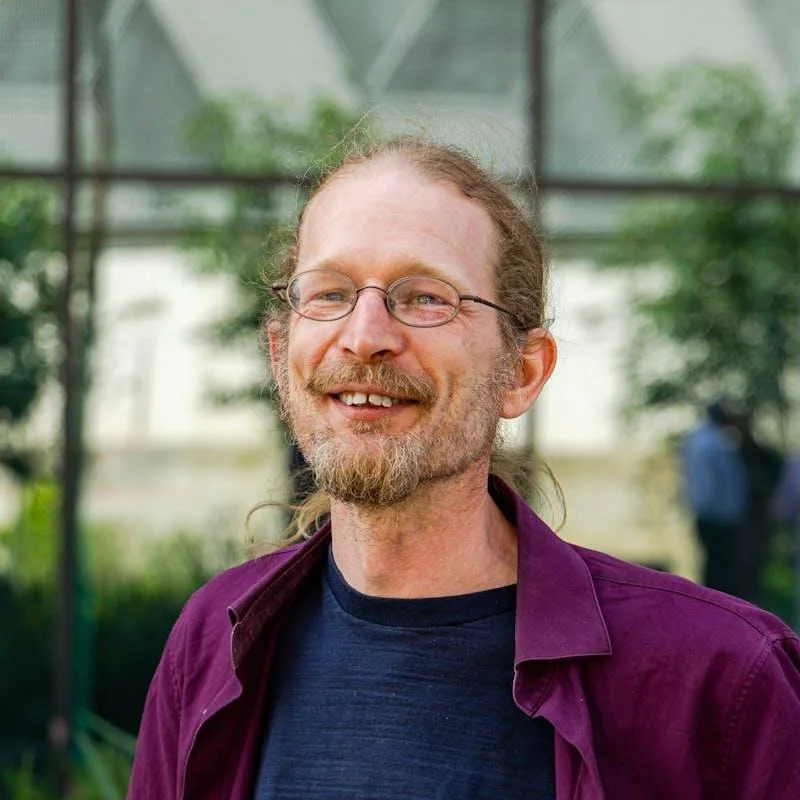
Lecturer and Senior Research Scientist - Newcastle University
Harold Fellermann is a committed and creative computational scientist working at the intersection of academia and industry. He is a Lecturer in Molecular Computing and Nanoscience in the Interdisciplinary Computing and Complex Biosystems Research Group at Newcastle University. He has more than ten years of experience in developing and applying computational design, modelling, and analysis techniques to problems in molecular biology, synthetic biology, and DNA nanotechnology. More broadly, he brings over 18 years of experience applying mathematics and computer science to chemistry and nanotechnology.
He received his PhD in Applied Systems Science in 2009 from the University of Osnabrück, Germany, and subsequently worked as a Postdoctoral Research Associate at Los Alamos National Laboratory (NM, USA) and the University of Southern Denmark (Odense), before joining Newcastle University in 2014. He is a Fellow of the European Center for Living Technology in Venice, Italy, and a member of the Board of Directors of the International Society of Artificial Life. His research focuses on molecular computing and the design and analysis of in vitro and in vivo DNA-based computing systems, including the modelling and evaluation of nanoscale information-processing systems.
Abstract: DNA Computing at the Interface to Biology and Medicine
Living systems utilize molecular interactions to sense, process, and integrate information, directing sparse resources toward life-sustaining actions. By leveraging this principle, we can engineer artificial chemical reaction networks that exhibit specific computational behaviors. These abstract networks can then be translated into synthetic DNA molecules, enabling the construction of algorithmic nanoscale circuits that directly interface with living systems. This capability opens the door to groundbreaking applications in biotechnology, medicine, agriculture, and environmental monitoring.
In this talk, I will present recent work from my group that investigates best design strategies of molecular and DNA computing systems for biological integration. I will discuss the biocompatibility of various models of computation and present new results on molecular neural networks. Additionally, I will demonstrate how DNA computing circuits can be expanded to detect a broader class of biologically relevant inputs, particularly metal ions. I will also showcase commercial applications of this technology, including the use of DNA nanodevices to detect and quantify oligonucleotide therapeutics for example in pharmacokinetic studies.
The talk will highlight how this research integrates computational design, modeling, statistical design of experiments, laboratory experimentation, data analysis, and machine learning to continuously enhance the engineerability of DNA computing circuits.
Dr. Christoph Senn
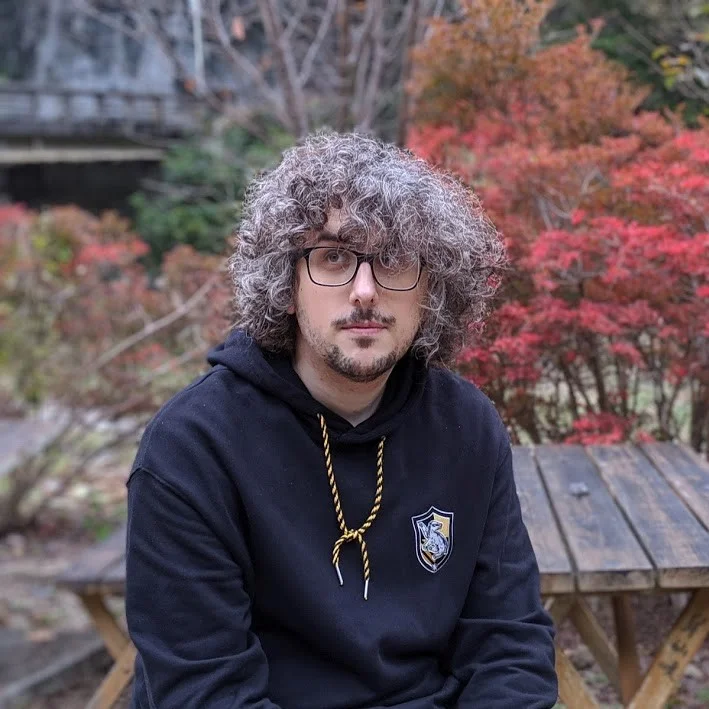
ML Research Engineer - Bandai Namco Studios Inc., Japan
Christoph Senn is a machine learning research engineer working at the intersection of applied machine learning and artificial life. He is currently based in Tokyo, where he develops neural simulation and rendering systems for game production at Bandai Namco Studios. He received his Doctor of Engineering from Tokyo Institute of Technology, where his research focused on nonlinear dynamical systems and reservoir computing. This background continues to shape how he approaches machine learning problems involving temporal structure, learned dynamics, and simulation.
His work combines applied machine learning with ideas from artificial life, including neural Lindenmayer systems, differentiable simulation, and learned world models. In this setting, models are treated as dynamical systems that evolve over time, enabling both prediction and interaction within simulated environments. He is particularly interested in how structured generative processes can be integrated with data-driven learning to produce coherent temporal behaviour. Across both academia and industry, he focuses on building practical systems that translate these ideas into usable tools. His current work includes neural rendering and simulation-driven models for interactive environments, with an emphasis on supporting creative workflows in game development.
Abstract: Games as Living Systems: Artificial Life in Commercial Game Development
Millions of players interact daily with virtual organisms, ecosystems, economies, and societies. While Artificial Life research has traditionally been conducted in laboratories, many of its ideas have found a home in commercial games. From evolving creatures and emergent simulations to player-driven economies and procedurally generated worlds, games have become one of the largest experimental platforms for synthetic life ever created.
This keynote examines the relationship between Artificial Life and game development, highlighting how player experience has shaped the design of life-like systems. Through a selection of historical and contemporary examples, including several lesser-known but influential games, we will explore how developers have used emergence, adaptation, and simulation to create engaging interactive experiences.
The talk will also consider recent developments in generative AI and machine learning, and discuss how ideas from the ALife community may help address some of the challenges facing modern AI systems, including efficiency and adaptability. Rather than viewing Artificial Life and games as separate domains, this keynote highlights the long history of exchange between them. By examining both past achievements and emerging technologies, we will consider how ALife-inspired approaches may contribute to the next generation of interactive experiences and intelligent virtual worlds.
Prof. Dr. Rudolf Marcel Füchslin
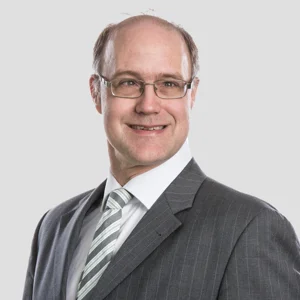
Prof. Rudolf M. Füchslin Zurich University of Applied Sciences – School of Engineering
Ruedi Füchslin studied theoretical physics at ETH in Zürich. He got his PhD from the University of Zurich, where he wrote his thesis in the newly established group for computer-assisted physics. By chance, he had the opportunity to act as a consultant for the Institute for Forensic Medicine. This experience fostered his interest in biological and medical problems. After various postdoc positions on the interface between theoretical biology and engineering, he got a position as professor of applied complex systems science at the Zurich University of Applied Sciences. In addition, he is co-director of the European Centre for Living Technology in Venice, Italy and president of the Naturama Foundation. Besides research, he is interested in questions relating to the interplay between natural sciences and the humanities.
Abstract – Exploring and Exploiting the Ways of Life – But not only with the Means of Life!
Fundamental science investigates systems under deliberately trivialised boundary conditions, that is, in laboratories. This reduction is sensible when the goal is to uncover internal mechanisms of objects and processes. Applied science, in contrast, asks what happens when such systems are embedded in complex, often unsupportive and only partially known environments.
Our work is driven by the idea that the organisational principles of living systems can help to bridge the gap between laboratory settings and the real world, without requiring us to copy the material substrates of life. We argue that this bridge rests on several key elements: evolution as a process of knowledge generation; modelling frameworks in which model variables map cleanly to experimental observables; a careful use of abstract models that nevertheless are capable of reflecting essential aspects of the dynamics of the systems under consideration, and, not least, careful communication of results within science and towards stakeholders outside academia.
We illustrate these elements with examples from our own work and seek to stimulate discussion on how artificial life can be harnessed in a principled way for a broad range of applications.
ORGANISING COMMITTEE
- Prof. Dr. Marcel Blattner - HSLU, Applied AI Research Lab
- Prof. Dr. Rudolf Füchslin - ZHAW, Applied Complex Systems Science
- Dr. Mathias Weyland - ZHAW, Applied Complex Systems Science
- Carmen Frischknecht-Gruber - ZHAW, Safety Critical Systems
- Dr. Nima Riahi - ZHAW, Institute for Data Science
INSTITUTIONS

HSLU - Hochschule Luzern
Applied AI Research Lab, Rotkreuz (host)

ZHAW - Zürcher Hochschule für Angewandte Wissenschaften
Institute of Applied Mathematics and Physics, Winterthur