The Global Pulse: Team MESH
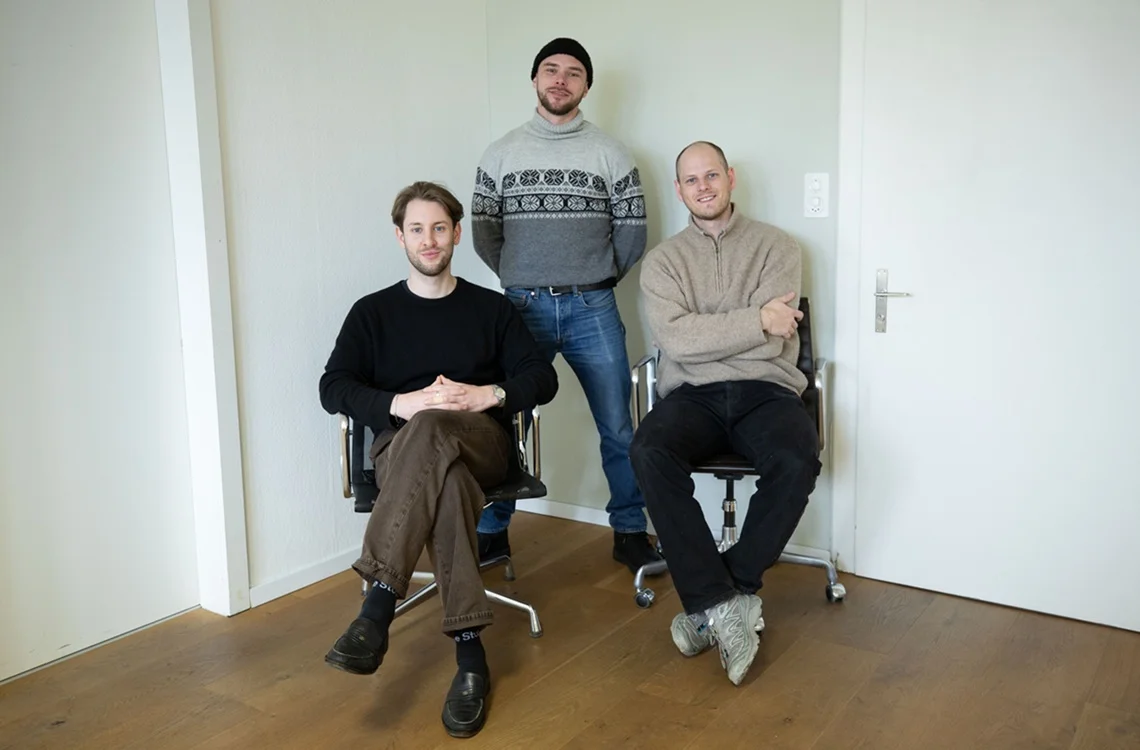
Three ZHAW alumni launch a start-up for circular supply chains: Right after completing their MSc in Circular Economy Management, Till Fülscher, Louis Ecker and Dominik Arpagaus took the leap into entrepreneurship. In this interview, they share how their idea emerged during their studies at ZHAW – and why now was exactly the right time to start a business.
What exactly does your company MESH offer?
Dominik: In short: We build digital twins of supply chains to help companies make their processes more circular and optimise them.
Till: The idea emerged during our master’s theses. I explored what complex systems theory can teach us about circular supply chains and realised that many companies struggle at the interface between qualitative and quantitative methods. Together with Dominik and Louis, we applied the System Dynamics Modeling methodology we had learned during the master’s program to these challenges. This enables companies to simulate scenarios, make data-based decisions and design more sustainable supply chains.
You already gained your first client while still studying. Can you tell us more about that?
Dominik: Yes, we actually found our first client during our time at ZHAW. As part of a case study in the third semester, we worked with Burri Public Elements, a Zurich-based metal construction company known for producing the iconic Landi benches. The original assignment was to calculate the CO₂ footprint of lighting structures. When data collection was delayed, we instead developed a tool that allowed the company to carry out calculations independently at a later stage. They appreciated it so much that we received a paid follow-up project shortly afterwards – even before MESH officially existed.
How has your idea evolved since founding the company?
Till: The biggest change concerns how we communicate what we do. At the beginning, we explained everything in too much technical detail. Companies mainly want to know the concrete value they gain. We had to learn to sharpen our message and focus on what truly matters.
Louis: We also realised that many companies don’t yet have the data they would actually need. Today, we therefore support them earlier in the process – starting with building a solid data foundation.
At the time, ZHAW was the only university that offered circular economy as a central subject. I wanted to do something meaningful – and the program gave me that perspective.
Louis Ecker, Team MESH
Where do you see MESH in the coming years?
Dominik: We are currently testing our service in several pilot projects. Once we have successfully completed five or six, we plan to translate our methodology into software. Our goal is to scale our knowledge: instead of offering only consulting services, other companies could use our software to advise their own clients. That increases our impact – and that is exactly what drives us.
How does collaboration work within your founding team?
Till: We have clear roles. I focus on the technical and strategic side, Dominik manages operations, and Louis contributes his supply chain perspective. Since we all completed the same master’s program, we align well both professionally and personally.
Louis: Trust is key. During project work in our studies, we realised that we collaborate effectively – without conflicts or free riders. That was the best possible foundation for starting a company together.
You founded your company immediately after graduation. Wasn’t that a big risk?
Till: On the contrary – it was and still is the perfect timing, because the risk will probably never be lower than it is now. We don’t have major obligations and can maintain the lifestyle we had as students. Of course, it takes courage – but the timing is ideal. And it’s incredibly fulfilling to see your own idea work and to collaborate with people you chose yourself.
Why did you choose the MSc in Circular Economy Management at ZHAW?
Dominik: Honestly, it was a coincidence. I had just completed my bachelor’s degree and came across an advertisement for the new program. Today, I’m glad I applied spontaneously.
Till: I wanted to shift from psychology towards a more technical direction – and ZHAW offered exactly that: sustainability combined with a practical, interdisciplinary approach.
Louis: At the time, ZHAW was the only university that offered circular economy as a central subject. I wanted to do something meaningful – and the program gave me that perspective.
What stands out most from your time as students?
Louis: The practical relevance. Through excursions and company projects, we were constantly connected to the real business world – that was extremely valuable. One particularly inspiring experience was a visit to FIFA in Zurich, where we discussed human rights and environmental responsibility with the organisation’s sustainability lead. She said that if she could reduce CO₂ emissions by just three percent at FIFA, it would have a greater impact than doing everything perfectly at a small NGO. That idea – focusing on where you can achieve the greatest measurable impact – still guides us today.
Dominik: The case studies were also crucial. Without them, we would never have gained our first client.
Louis: And something we will never forget is the time we spent together between lectures. On the Wädenswil campus, there were two table football tables that we claimed every Tuesday. Every spare fifteen minutes was spent playing – and anyone who didn’t show up received a small complaint message. It brought us closer together, and we still laugh about it today.
What advice would you give to current or future master’s students who want to start their own business?
Dominik: Just do it. Try things out, test, adjust – you quickly learn what works and what doesn’t.
Till: And speak with potential customers as early as possible. Don’t wait until the idea is perfect – the most important lessons come from engaging with practice.
Get more insights into ZHAW International Business:
Continuing Education International Management
BSc in International Management
MSc in International Business
Further The Global Pulse articles