ZHAW International Business Insight: "The Disposable Oligarchs"
In an article for "Foreign Affairs," Christopher A. Hartwell, Head of the ZHAW International Management Institute, and Tricia D. Olsen of the University of Minnesota analyze a central tension in modern political economy: The relationship between economic elites and authoritarian political systems.
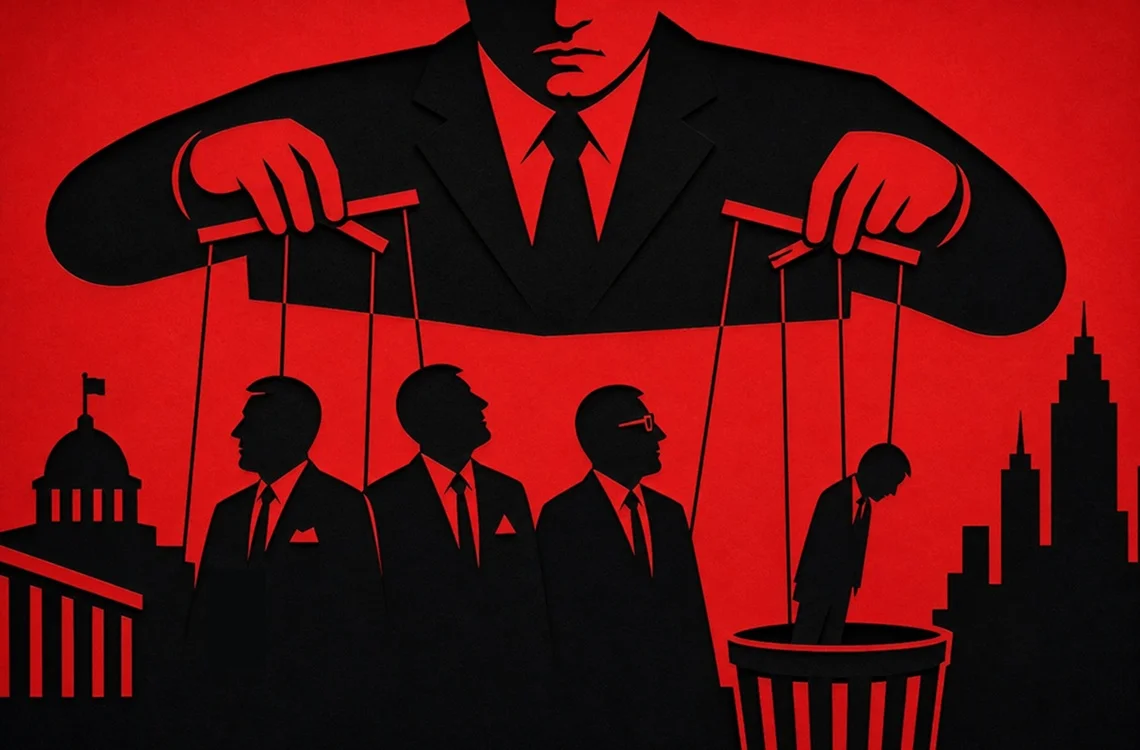
In their article, “The Disposable Oligarchs: Why Wealthy Elites Come to Regret Their Bargains With Authoritarians,” Hartwell and Olsen argue that the visible alignment of leading U.S. technology executives with Donald Trump during his second inauguration is far more than a fleeting moment of political symbolism. Rather, they see it as a potential sign of a broader development already familiar from other parts of the world: the emergence of a system in which economic and political power become increasingly intertwined—with potentially far-reaching consequences for democracy and markets.
A key reference point in their analysis is Russia after the collapse of the Soviet Union. In the 1990s, a class of oligarchs emerged, amassing vast economic power through privatization and close political ties. Figures such as Roman Abramovich and Mikhail Khodorkovsky shaped not only the country’s economy but also its political landscape.
Yet this influence proved fragile. Under Vladimir Putin, the state began to reassert control. Assets were expropriated, companies brought under state influence, and individual oligarchs prosecuted. The result, the authors argue, is a system of “authoritarian state capitalism,” characterized by strong state dominance and the deliberate disciplining of economic elites.
The core insight: those who support authoritarian systems ultimately strengthen structures that can later be turned against them.
This dynamic is by no means limited to Russia. Similar patterns can be observed in countries such as Saudi Arabia and Turkey, where economic elites initially benefit from political proximity but come under pressure once their independence is perceived as a threat. Examples range from multibillion-dollar fines and forced sales to detentions and asset seizures.
Hartwell and Olsen argue that these developments are structural: authoritarian systems tend, over time, to seek control over all sources of power—including economic ones. This creates inherent uncertainty for businesses, even when they benefit from political connections in the short term.
The article pays particular attention to the United States. Although its political system differs fundamentally from classic authoritarian regimes, the authors identify signs of “democratic backsliding,” including rising polarization, the expansion of executive power, and the strategic use of legal tools against political opponents.
Against this backdrop, the growing alignment of certain business leaders with political power takes on new significance. The authors caution against viewing such alliances as purely pragmatic adaptations to political realities. In the long run, they may undermine the very institutional foundations on which economic success depends: the rule of law, predictability, and well-functioning markets.
The Role of Business: Risk and Responsibility
A central argument of the article concerns the role of economic elites themselves. Companies and their leaders are not only potential victims of political power concentration but also key actors in limiting it.
Hartwell and Olsen identify two possible paths:
- the active reinforcement of democratic institutions by economic actors, or
- a societal backlash against excessive concentration of power, prompting businesses to reconsider their position.
In both cases, one point becomes clear: economic elites wield significant influence—and with it, responsibility for the stability of the institutional frameworks in which they operate.
Short-Term Gain, Long-Term Risk
With “The Disposable Oligarchs,” Hartwell and Olsen provide a rigorous and highly timely analysis of the interplay between political power and economic interests. The article compellingly demonstrates that seemingly advantageous alliances with authoritarian actors are rarely sustainable—and often carry substantial long-term economic and societal costs.
For scholars, policymakers, and the broader public alike, the piece offers not only a historical and comparative perspective but also a clear warning: the stability of democratic institutions cannot be taken for granted—and preserving it is in the interest of all, including—and especially—economic elites.