Digital Literacy Skills in University Contexts (DigLit)
Description
Writing in most contexts today is done with digital, computer-assisted support. Technologies based on artificial intelligence (AI) such as intelligent tutoring (IT), automated writing evaluation (AWE), automated text production (ATP) and machine translation (MT) present new opportunities, perspectives, and risks for tertiary education. The challenge in university contexts is to determine how the advantages of AI-related technology can be leveraged in language teaching and academic writing while minimizing potential issues such as ineffective communication, miscommunication, and misuse (e.g. plagiarism).
The main goal of the project is to show how they can be brought systematically into classrooms and coaching as surrogates for how to exploit AI in education, empowering lecturers and students by demonstrating how smart machines can help students to improve their literacy skills. In order to meet this goal, we will evaluate the applicability of various types of digital multilingual reading and writing support in Swiss universities and heighten current and potential users’ awareness of the opportunities and risks they entail.
Key data
Projectlead
Project team
Margo Ulasik, Dr. Maren Runte, Romina Schaub-Torsello, Prof. Dr. Joachim Hoefele, Dr. Christian Rapp, Elana Summers, Mattia Turra, Dr. Curtis Gautschi, Dr. Andrea Hunziker Heeb, Sooyeon Geckeler
Project partners
Pädagogische Hochschule Zürich PHZH; Berner Fachhochschule BFH; Université de Neuchâtel
Project status
completed, 01/2021 - 12/2024
Institute/Centre
Institute of Language Competence (ILC); Institute of Multilingual Communication (IMK); Center for Innovative Teaching and Learning (ZID)
Funding partner
Projektgebundene Beiträge swissuniversities / P-8 Digital Skills
Project budget
2'060'000 CHF
Further documents and links
Publications
-
Quelles émotions autour de l’IA ? Analyse discursive de témoignages d’apprenant-es
2025 Sara, Cotelli; Lehr, Caroline
-
Comment développer la littéracie digitale des enseignant-es et des apprenant-es? : conclusions du projet ‘Digital Literacy in University Contexts’
2025 Cotelli Kureth, Sara; Delorme Benites, Alice; Lehr, Caroline; Noghrechi, Hasti; Steele, Elizabeth; Summers, Elana
-
Using synthetic sentences for developing a corpus-based feedback service for student writing
2024 Runte, Maren; Mahlow, Cerstin; Ulasik, Malgorzata Anna; Cho, Sooyeon
-
Wie verändern Übersetzungstechnologien den Sprachunterricht? Wie gestalten wir als Sprachexpert:innen den technologischen Fortschritt durch künstliche Intelligenz mit? : Gastvortrag im Romanischen Seminar der Universität Hannover, 25. Mai 2024
2024 Lehr, Caroline
-
Content analysis of automated writing evaluation tools : feedback
2023 Gautschi, Curtis; Ulasik, Malgorzata Anna
-
Machine translation literacy for academic writing
2023 Delorme Benites, Alice; Cotelli Kureth, Sara
-
Wenn die Künstliche Intelligenz die Schulbank drückt : Einblicke in die Funktionsweise, Potenziale und Gefahren von KI im Fremdsprachenunterricht
2023 Delorme Benites, Alice
-
“I looked it up in DeepL” : machine translation and digital tools in the language classroom
2023 Cotelli Kureth, Sara; Delorme Benites, Alice; Haller, Mara; Noghrechi, Hasti; Steele, Elizabeth
-
Nutzung von INCEpTION zur Entwicklung und Verwendung von Auszeichnungsrichtlinien für Textprozeduren
2022 Runte, Maren; Mahlow, Cerstin; Ulasik, Malgorzata Anna; Hoefele, Joachim; Opacic, Aleksandra
-
Maschinelle Übersetzung und automatische Textgenerierung : was ist wichtig für den Einsatz von künstlicher Intelligenz in der Lehre?
2022 Lehr, Caroline; Delorme Benites, Alice; Cotelli, Sara; Steele, Elizabeth
-
Exploring the role of MT in science news flows
2022 Ehrensberger-Dow, Maureen; Lehr, Caroline; Delorme Benites, Alice
-
Neural machine translation and language teaching : possible implications for the CEFR
2022 Delorme Benites, Alice; Lehr, Caroline
-
Machine translation literacy für den DaF/DaZ-Unterricht : Chancen und Herausforderungen
2022 Delorme Benites, Alice; Lehr, Caroline
-
Let’s talk about MT : raising awareness in Swiss universities
2022 Delorme Benites, Alice; Ehrensberger-Dow, Maureen; Steele, Elizabeth; Cotelli, Sara; Lehr, Caroline
-
I looked it up in DeepL : online dictionaries and online machine translation
2022 Delorme Benites, Alice; Cotelli Kureth, Sara; Lehr, Caroline; Steele, Elizabeth; Franciello, Laura
-
Leveraging MT Literacy (panel)
2021 Ehrensberger-Dow, Maureen; O'Brien, Sharon
-
NMT Literacy for future language professionals : changing perceptions
2021 Delorme Benites, Alice; Lehr, Caroline
-
Machine translation literacy and language teaching
2021 Delorme Benites, Alice; Cotelli Kureth, Sara; Lehr, Caroline; Steele, Elizabeth
-
Machine translation literacy : a panorama of practices at Swiss universities and implications for language teaching
2021 Delorme Benites, Alice; Cotelli Kureth, Sara; Lehr, Caroline; Steele, Elizabeth
-
Machine translation in the language classroom : Swiss data
2021 Cotelli Kureth, Sara; Delorme Benites, Alice; Lehr, Caroline; Steele, Elizabeth
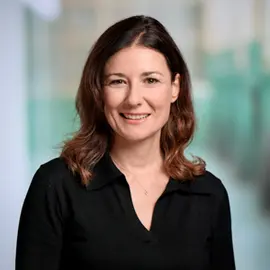
Prof. Dr. Triantafyllia Liana Konstantinidou
School of Applied Linguistics
Theaterstrasse 17
8400 Winterthur
+41 (0) 58 934 61 02
triantafyllialiana.konstantinidou@zhaw.ch