AI meets radioastronomy: The ZHAW SKACH team attends the MWA and Swiss SKA conferences
SKACH researchers from ZHAW CAI and IWI attended their first MWA project meeting and just afterwards presented their work on generative deep learning for the SKAO at the Swiss SKA Days 2024.
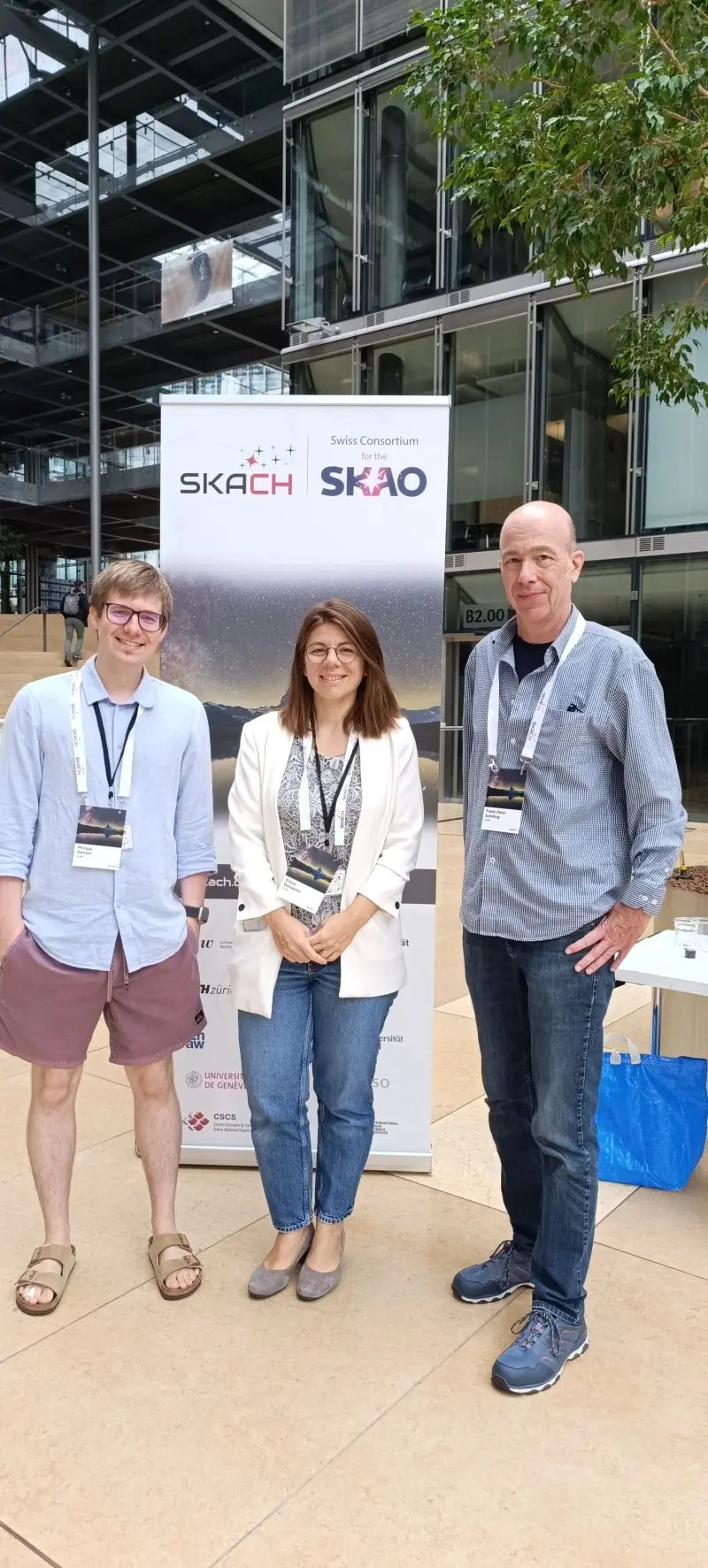
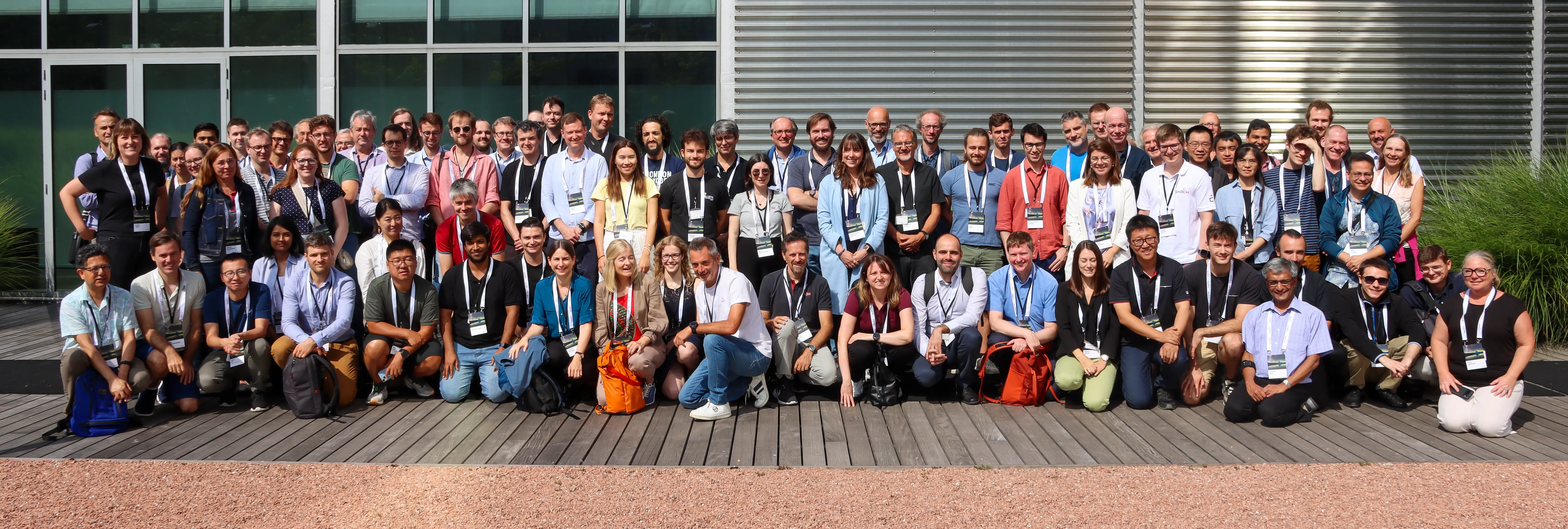
ZHAW's team of SKACH researchers Philipp Denzel, Frank-PeterSchilling, and Elena Gavagnin had two busy weeks: First, Philipp Denzel and Elena Gavagnin attended their first MWA project meeting in Lausanne on the EPFL campus. The MWA (Murchison Widefield Array) is an international collaboration, comprising 259 astronomers and 28 partner institutions from Australia, Japan, China, Canada, the United States, and, newly, Switzerland. It built and operates the longest-running precursor radio telescope to the SKA in the Shire of Murchison in the Western desert of Australia, collecting data since 2013 to uncover the mysteries of the Universe. During the meeting, our researchers were trained in how to access and process the complex raw data from the massive archive of nearly 50 PB size. Moreover, they met other MWA members from Australia and gathered ideas for new and exciting deep learning research collaborations.
Only 2 days later, the team attended the annual Swiss SKA Days 2024 conference in Geneva. There, SKACH researchers reported and discussed their findings on SKAO research in the fields of Astronomy, Astrophysics, Engineering, Data Science, and in particular Machine Learning. On the last day, Philipp Denzel presented the team's latest results from the Generative Learning for SKA project. At CAI, we are training state-of-the-art generative models such as GANs and diffusion models on galaxy maps projected from cosmological hydrodynamical simulations. Infused with the physics contained in the simulation data, these models will enable the inference of fundamental galactic components such as dark matter, stars, gas, black holes, and even magnetic fields from upcoming SKA observations.