Urban spaces as venues for environmental education
Environmental education is seen as a catalyst for environmentally responsible behavior. The goal is to foster environmentally responsible habits. It follows, then, that environmental education should be more fully integrated into the daily lives of the general public.
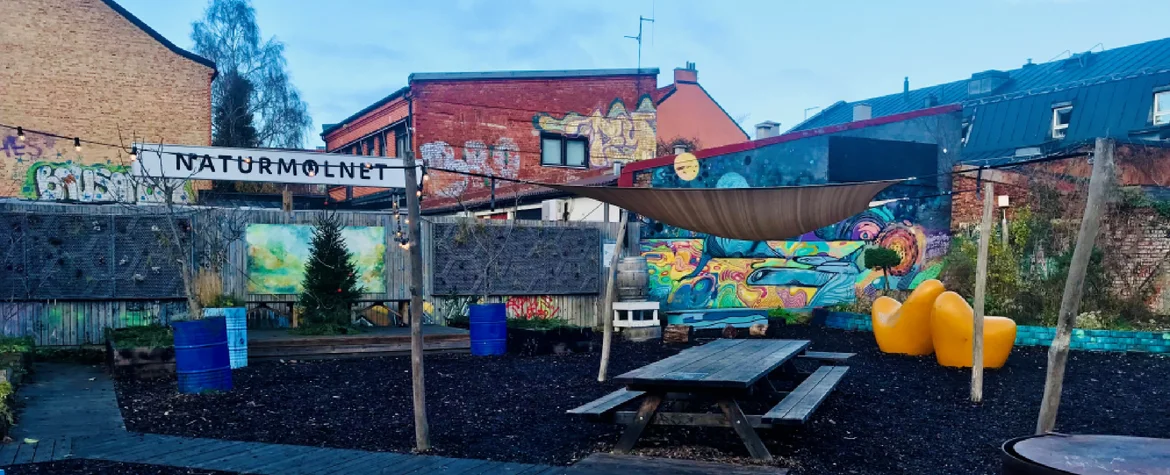
Description
Environmental education programs often take place far removed from the everyday lives of the general public—in forests, mountains, or by bodies of water. Does that make sense if our goal is actually to foster sustainable behaviors? The international Movetia exchange project between ZHAW and the Swedish organization Växtvärket aims to utilize urban spaces as learning environments for environmental education, addressing local and global environmental issues through behavioral changes directly within the participants’ everyday lives.
The two partner organizations are pooling their expertise to strengthen and conceptualize environmental education in cities. By focusing on urban environmental education, the project aims to expand target groups, design specific learning settings, and increase effectiveness.
In a first step, opportunities in urban spaces were identified. A workshop, mutual visits, and prototyping within a ZHAW course module deepened the collaboration. This led to the creation of a position paper to disseminate the approach and integrate it into teaching.
Key data
Projectlead
Deputy Projectlead
Project team
Project partners
Växtvärket
Project status
completed, 10/2024 - 06/2025
Institute/Centre
Institute of Natural Resource Sciences (IUNR)
Funding partner
Movetia
Publications

School of Life Sciences and Facility Management
Grüentalstrasse 14
8820 Wädenswil