Institute of Midwifery and Reproductive Health
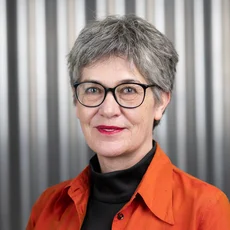
«We promote a healthy start to life with training and further education of midwifes as well as with research projects to promote the health of women, their newborns and families.»
Prof. Jessica Pehlke-Milde, Head of the Institute of Midwifery and Reproductive Health
To prepare competent midwives who develop the full potential of the profession and academic discipline.
Studying for a degree
The Institute of Midwifery and Reproductive Health offers an internationally recognised, scientifically sound and practice-oriented bachelor's degree programme in Midwifery as well as a postgraduate master's degree programme in Midwifery.
Bachelor of Science in Midwifery
Midwives offer a comprehensive array of healthcare services to women and their families during pregnancy, managing childbirth and providing care for the mother and the newborn during the postpartum period and breastfeeding. In doing so, they work in a spirit of partnership and empathy with the women and their families.
After successful completion of the three year and 10 months full-time study course in midwifery, students will graduate with a Bachelor of Science ZHAW in Midwifery (Zurich University of Applied Sciences) and the Higher Diploma in Midwifery. This study course is the best possible preparation for a career in the midwifery profession as you receive versatile and practice-oriented training in obstetrics, health promotion and prevention. The training is divided into teaching at ZHAW and clinical placements at institutions in the healthcare system and in private practices.
Master of Science in Midwifery
The part-time master's degree programme is designed to prepare midwives for new roles and competencies in specialised practice, research and teaching.
Midwives with a Master of Science (MSc) in Midwifery are in high demand as professional experts, researchers and lecturers to develop solutions to current and future challenges in interdisciplinary obstetrical healthcare with user involvement.
Continuing education
Our study programmes build on the existing knowledge of the participants and refer directly to everyday practice. Practical experiences as well as up-to-date, evidence-based knowledge are the focus of our training. The part-time modules allow for a direct and continuous practice transfer.
Modular design
The continuing education courses at the Institute of Midwifery and Reproductive Health are modular, enabling participants to plan their continuing education according to their personal interests, convenience and capacities.
- The teaching modules are designed in such a way that they can also be completed individually as a stand-alone continuing education course.
- The learning outcomes (ECTS credits) of individual modules can be credited towards a Certificate of Advanced Studies (CAS) or a Master of Advanced Studies (MAS) when enrolling for the programme.
- A Certificate of Advanced Studies consists of three modules.
- For a Master of Advanced Studies, students have to complete three CAS programmes and write a master thesis.
Research in Midwifery
The Midwifery Science Research Unit promotes quality in obstetrics and midwifery through applied research and development projects by focusing on the best possible care for women, children and families during pregnancy and childbirth, the postpartum period and breastfeeding. with a particular focus on evidence-based practice in obstetrics, the quality assurance and development of midwifery activities and healthcare research. The team includes experts in midwifery and nursing science, sociology, early childhood, statistics, ethnology and gender research with broad experience in practice and research.
Services
Midwives from various professional fields and specialties teach and research at ZHAW. This enables us to offer customized continuing education courses with the latest evidence and technologies.
Obstetric simulation training
Obstetric events require fast and competent actions based on proper decisions, clear communication and smooth interprofessional and professional collaboration. With our obstetric simulation training, we have developed a continuing education programme that enables obstetrics teams to practice and reflect events around the birth in a realistic setting. Intraprofessional and interdisciplinary teams are given the opportunity to practice their actions in exceptional situations using models, computer-animated simulation dolls and simulated patients. The aim of the obstetric simulation training is to recognise the potential need for action in routine procedures and to put ideas into practice.
Tailor-made trainings
The trainings are tailored to the needs and concerns of the practice and is put together individually. The case studies are determined in advance in collaboration with the participants and then developed by our lecturers and skills trainers.
eLearning courses
We develop tailor-made, interactive e-learning courses that are specifically tailored to the needs of an obstetrics team. From current topics in midwifery to individual, business-related content, the courses can be used flexibly online and accessed as often as necessary. We place great importance on well-designed, evidence-based content.
About us
Vision
As a leading center for maternal and reproductive health in Europe we promote the discipline of midwifery through education, research, and leadership to enhance the well-being of women, families, and society.
Mission
To prepare competent midwives who develop the full potential of the profession and academic discipline.
The institute at a glance
Number of employees: 46
Number of BSc students: 90 per year
Number of MSc students: various per year
Continuing education courses: 1 Master of Advanced Studies (MAS), 2 Certificates of Advanced Studies (CAS) and various continuing education courses
Ongoing research projects: 11
Clinical placement providers: 37 hospitals in Switzerland, 17 birthing centers in Switzerland, 11 facilities abroad
Leadership
| Person | Role |
|---|---|
| Prof. Jessica Pehlke-Milde | Head of the Institute of Midwifery and Reproductive Health |
| Dr. Karin Brendel | Co-Head of the Bachelor's degree programme in Midwifery |
| Gabriele Hasenberg | Co-Head of the Bachelor's degree programme in Midwifery |
| Dr. Astrid Krahl | Head of the Master's degree programme in Midwifery |
| Dr. Johanna Eichinger | Head of the Research Unit for Midwifery and Reproductive Health |
Staff
| Person | Role |
|---|---|
| Jenny Brunner | Assistant Institute of Midwifery and Reproductive Health |
| Katja Geiger | eLearning Specialist |
| Katrin Gille | Head of International Affairs Institute of Midwifery and Reproductive Health |
| Elena Pilla | Assistant Institute of Midwifery and Reproductive Health |
| Daniela Wittmeier | Coordinator Institute of Midwifery and Reproductive Health |
Bachelor's degree programme
| Person | Role |
|---|---|
| Dr. Karin Brendel | Co-Head of the Bachelor's degree programme in Midwifery |
| Gabriele Hasenberg | Co-Head of the Bachelor's degree programme in Midwifery |
| Anina Bundi | Assistant Bachelor's degree programme in Midwifery |
| Michèle Strässle | Assistant Bachelor's degree programme in Midwifery |
| Miriam Aydt | eLearning Specialist |
| Sabine Meier | Research Associate |
| Claudia Dörig | Lecturer |
| Ruth Eggenschwiler | Module Coordinator & Lecturer |
| Petra Graf | Lecturer |
| Sandra Grieder | Module Coordinator & Lecturer |
| Valentine Gschwend | Head of Fachbereich Betriebe/Praktika & Lecturer |
| Ramona Hächler | Research Associate |
| Kristin Hammer | Module Coordinator & Lecturer |
| Ilke Hasler | Head of Fachbereich Lehre & Lecturer |
| Lisa Hochstrasser | Lecturer |
| Katja Hoffmann-Gessner | Module Coordinator & Lecturer |
| Johanna Hünig | Research Associate |
| Shanti Lawrence | Module Coordinator & Lecturer |
| Katrin Oberndörfer | Module Coordinator & Lecturer |
| Anja Pfister-Stoppa | Module Coordinator & Lecturer |
| Christina Roth | Lecturer |
| Aline Seeger | Research Associate |
| Elisabeth Spiegel | Module Coordinator & Lecturer |
| Anita Micaela Thomas | Research Associate |
| Isabel Widmer | Lecturer & PhD-Student |
| Andrea Wirz | Module Coordinator & Lecturer |
| Larissa Zeller | Research Associate |
Master's degree programme
| Person | Role |
|---|---|
| Dr. Astrid Krahl | Head of the Master's degree programme in Midwifery |
| Jonathan Dominguez Hernandez | Lecturer & PhD-Student |
| Dr. sc. med. Vanessa Leutenegger | Lecturer |
Continuing education
| Person | Role |
|---|---|
| Katherina Albert | Head of MAS Hebammenkompetenzen plus |
Research and development
| Person | Role |
|---|---|
| Dr. Johanna Eichinger | Head of the Research Unit for Midwifery and Reproductive Health |
| Heike Edmaier | Research Associate |
| Dr. Michael Gemperle | Lecturer |
| Prof. Susanne Grylka | Senior Researcher |
| Antonia Müller | Research Associate |
| Irina Radu | Research Associate |
| Piroska Zsindely | Research Associate |