Care for patients with neuromuscular disorders in Switzerland (Care-NMD-CH)
A study of the care situation of people with neuromuscular disorders and their families in Switzerland
Background
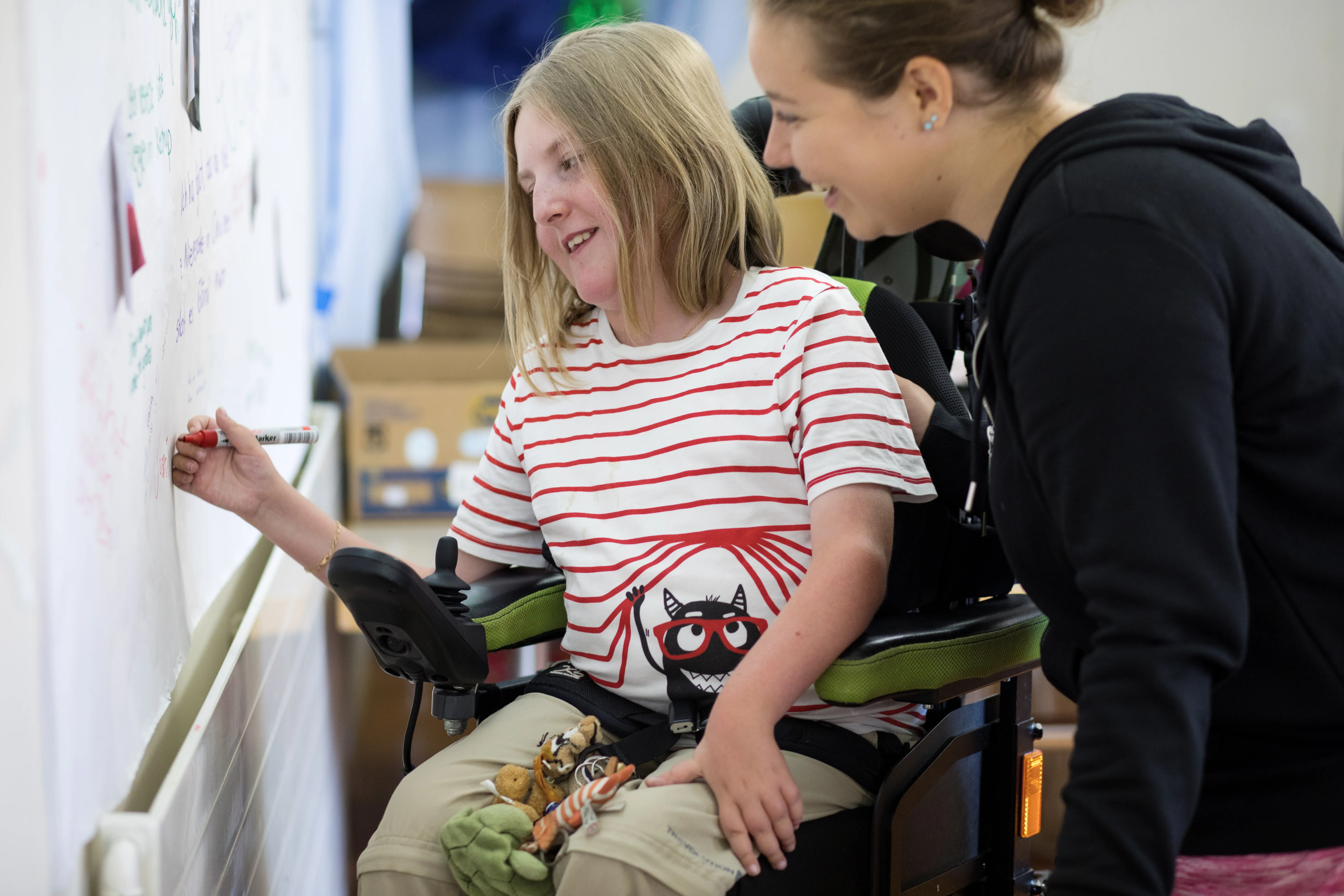
Neuromuscular disorders (NMDs) are mostly rare genetic conditions associated with progressive muscle weakness and a reduction in life expectancy. The most common NMDs are muscular dystrophy (MD), spinal muscular atrophy (SMA) and amyotrophic lateral sclerosis (ALS).
In 2021, a total of 332 MD and SMA patients and carriers were registered in the Swiss Registry for Neuromuscular Disorders (Swiss-Reg-NMD). It is estimated that around 600 people in Switzerland are living with ALS.
Major impact on affected individuals and their families
Neuromuscular disorders are rare and under-researched, but these diseases have a very serious impact on the affected individuals and their families. The majority of those affected live with progressive muscular atrophy, weakness, recurrent health crises, and limited life expectancy. Due to improvements in symptomatic treatment and new technologies, people suffering from neuromuscular diseases are now living longer than ever before.
Family caregivers face increasing caregiving demands, an enormous workload, and increased risk related to physical or psychosocial problems. The most difficult stages of the disease include major life transitions, such as the transition of an affected adolescent into adulthood and the late stages of the disorder.
High-level care
The treatment and care management of NMD is complex and requires a coordinated, interdisciplinary approach. In Switzerland, seven neuromuscular centres for NMD patients contribute to a high quality of care. However, due to the many health and psychological problems of these patients, adequate care, and the coordination of services in these centres is challenging and time-consuming. This is compounded by a lack of resources and cost pressures, all of which threatens the financial sustainability of coordinating the care of patients with NMD.
Objectives
This project investigates the current care situation of people with an NMD and their families in Switzerland. The aim is to describe the status quo and identify areas that work well and others that need to be improved.
Based on these findings, the study also aims to develop an evidence-based, family-centric concept for NMD care management. This concept will be implemented as part of a coordinating service by NMD care managers in neuromuscular centres, and its benefits for patients and their families, the interdisciplinary care team and the health care organization will be evaluated.
Methods and procedure
The project has a mixed methods study design. It uses a multicentric approach and consists of three study phases:
- Phase A: Analysis of current care situation;
- Phase B: NMD care management concept development;
- Phase C: Implementation and evaluation of coordinating service by NMD care managers.
The national project comprises several health care institutions in three language regions in Switzerland. Data will be collected at five time points through individual and group interviews (approximately 45 participants) and through an online questionnaire survey (approximately 500 participants) with patients, their families, health professionals/caregivers and stakeholder representatives.
Throughout this project, patients, their families, health professionals, caregivers and relevant stakeholder groups will be involved in research and development processes, which will have a positive impact on the sustainability of its evidence-based, family-centric concept of NMD care management.
Results
By improving care coordination, the project can contribute to a better quality of care for patients and their families. At the same time, the implementation of the new NMD care management will improve the work situation within care teams, for example by improving interprofessional cooperation.
Concept for NMD Care Management
Based on the findings of the current state analysis of the care situation (see Kurzbericht Phase A), we developed an evidence-based, family-centred concept for NMD care management. The concept is available for download to anyone interested.
Implementation
The Concept for NMD Care Management was implemented as part of a coordinated service provided by NMD care managers in neuromuscular centres. Its benefits for those affected and their family members, for the treatment team and for the healthcare organisation will subsequently be assessed.
Publications
Waldboth V, Schuler C, Willmann R, Petry H, Weber M, Grädel Messerli B, Hediger H, Kramer I, Stettler-Nemecek G, Knoblauch M, Stettner GM. Developing, Implementing, and Evaluating a Care Management Model for Patients With Neuromuscular Diseases: Protocol for a Participatory Mixed Methods Study. JMIR Research Protocols. 2026;15. https://doi.org/10.2196/82833
Waldboth, V. (2026). Care-NMD-CH Project: Developing, Implementing, and Evaluating a Care Management Model for Patients With Neuromuscular Diseases. Annual Meeting of the Swiss Society of Neuropediatrics, Basel. Oral presentation.
Veronika Waldboth; Christina Schuler; Georg Martin Stettner; Heidi Petry; Barbara Grädel Messerli; Raffaella Willmann; Martin Knoblauch; Markus Weber. (2025). Poster: Care Management for People With Neuromuscular Diseases: The Potential of a Counseling and Coordination Service. (PDF 504 kB) 27th Congress of the Medical and Scientific Advisory Board of the German Society for Muscular Diseases (DGM), 19–21 March 2025, Giessen.
Veronika Waldboth; Iris Kramer; Christina Schuler; Markus Weber; Gabriela Nemecek; Heidi Petry; Barbara Grädel Messerli; Raffaella Willmann; Martin Knoblauch; Georg Martin Stettner. (2025). Poster: Satisfaction of People With Neuromuscular Diseases and Their Relatives With a Counseling and Coordination Service (Care Management): A Cross-Sectional Study. (PDF 404 kB) 27th Congress of the Medical and Scientific Advisory Board of the German Society for Muscular Diseases (DGM), 19–21 March 2025, Giessen.
Christina Schuler; Gabriela Nemecek; Hannele Hediger; Markus Weber; Georg Stettner; Heidi Petry; Barbara Grädel; Raffaella Willmann; Martin Knoblauch; Veronika Waldboth. (2022). Challenging Phases of Illness and Life: Insights From an Analysis of Healthcare Provision for People With Neuromuscular Diseases and Their Relatives in Switzerland. (PDF 431 kB) Duchenne Conference, 2 September 2022, Nottwil.
Veronika Waldboth; Mirjam Mezger (2021). Une étude sur la situation actuelle des prestations offertes aux personnes atteintes de maladie neuromusculaires et leur famille en Suisse (PDF 502 kB). Journal de l’Association Suisse Romande Intervenant contre les Maladies neuroMusculaires. Retrieved from: https://www.asrimm.ch/
Veronika Waldboth; Christine Patch, Romy Mahrer‐Imhof, Alison Metcalfe (2021). The family transition experience when living with childhood neuromuscular disease: A grounded theory study. Journal of Advanced Nursing, 2021;00:1–13. DOI: 10.1111/jan.14754, https://orcid.org/0000-0003-2785-3241
Waldboth, Veronika; Patch, C.; Mahrer Imhof, Romy ; Metcalfe, A., 2016. Living a normal life in an extraordinary way : a systematic review investigating experiences of families of young people's transition into adulthood when affected by a genetic and chronic childhood condition. International Journal of Nursing Studies. 62(10), pp. 44-59. Available from : https://doi.org/10.1016/j.ijnurstu.2016.07.007
Project organisation
Project lead
- Prof. Veronika Waldboth, ZHAW School of Health Sciences, Institute of Nursing
Project co-lead
- Prof. Heidi Petry, MScN, RN, Zurich University Hospital
- Prof. Markus Weber, St. Gallen Cantonal Hospital
- Dr. Georg Martin Stettner, M.D, PD, Zurich Children’s Hospital – Eleonorenstiftung
Funding
- The project is funded by the Swiss Muscle Society and by Roche and Biogen.
Project partners

Association suisse des maladies neuromusculaires - ASRIMM 
Associazione Malattie Genetiche Rare Svizzera Italiana 
Inselspital Bern 
Kantonsspital St. Gallen 
Kinderspital Zürich – Eleonorenstiftung 
Mathilde Escher Stiftung 
Ostschweizer Kinderspital 
Schweizerische Muskelgesellschaft 
Schweizerische Stiftung für die Erforschung der Muskelkrankheiten ssem 
SMA Schweiz 
Universitätsspital Zürich 
Verein ALS