Sustained implementation of family systems care in the Swiss healthcare system (FSC Sustain)
The physical, mental, and social health of children, adolescents and adults is at risk when one of their family members is ill. This is why we investigate how healthcare institutions in German-speaking Switzerland have been able to sustainably implement family systems care. We also aim to determine the benefits of this approach for families and healthcare professionals. The project is a collaboration between ZHAW, the University of Zurich, and the University Hospital Zurich.
Background
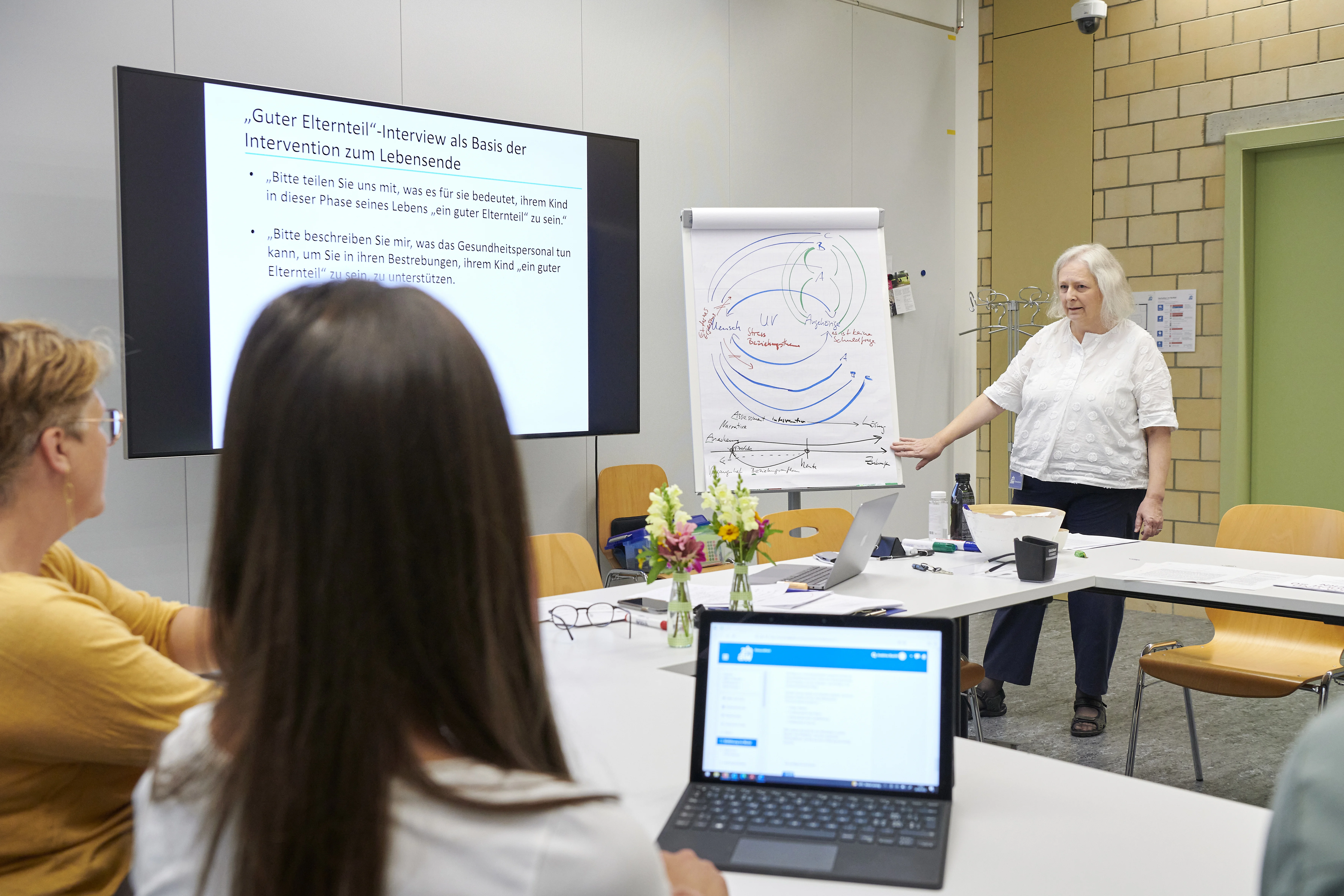
Family Systems Care is an approach to healthcare that supports families as a unit, recognising that families as entities are affected by the health issues of their members. It includes practices, such as relationship-building and supportive conversations with people with illnesses and their families and recognising and valuing family engagement.
Family Systems Care has been implemented and evaluated globally, also in Switzerland, across different settings and populations. Despite the demonstrated benefit of Family Systems Care, its actual sustainment in practice across organisations has rarely been the focus of research, both in the Swiss healthcare system and internationally. This is important because organisational and individual barriers often hinder sustained implementation, leading to higher costs and less effective care.
Objectives
The aim of this study is to develop recommendations for the sustained implementation of Family Systems Care in the Swiss healthcare system. This will be done based on the findings of this study and in collaboration with the healthcare institutions participating in the study.
Methods and procedure
We will conduct a mixed-methods multiple-case study that follows the approaches of realist evaluation and implementation science, using the Consolidated Framework for Implementation Science 2.0 and its Outcomes Addendum as our theoretical framework. The cases included cover healthcare organisations across the entire care continuum and lifespan.
We will conduct a cross-sectional survey among families, key implementation persons, and healthcare professionals in the quantitative study section. In the qualitative study part, we will conduct focus group interviews with healthcare professionals. The data will be analysed at the within-case and cross-case levels.
Results
The results will provide insights into the extent to which these institutions have succeeded in implementing Family Systems Care in a sustained manner and in generating benefits for families and professionals. Based on this study and following the realist evaluation approach, context-specific recommendations will be developed in collaboration with the participating healthcare institutions to promote the spread of Family Systems Care within the healthcare system. In this way, this study will contribute to the promotion of the physical, mental, and social health of families experiencing illness.
Project organisation
Project lead
- Dr. Evelyn Huber, ZHAW School of Health Sciences, Institute for Nursing
Co-project lead
- Prof. Rahel Naef, University of Zurich, Institute for Implementation Science in Health Care, University Hospital Zurich, Center for Clinical Nursing Science
Project team ZHAW
- Dr. Franzisca Domeisen Benedetti, ZHAW School of Health Sciences, Institute for Nursing
- Prof. Tina Quasdorf, ZHAW School of Health Sciences, Institute for Nursing
- Prof. André Fringer, ZHAW School of Health Sciences, Institute for Nursing
Project team University of Zurich (UZH) / University Hospital Zurich (USZ)
- Dr. Myrta Kohler
- Dr. Marco Riguzzi
Funding
Project duration
- 01.09.2026-31.08.2028
Funding

Funded by Nursing Science Foundation Switzerland