LINA at the AI Festival 2026: Physical AI is leaving the lab. What does it take to make it work in the real world?
What happens when AI leaves the screen and starts moving through the physical world? This was the central question of “AI Meets Reality – Testing the Future of Autonomous Systems”, an event hosted by LINA on September 28, 2026 in Winterthur.
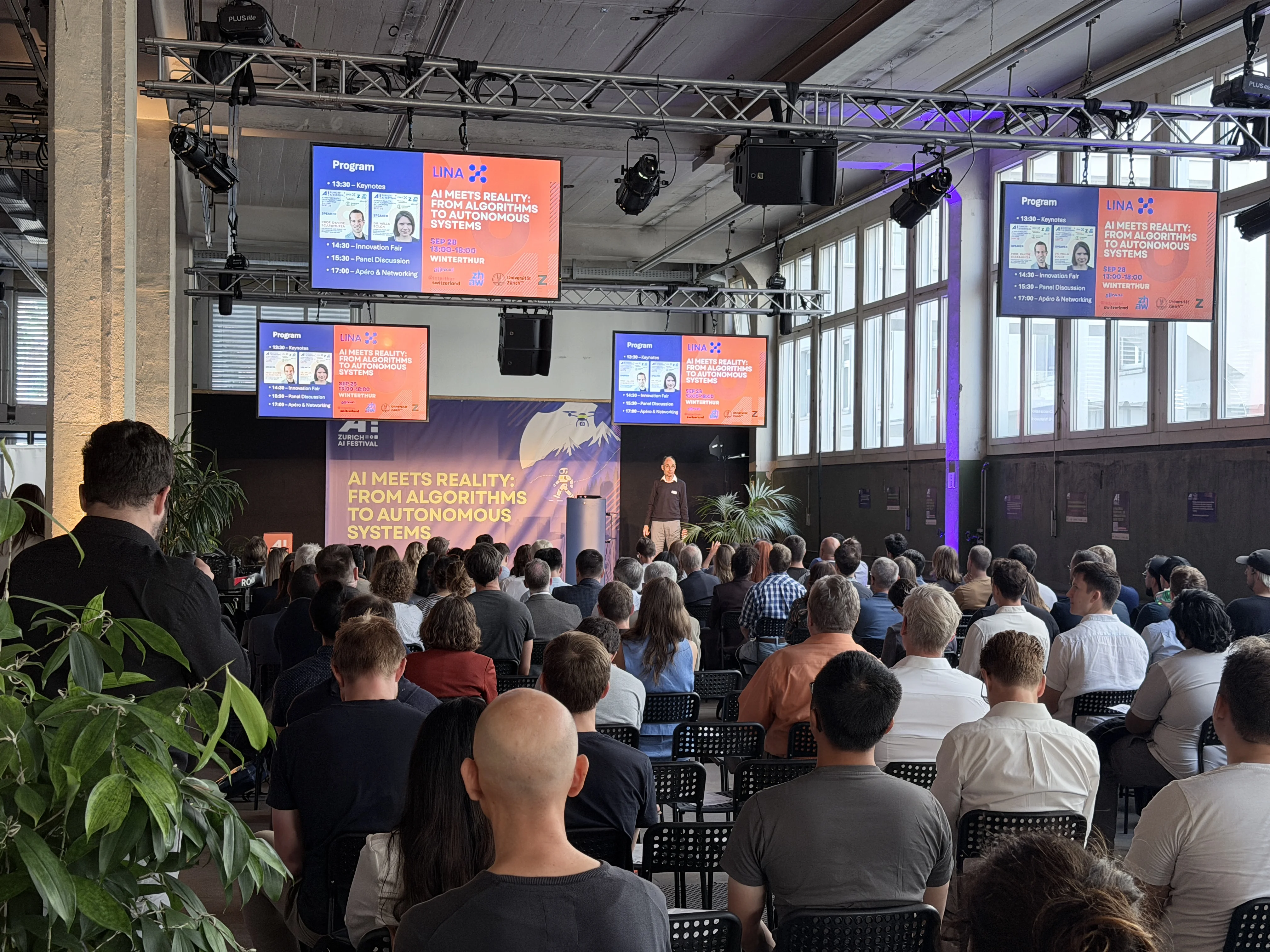
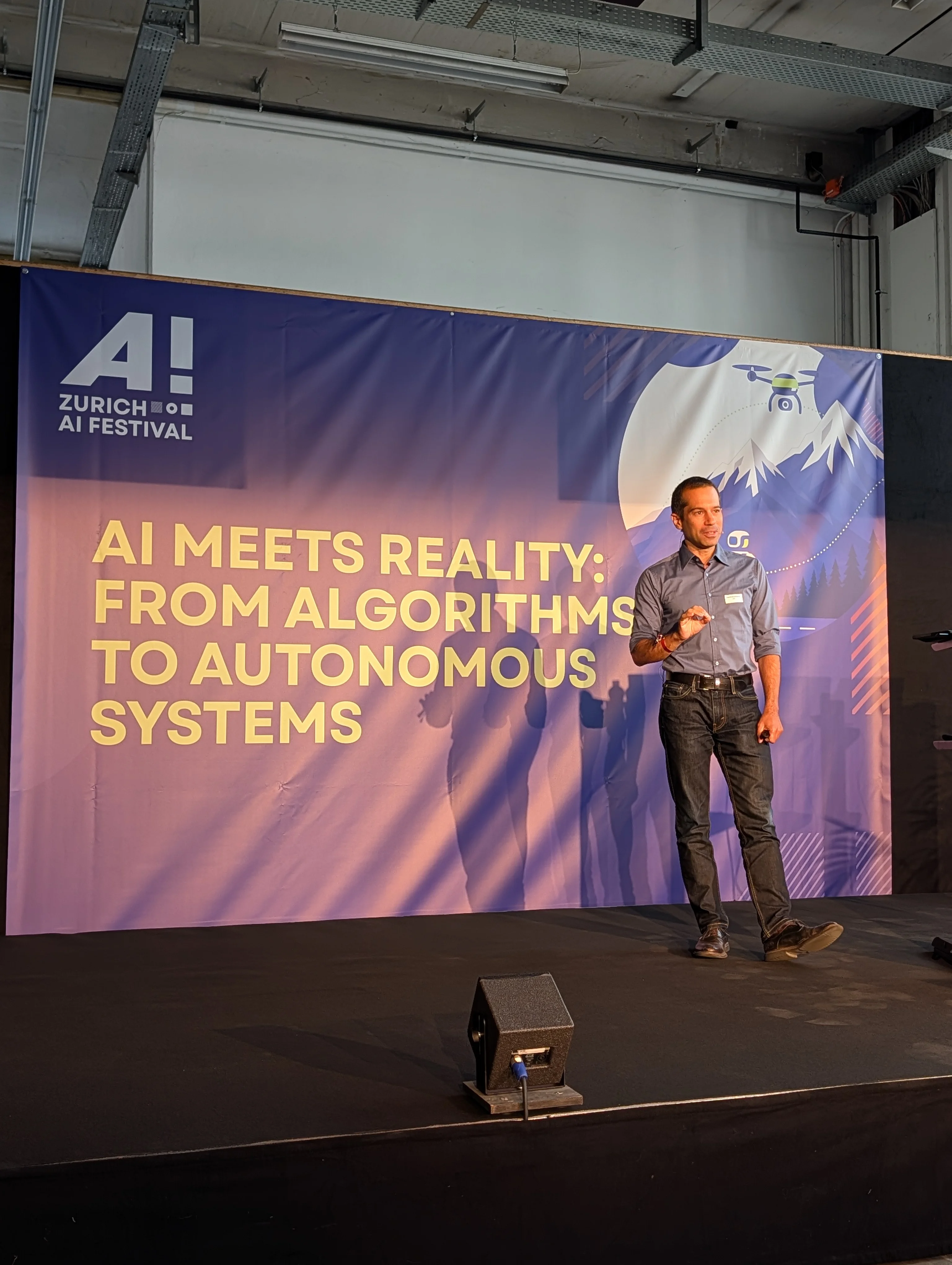
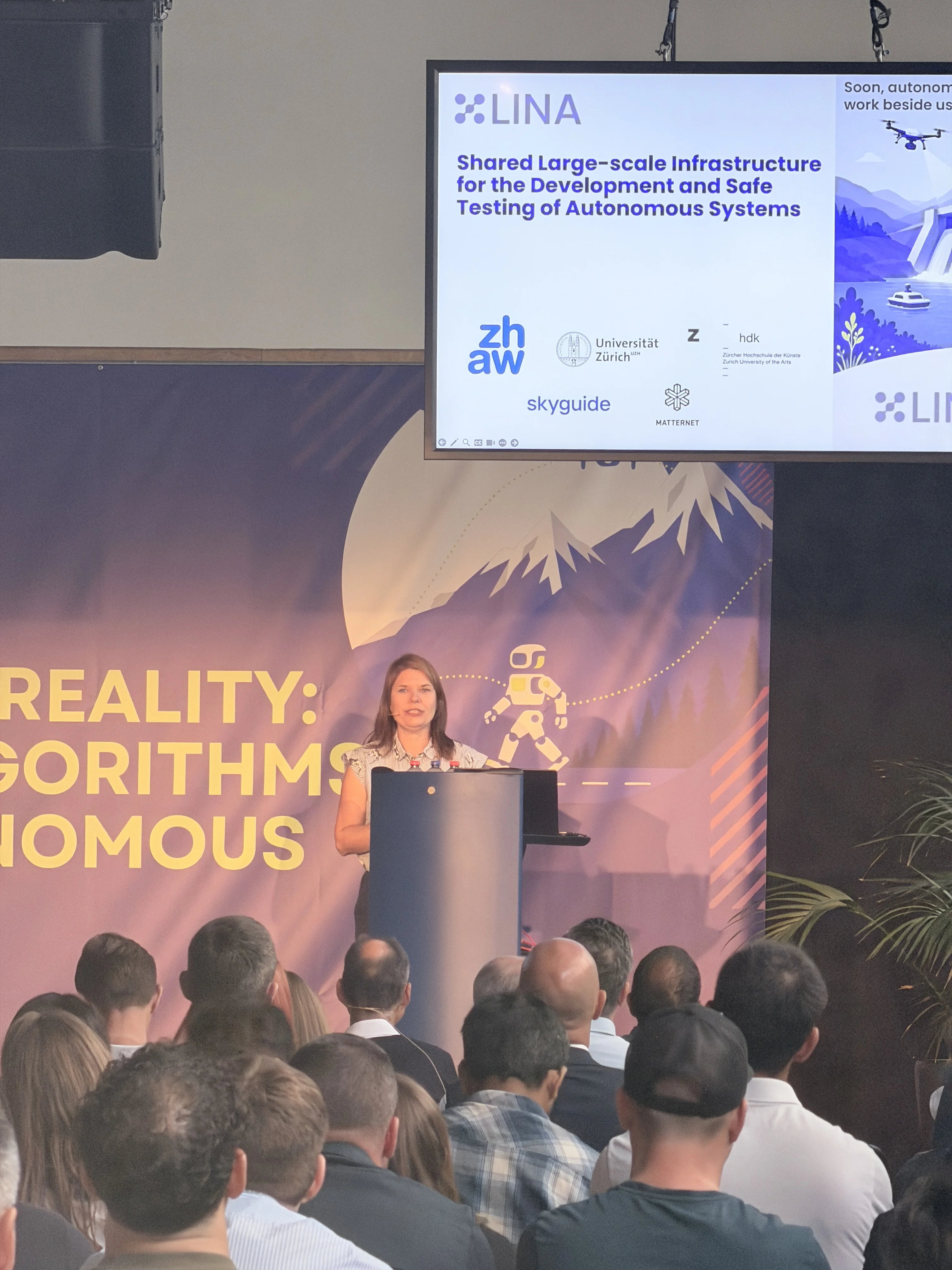
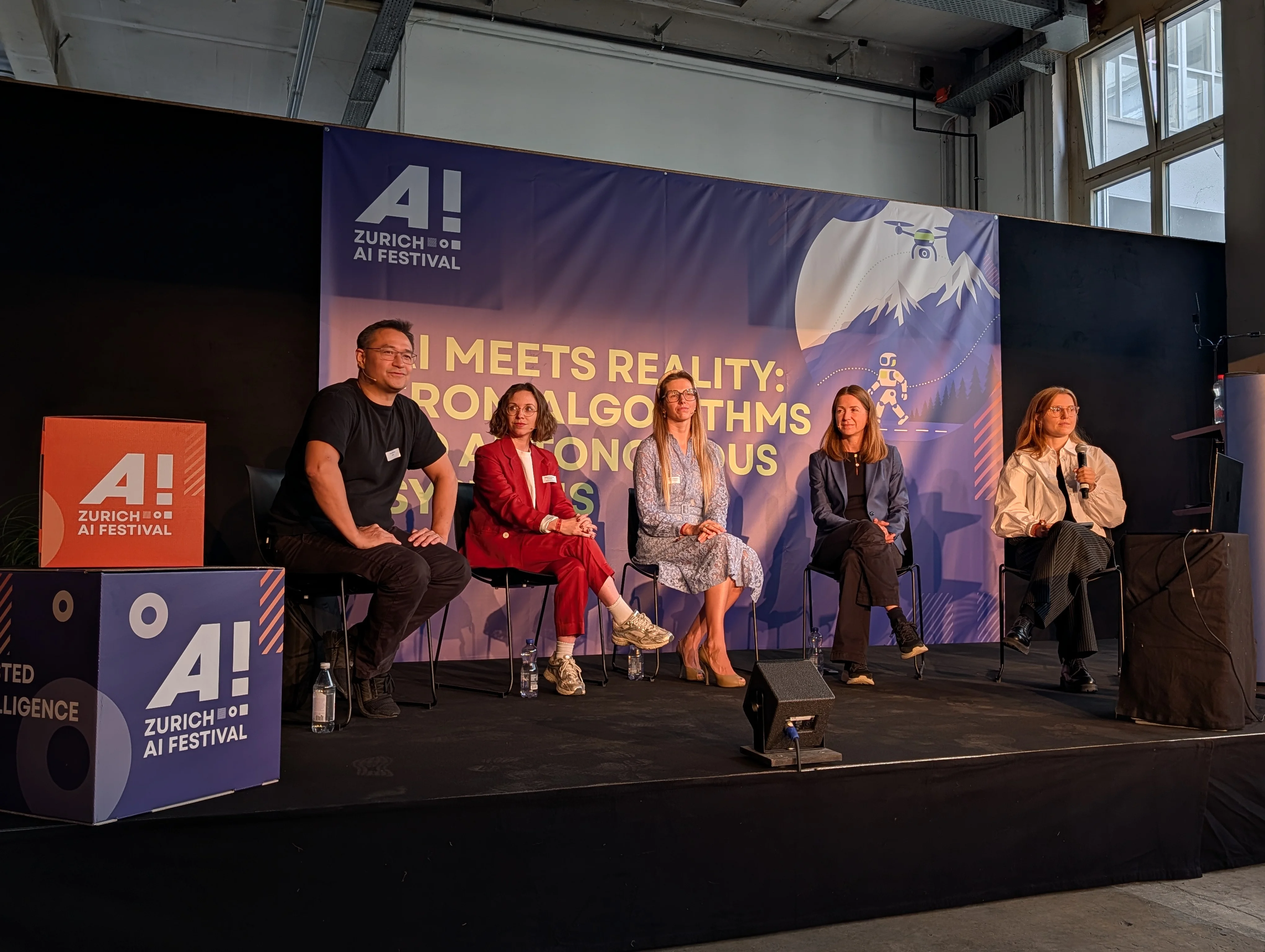
Autonomous drones, robots and other Physical AI systems are advancing rapidly. But a successful prototype is only the beginning. Before these systems can operate safely alongside people, they need to prove that they can deal with the complexity and unpredictability of the real world. Around this question, researchers, companies, public-sector representatives and technology enthusiasts came together for an afternoon of keynotes, live demonstrations and discussion.
The road ahead from impressive technology
The event opened with a welcome by Prof. Michel Guillaume, Head of the LINA team, who introduced fellow LINA member, Prof. Davide Scaramuzza from the University of Zurich for the first keynote. Davide impressively showed just how far drones and autonomous drone technology have already come. His team developed an onboard AI system capable of navigating a drone autonomously through a racing course and competing against human world champions in drone racing. The system won several head-to-head races against each of the three champions and recorded the fastest race time overall, demonstrating how far tightly integrated perception, learning and control can already push autonomous performance in a highly defined task.
But moving from such cutting-edge demonstrations to everyday operation brings another set of challenges.
“Computer Vision is making mobile robots autonomous, but humans are still preferred in most applications. Current robots are far from human performance in agility, versatility and robustness.”
– Prof. Dr. Davide Scaramuzza
Dr. Hella Bolck, Project Manager of LINA and lecturer at the ZHAW Centre for Artificial Intelligence, then shifted the focus from what autonomous systems and physical AI can already achieve to what it takes to keep innovation moving once a prototype leaves the lab.
A system may perform beautifully in a controlled demonstration. But what happens when it encounters bad weather, unreliable connectivity, other vehicles or aircraft, people, animals, a sensor failure or simply an unexpected situation? This is where progress often becomes slower and more difficult. As systems mature, testing becomes more important but also more complex, more expensive and more dependent on access to suitable environments, infrastructure, operational expertise and regulatory frameworks.
“Make it work. Break it safely. Trust it among us.”
– Dr. Hella Bolck
Hella reflected on the experience the LINA team has gained in testing autonomous systems under increasingly realistic conditions. Looking ahead, one lesson is clear: one test site is not enough. Different technologies, use cases and stages of maturity require different environments and levels of complexity. The LINA successor TESTAIR aims to scale what was started with LINA into a national platform for testing, training and validation of aerial robotics and Physical AI. The ambition of this initiative goes beyond providing additional test sites. TESTAIR aims to create a national backbone that brings together the environments, expertise and validation capabilities needed to move autonomous systems and Physical AI from promising prototypes towards trusted real-world deployment.
Innovation Fair: Physical AI up close
The keynotes framed the central challenge, the Innovation Fair was designed to make this transition tangible. Around 200 participants from research, start-ups, industry, public administration and the wider innovation ecosystem could see, experience and discuss autonomous systems and emerging robotic technologies first-hand. Exhibitors including Binabik AI, the ZHAW autonomous vehicle “Nina”, BEYOND AI and Avientus as well as the LINA team itself presented demonstrators, prototypes and working systems. The focus was not simply on what the technologies can already do, but equally on what remains difficult: testing and validation, safety, scaling, robustness and operation under real-world conditions.
The fair created space to discuss lessons learned beyond the lab or pilot stage, as well as open questions with researchers, companies, public stakeholders and users.
Among Us, living alongside robots and autonomous systems
We were particularly excited about our all-female panel “Among Us: Living Alongside Robots and Autonomous Systems”, bringing together perspectives from research, industry and the public sector. Prof. Yulia Sandamirskaya (ZHAW), Kateryna Portmann (ANYbotics) and Marisa Kappeler-Schudel (City of Winterthur) joined the discussion, moderated by Max Rheiner and Riva Pinto, our LINA colleagues from ZHdK.
The panel explored what it takes for autonomous systems to move from technical capability into everyday use, including questions of reliability, acceptance, safety and human involvement. It also highlighted how differently these questions look depending on whether you approach them from research, from the perspective of a company deploying robots, or from a city thinking about autonomous systems in public space. A recurring theme was that trust cannot be created through technical performance alone. People need to understand what systems do, where their limits are, and how they will affect the environments in which they are introduced.
Winterthur: an industrial setting for the next generation of technology
For “AI Meets Reality”, a former Rieter industrial hall at today’s Vitus Areal became a lively space for keynotes, robots, demonstrations, discussion and exchange. For decades, textile machinery was produced and assembled on this site. Today, the area is being transformed into a place for new industries, technology and innovation. That made it a particularly fitting setting for an event about the next generation of technologies moving from research into real-world use.
Many thanks to everyone who contributed to making the event possible, including colleagues and partners from the ZHAW Centre for Artificial Intelligence, ZHAW Centre for Aviation, University of Zurich (UZH), Zurich University of the Arts (ZHdK), Stadt Winterthur, Vitus Areal and House of Winterthur, as well as all speakers, exhibitors and supporters.
More about LINA: Initiative für Large-Scale Development & Testing von Autonomen Systemen im Kanton Zürich lanciert | ZHAW Zürcher Hochschule für Angewandte Wissenschaften