Towards positive, realistic AI scenarios for Swiss society
End of September, a small group of national and international experts met to ideate futures for our societies that are worth pursuing and living in. A bespoke process was employed to ensure the results would end up realistic.
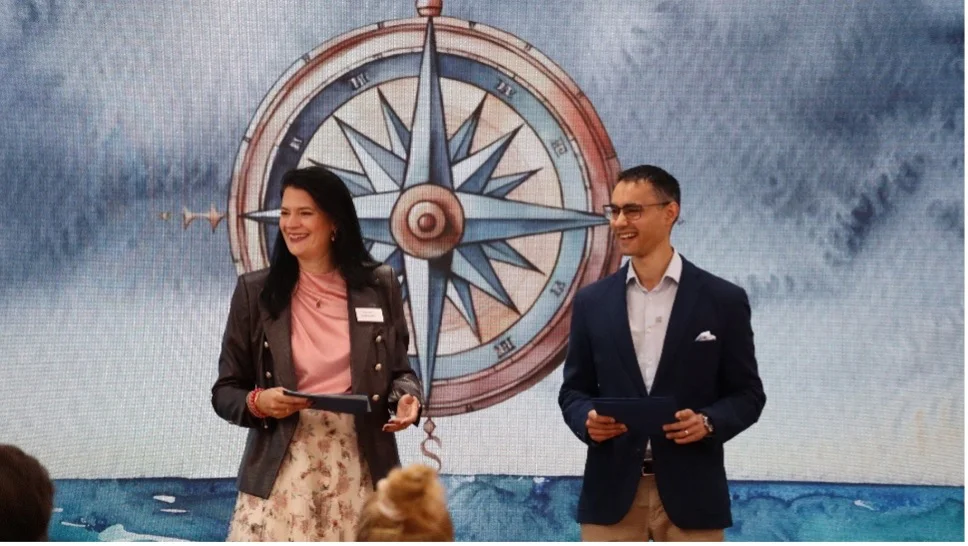
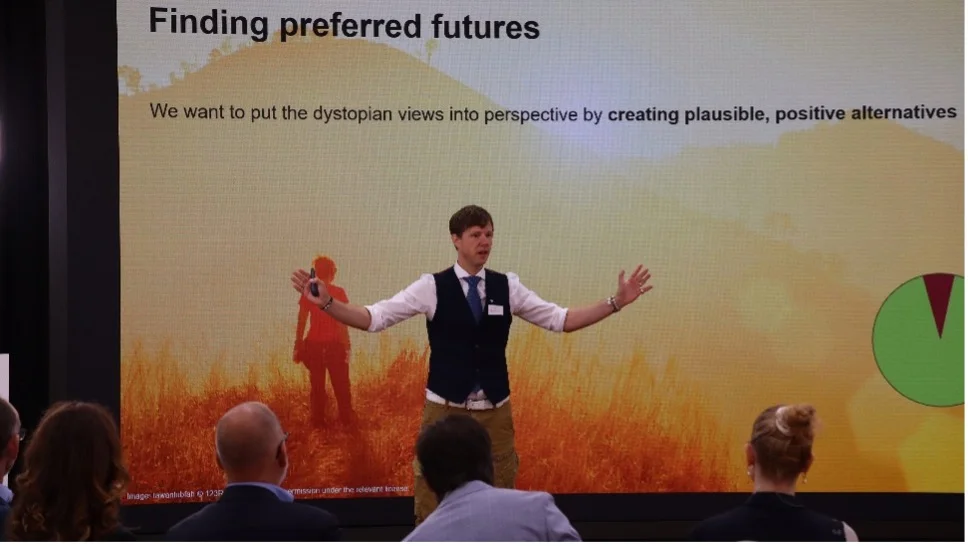
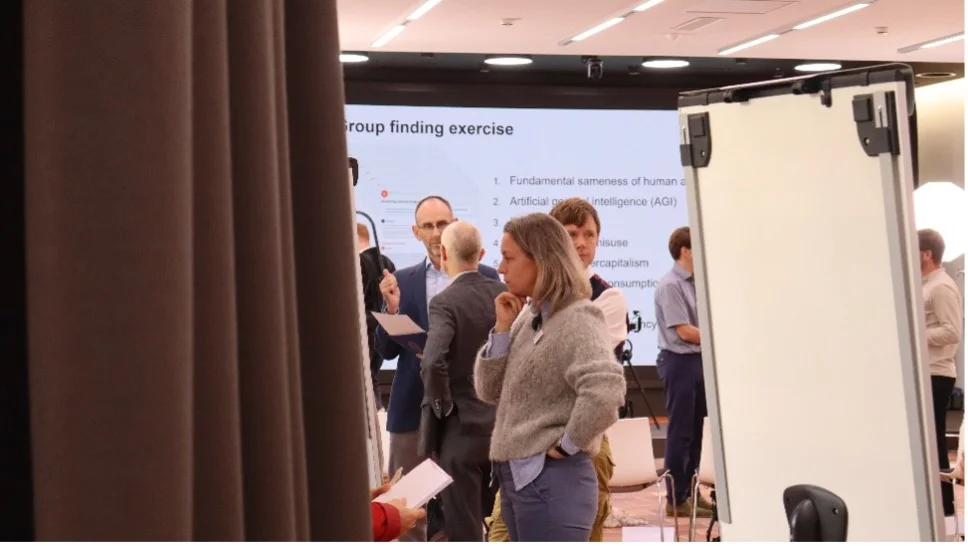
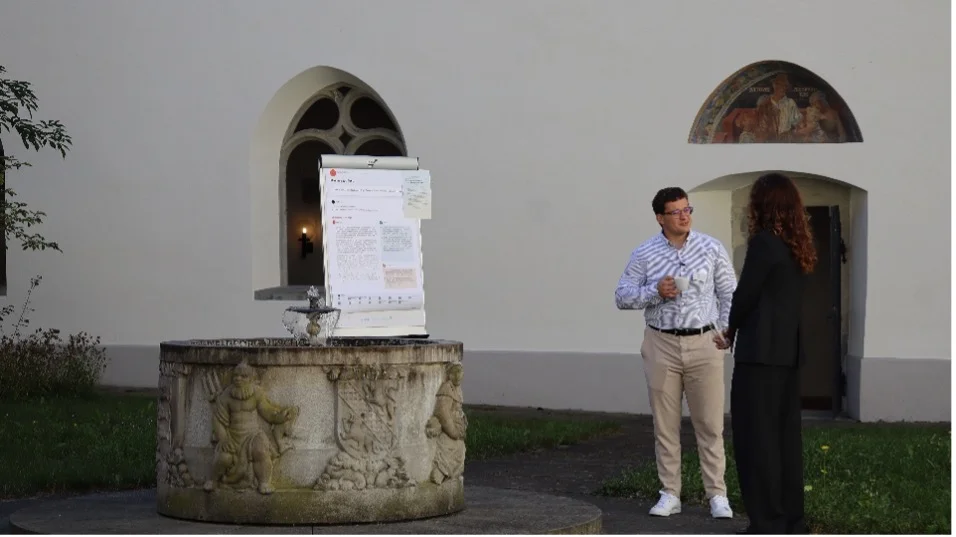
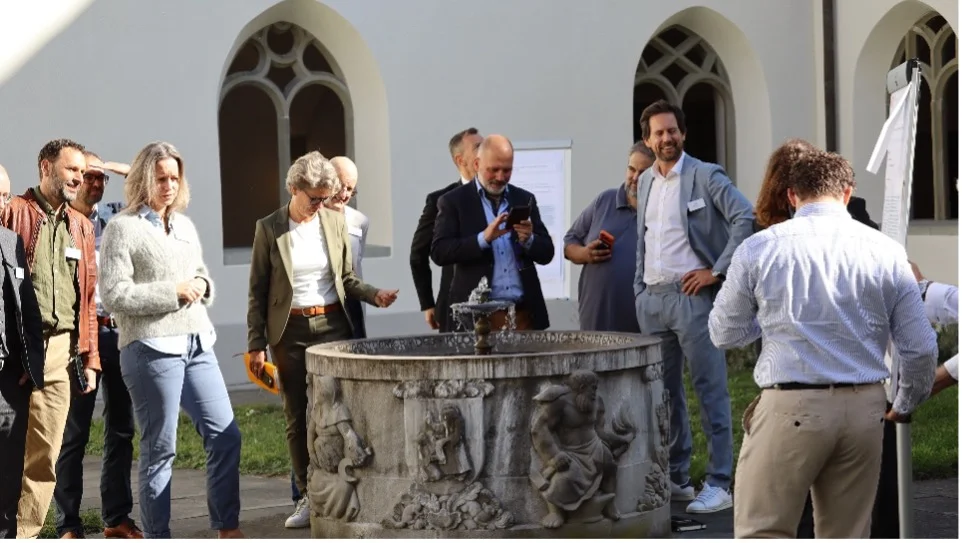
Early morning on September 28, an illustrious group of fascinating people arrives one by one at Klostergut Paradies, near Schaffhausen: bestselling authors, CEOs, professors of AI, a former head of state, heads of their respective professional associations, philosophers, a school principal, psychologists, founders, civil society representatives, and a former editor in chief of its country’s most read news outlet. They were awaited by a meticulously prepared venue and schedule; an almost as illustrious team of hosts; and a professional film crew that would record hundreds of hours of audio and video to capture every word. The goal: to co-create, brainstorm and imagine, within one full day, ingredients for viable and positive AI future scenarios for our societies.
Why should one bother? In public discourse, AI futures seem to be settled: almost inevitably, it is assumed, AI will evolve to overtake human intelligence, and as a new sentient species, begin to compete with humans for control and resources; and irrespective of the underlying reality of this worldview-based prediction, it is further assumed that AI will inevitably cause enormous disruption to almost all aspects of our personal, social and economic lives. For many people, any potential hope is drowned by fear: What good are medical breakthroughs or the automation of hazardous tasks, if AI robs us of purpose by outperforming us in all the activities that used to give us meaning? What if AI empowered surveillance becomes a tool for totalitarian government? In the meantime, many are seriously concerned about the environmental and economic implications of the gigantic investments in data centres and model scaling.
But what if the current discourse on AI futures is too narrow? Decision makers need someone to sketch out desirable scenarios, because you can’t aim at something you can’t see or imagine.
Scenarios are essentially descriptions of possible futures that depend on assumptions that themselves involve uncertainty. Therefore, alternative scenarios can be developed with intellectual rigour in a two-step process: (1) challenge the dominant assumptions by questioning how true or probable they really are, based on recent research. Then, (2) introduce new factors or give weight to pro-human visions or values that so far have been underexplored.
Accomplishing this in one day would be a challenge, but, with generous support from the Hasler Foundation within project COMPASS, a core team consisting of professors Thilo Stadelmann and Christoph Heitz, futurist Andreas Walker, bestselling author Jyoti Guptara, media producer David Taylor, and transformation leader and project coordinator Renate Stadelmann deliberately developed and tested individual and group work settings over months to make this possible. The methodology outlined above used guided small group work to ideate future ingredients and assemble scenarios validated by back-casting into the present to sketch a realistic path from current decisions to future scenario.
The workshop at Paradies sought positive scenarios influenced by the participants’ professional understanding of the effects of AI, specifically, the direct and indirect effects of AI: Direct effects of AI are immediate consequences of AI’s capabilities for, e.g., positive breakthroughs in medicine or production efficiency or negative effects via biased or unreliable outputs; these are mainly influenced by tech companies. Indirect effects, on the other hand, are what happens when AI is widely used and society begins to see the consequences of the aggregate choices of institutions and individuals, e.g., eroded agency or fragmented societies. These are influenced by institutions, incentives, and personal choices – and this is where the largest leverage lies: Treating an indirect effect like de-skilling or fragmentation as an inevitable by-product of AI, rather than a governable consequence of how it's used, is what makes a future look settled. The room to maneuver lies in the choices a society makes, which is what the project intends to inform.
We expect final results – spelled out scenarios in an accessible brochure and a documentary film to teaser the results – by end of 2026. They shall be presented at the Geneva AI Summit 2027.