AIT Nepal 2026/27: HICS
Meet Pawan Dhakal, one of the ten participants in the 2026/27 edition of the Academia-Industry Training Nepal program.
Interview with Pawan Dhakal
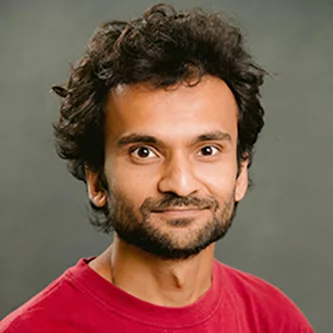
“Nepal’s air, climate, and seismic hazards are barely measured, though millions of lives depend on them. And Nepali students learn science as theory. Both trace to one gap: few institutions do science from within Nepal, for Nepal. HICS is building one: instruments made locally, schools hosting them as observatories, learning built around real data, everything published openly.”
What problem does your startup solve, and why is it important to you personally?
Nepal’s air, climate, and seismic hazards are barely measured, though millions of lives depend on them. And Nepali students learn science as theory. Both trace to one gap: few institutions do science from within Nepal, for Nepal. HICS is building one: instruments made locally, schools hosting them as observatories, learning built around real data, everything published openly. Like many Nepalis, I went abroad for opportunities that did not exist here. HICS is my work of building them here.
What inspired you to become a sciencepreneur, and what has been your biggest “aha!” moment so far?
For years I worked in two worlds: physics research and education reform, designing contextual, locally built curriculum and learning experiences for Nepali classrooms. Sciencepreneurship is the one path that merges them: research, learning, and community building. My “aha” has been gradual. The best-equipped labs prove instruments alone guarantee nothing; context is what counts. AI and open hardware are removing the tool barrier. What remains scarce is groundedness: science that communities own and benefit from, not research that only takes.
What unique perspective does your academic background bring to your startup?
Physics trains you to think from first principles: what needs measuring, how much noise is tolerable, and what is the simplest instrument that gives trustworthy data. That mindset is how HICS builds research-grade instruments from affordable, off-the-shelf components, engineered for Himalayan conditions, with our designs published openly. It also changes how you see geography. Where others see remoteness, I see an unmeasured altitude gradient of scientific value. And it sets a standard: student-built instruments should produce data researchers can use.
What’s one surprising lesson you’ve learned since launching your startup?
The limiting factor has quietly changed. I assumed building scientific hardware in Nepal would get stuck on the usual constraints: expertise, equipment, supply chains. It did not. Our first environmental station went from breadboard to a working boxed unit in three weeks. Much of what we say “cannot be done from here” is simply an assumption nobody has re-tested recently.
If you could host a dinner with three innovators (past or present), who would they be and why?
Lasting innovations can be quiet and patient. The founder of Action Dolpo, whose thirty years of community work in education, healthcare, livelihoods, and culture was designed to be handed over; her students lead it today. George Boateng, a college friend who taught coding on smartphones across Ghana when laptops failed, now at ETH Zurich. And Vikram Sarabhai, who built India’s space programme believing a poor country doing frontier science is development itself. That is the case HICS makes for Nepal.