AIT Nepal 2026/27: BioBhumi
Meet Akshyat Karki, one of the ten participants in the 2026/27 edition of the Academia-Industry Training Nepal program.
Interview with Akshyat Karki
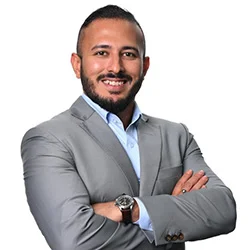
“Cities everywhere throw away the exact thing their soil is dying for. Composting has existed for centuries, but it has always been slow, open, and left to chance. BioBhumi turns it into an engineered, controlled process.”
What problem does your startup solve, and why is it important to you personally?
Cities everywhere throw away the exact thing their soil is dying for. Composting has existed for centuries, but it has always been slow, open, and left to chance. BioBhumi turns it into an engineered, controlled process, the same shift vertical farming brought to agriculture, cutting months down to weeks with consistent, tested output. We are proving this first in Kathmandu, where I have watched both waste and soil crises worsen for years, before taking the system further.
What inspired you to become a sciencepreneur, and what has been your biggest “aha!” moment so far?
I am not formally trained in science. My background is in economics and business. But at Envizeal, I spent two years doing my own R&D until I cracked a working formula for recycling cigarette butts, and later taught myself carbon accounting from scratch. My aha moment was realizing I did not need a science degree to go deep into a technical problem, I needed the discipline to not stop until it worked. That is what I bring to BioBhumi.
What unique perspective does your academic background bring to your startup?
My INSEAD MBA taught me to interrogate a business model until it either breaks or holds while giving me a global lens rather than a local one. Economics dove a layer deeper, training me to distrust a number until it survives scrutiny, and to see incentives before seeing numbers at all. Together, this means I do not solve a Nepal problem only for Nepal. I think in terms of a system designed to scale beyond it from day one.
What’s one surprising lesson you’ve learned since launching your startup?
I expected the fight to be against chemical fertilizers. It is actually against poverty itself. Smallholder farmers know overuse degrades their soil, but with small land and little capital, they need this season’s yield to survive, so they use whatever is cheapest and fastest, trapping them in a cycle where the soil worsens and needs even more chemicals just to keep pace. The real barrier to organic adoption isn’t awareness. It is that farmers cannot afford to think long term.
If you could host a dinner with three innovators (past or present), who would they be and why?
Norman Borlaug, because he proved agriculture could be re-engineered at civilizational scale, and ask what he’d change knowing what we now know about soil. Wangari Maathai, who showed that environmental restoration and economic power for the poor are the same fight. And Elinor Ostrom, who proved communities can manage a shared resource sustainably without central control. All three thought in systems. That is the exact conversation I want to have and also ask what they would have done better currently.