AIT India 2026/27: UrbanQ AI
Meet Mayank Kaushal, one of the ten Switzerland-based participants in the 2026/27 edition of the Academia-Industry Training India program.
Interview with Mayank Kaushal
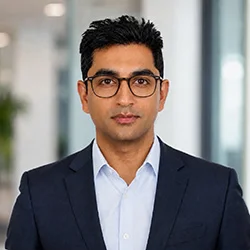
“Urban decisions often rely on fragmented data and competing priorities. I am developing UrbanQ AI to help architects, landscape architects, urban designers, developers, real-estate teams and public agencies compare options using shared evidence. AI organises information and explains trade-offs for professional review.”
What problem does your startup solve, and why is it important to you personally?
Urban decisions often rely on fragmented data and competing priorities. I am developing UrbanQ AI to help architects, landscape architects, urban designers, developers, real-estate teams and public agencies compare options using shared evidence. AI organises information and explains trade-offs for professional review. Having worked across Asia and Europe, I want useful research to reach everyday practice and help people understand how decisions about their neighbourhoods are made.
What inspired you to become a sciencepreneur, and what has been your biggest “aha!” moment so far?
After moving between architecture practice, sustainability consulting and applied research, I realised I wanted to make research useful in the decisions that shape everyday life. My biggest aha came during my ETH doctorate: cities did not lack data, maps or indicators. They lacked a shared way for people with different priorities to interpret the same evidence and explain a choice. That realisation became UrbanQ AI, connecting rigorous urban research with decisions teams can discuss, test and stand behind.
What unique perspective does your academic background bring to your startup?
I bring an architect’s understanding of design decisions and a researcher’s habit of questioning the evidence. My ETH Zürich doctorate combined spatial analysis, urban-quality indicators and stakeholder priorities. Earlier work at the Singapore-ETH Centre and SUTD, alongside professional practice, gave me experience across different urban contexts. This background helps me connect analytical methods with the practical questions that design teams, developers and public agencies need to answer.
What’s one surprising lesson you’ve learned since launching your startup?
The model can be useful to many professions, but that does not give them the same reason to use or buy it. An architect, a developer and a public agency may need different views of the same evidence. This has shaped my next step: test one focused pilot with several stakeholder roles, identify who pays, and learn which parts of the work can become a repeatable product.
If you could host a dinner with three innovators (past or present), who would they be and why?
I would invite Jane Jacobs, Patrick Geddes and Herbert Simon. I would ask Jacobs how to keep everyday urban life visible in planning decisions, Geddes how to connect place, people and the environment, and Simon how to design useful decision support when information is incomplete. I would enjoy hearing them discuss what an urban model can reveal and what still needs to be understood by talking to people.