AIT India 2026/27: ReShape
Meet Matteo Frigelli, one of the ten Switzerland-based participants in the 2026/27 edition of the Academia-Industry Training India program.
Interview with Matteo Frigelli
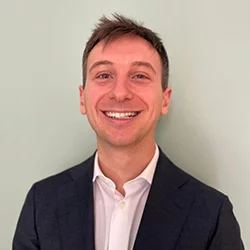
“Children nowadays spend less time outdoors and more time focused on screens, and their eyes develop accordingly: by 2050, half the world is expected to have myopia and therefore need refractive correction. Today, that means glasses, contact lenses, or a laser that permanently removes tissue. ReShape corrects vision by strengthening the cornea rather than cutting with a laser – a less invasive alternative.”
What problem does your startup solve, and why is it important to you personally?
Children nowadays spend less time outdoors and more time focused on screens, and their eyes develop accordingly: by 2050, half the world is expected to have myopia and therefore need refractive correction. Today, that means glasses, contact lenses, or a laser that permanently removes tissue. ReShape corrects vision by strengthening the cornea rather than cutting with a laser – a less invasive alternative. I spent my PhD predicting how this treatment shapes the cornea; now I try to control it.
What inspired you to become a sciencepreneur, and what has been your biggest “aha!” moment so far?
After years in academia, I learned a valuable lesson: many good solutions never leave the lab; at best, they become a well-cited paper. But the hard part comes afterwards. What drives me is the conviction that good research deserves to be translated into something concrete that works in the outside world. I saw a friend bringing their product to the clinic for the first time, helping patients in real life. That was when I understood, “This is what I will do.”
What unique perspective does your academic background bring to your startup?
Two perspectives: the first one is biomechanics. Most refractive surgery is planned based only on the shape of the cornea; we plan around how that particular cornea deforms, which is patient-specific and strongly impacts the result. The second is more clinical: I’ve worked in a hospital, side by side with surgeons, and this taught me that a device is adopted only if it fits into the clinic’s routine, if the nurse can handle it, and the doctor understands it.
What’s one surprising lesson you’ve learned since launching your startup?
Science is only a part of it, and not as central as I’ve always assumed. Adoption, product-market fit, and finding the right investment at the right time — these decide whether the work reaches a patient, and none of them are ever considered during academic research. What surprised me most was how early that work starts. I assumed a manufacturer or a hospital would want a finished product. Most only needed a clear question.
If you could host a dinner with three innovators (past or present), who would they be and why?
Marie Curie: she worked in a field that was not built for her and changed it anyway; proof that precedent decides very little. Steve Jobs: he inspired me (and half of my generation) when I was young. Rise, fall, rise again, and a stubborn idea of what a product should be. Tim Berners-Lee: he gave the web away instead of selling it. Apart from having changed the world, he seems like good company at a table.