AIT India 2026/27: OutBe Rhythms
Meet Manuel Carro Domínguez, one of the ten Switzerland-based participants in the 2026/27 edition of the Academia-Industry Training India program.
Interview with Manuel Carro Domínguez
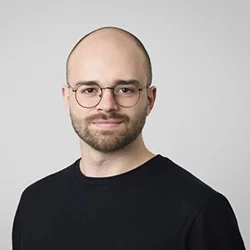
“Poor sleep affects one in three people, accelerating dementia and cardiovascular disease, yet current solutions are split between inaccurate trackers and inaccessible clinical care. OutBe Rhythms aims to bridge this gap by combining advanced health monitoring through closed eyelids with tailored outpatient care.”
What problem does your startup solve, and why is it important to you personally?
Poor sleep affects one in three people, accelerating dementia and cardiovascular disease, yet current solutions are split between inaccurate trackers and inaccessible clinical care. OutBe Rhythms aims to bridge this gap by combining advanced health monitoring through closed eyelids with tailored outpatient care. I strongly believe that to exceed in being, or OutBe, we need to improve our sleep so that we can better manage our brain and body health.
What inspired you to become a sciencepreneur, and what has been your biggest “aha!” moment so far?
Preventing scientific discoveries from being buried in academic papers is something I strive for and find great purpose in. I want to turn groundbreaking research into tangible human impact, and I find the entire journey deeply fulfilling. My biggest “aha!” moment happened during my PhD research at ETH Zurich. I found that pupil dynamics offer a real-time physiological window into the brain’s arousal levels during sleep, unlocking a way to actively guide sleep quality.
What unique perspective does your academic background bring to your startup?
My diverse background in biomedical engineering, industrial AI sensor modeling, and six years of sleep neuroscience research at ETH Zurich has allowed me to gain the wide perspective needed. This cross-disciplinary journey allows me to bridge hard tech with human biology. I don’t view sleep solely as a researcher; I understand how sensors, AI algorithms, and real-time physiological biomarkers must seamlessly integrate to turn complex neuroscientific discoveries into a comfortable, scalable, and clinically meaningful MedTech product.
What’s one surprising lesson you’ve learned since launching your startup?
Groundbreaking neuroscience and technology mean nothing if it isn’t simple to understand and use. In academia, complexity and technological novelty is often celebrated, but in healthcare, complex products and services that don’t help better understand or treat a clinical problem can further exacerbate the diagnostic and treatment pathway. After talking to many stakeholders across the entire healthcare pathway, stripping away academic and technological complexities to deliver intuitive, actionable feedback has been a revelation.
If you could host a dinner with three innovators (past or present), who would they be and why?
I believe that necessity is the mother of innovation, and inspiration and aspiration are its older siblings. Adversity is the storm outside that tests the foundations of their home, and being outspoken is the open door that lets the storm in while letting the world know what will soon come out. Marie Curie, Leonardo da Vinci, and Martin Luther King were all innovators in their own way. Their unapologetic way of being, thinking, and speaking out unconventionally for their time would make me want to open a window if we had dinner in the house of innovation.