AIT India 2026/27: MudraDx
Meet Harini Lakshminarayanan, one of the ten Switzerland-based participants in the 2026/27 edition of the Academia-Industry Training India program.
Interview with Harini Lakshminarayanan
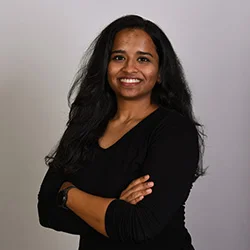
“MudraDx addresses an important gap in the clinic that kidney cancer patients face, namely the lack of informative molecular biomarkers. Using patient blood, we aim to support risk stratification of patients, so that clinicians can decide who needs therapy and who can be spared from drug toxicity.”
What problem does your startup solve, and why is it important to you personally?
MudraDx addresses an important gap in the clinic that kidney cancer patients face, namely the lack of informative molecular biomarkers. Using patient blood, we aim to support risk stratification of patients, so that clinicians can decide who needs therapy and who can be spared from drug toxicity. This is an important effort for me personally, because I believe strongly in the potential of liquid biopsies and the impact of early detection on patient outcomes.
What inspired you to become a sciencepreneur, and what has been your biggest “aha!” moment so far?
A common theme in my scientific career has been translational research, specifically with a diagnostic perspective. Therefore, becoming a sciencepreneur and developing from the bench into a viable product seems to me the natural next step. In addition, there are entrepreneurs and tech leaders in my family, and I was naturally inspired to take risks. I don’t think science is made of big “aha!” moments, but rather of smaller ones that eventually add to the big picture. One such quiet moment was when I got the invite to join AIT India 2026!
What unique perspective does your academic background bring to your startup?
In my academic career, I have had the privilege to work in a clinical setting and work directly with patient samples. Joining the tumor boards there has given me an inner perspective on the priorities that clinicians emphasis when making decisions for their patients. Apart from this, I also gained an understanding of how molecular pathology teams work, how they implement new technologies, what agility looks like in Switzerland and how these teams remain state-of-the-art.
What’s one surprising lesson you’ve learned since launching your startup?
People are far more helpful and collaborative than we give them credit for! We’re always told that entrepreneurship is a competitive space and that there may not be a lot of room for collaboration, but at this early stage, I have already benefited from the generosity of several people and their goodwill.
If you could host a dinner with three innovators (past or present), who would they be and why?
Why only 3, I love hosting large dinners! But, I think Marie Curie (she is truly an icon, I don’t think I need to explain “why” any further), Kiran Mazumdar-Shaw (as one of India’s pioneer female leaders, she has paved the way in biotechnology), and finally Katalin Kariko (I had the privilege to hear one of her talks, and I find her unconventional career journey truly inspiring, in addition to her scientific contributions and sense of humor!).