Century-old documents provide insights into grassland diversity
Researchers at the ZHAW have compared the biodiversity of Swiss pastures and meadows with conditions over a century ago. More than a quarter of the plant species have disappeared.
Hand-written plant inventories dating from 1884 to 1931 that were nearly discarded contain valuable information about historical grassland diversity in Central Europe. The documents were discovered in 2003 in preparation for renovations at Agroscope, Switzerland’s agricultural research institute. Most vegetation surveys covering larger areas are no more than 50 years old and date from the period following the intensification of agriculture through mechanisation and increased fertiliser use, which began around 1900.
One red frame to measure them all
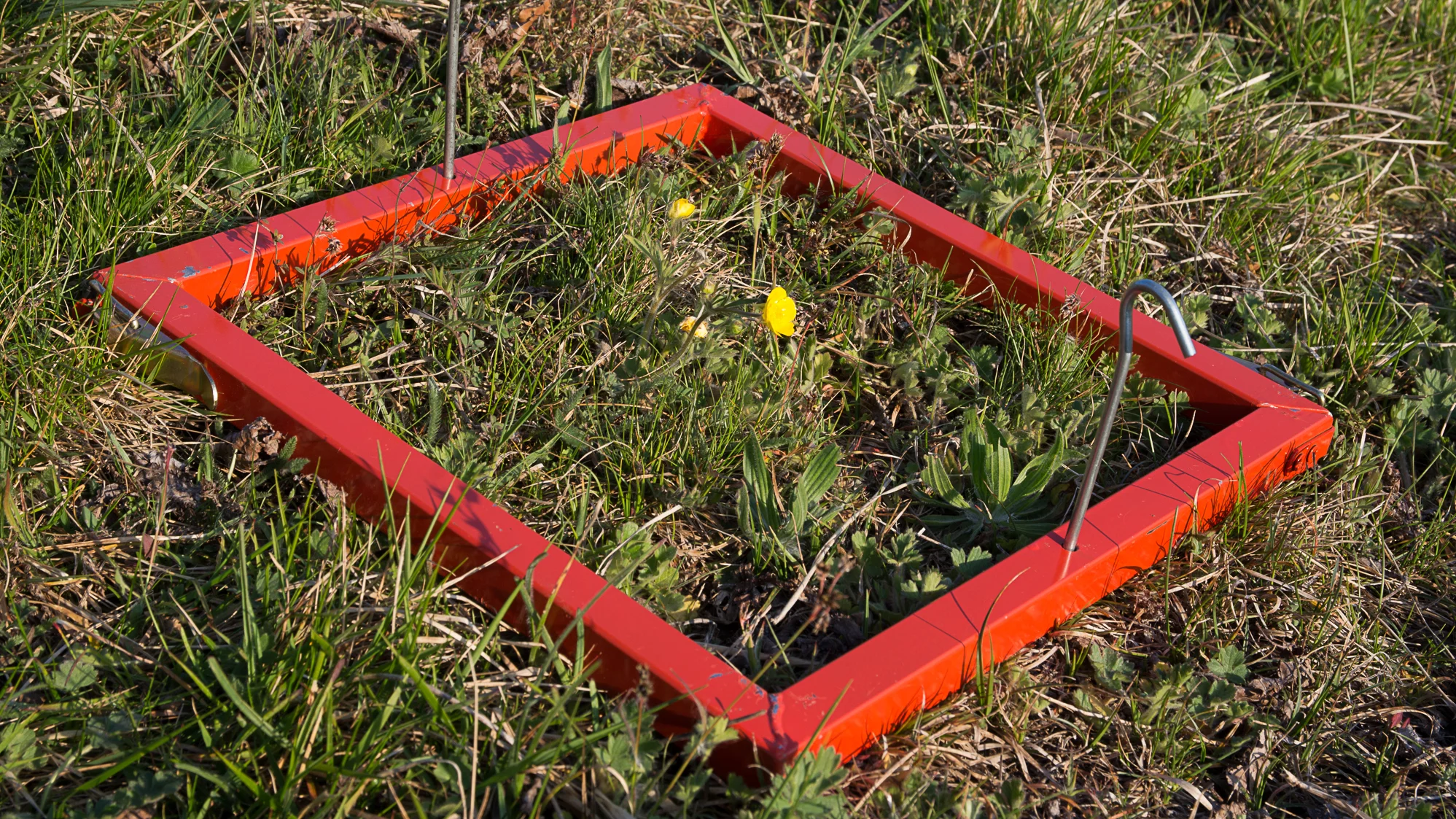
The century-old lists were written by two botanists, who recorded plant species at around 600 sites. Between 2021 and 2022, ZHAW researchers at the Institute of Natural Resource Sciences and Agroscope retraced the botanists’ steps more than 100 years later. The researchers used a red frame measuring 30 by 30 centimetres – which gave the Square Foot Project its name – to sample the plant species at the same sites. The project was funded by the Swiss National Science Foundation.
Intense farming threatens biodiversity
When the researchers could not find previously recorded species within the 30 × 30 cm plots, they expanded their search area to a radius of 500 metres. There they rediscovered all previously recorded species, often in areas that were either protected or used for biodiversity promotion. “Many of these species have found a way to survive there,” says Jürgen Dengler, who led the project.
The study revealed that 26 per cent of plant species had been lost. On the Swiss plateau – the region where most of Switzerland’s population lives and agriculture is most intensive – the decline reached almost 40 per cent, while Alpine meadows had lost only 11 per cent. “The greatest threat to the diversity of local plants is intensive agriculture and nutrient inputs from the air,” says Jürgen Dengler. Climate change has so far played only a minor role.