Children in residential care experience mixed feelings
What is life like for children aged 8 to 14 in child and youth care facilities? An SNSF-funded project on childhood vulnerability and children’s understandings of well-being provides valuable insights.
Care institutions offer children and adolescents a safe environment. They can meet experts who support them in dealing with problems, connect with peers, and have space of their own. However, many young people in care also report feelings of distress. “They struggle with being separated from their families and friends, as well as from uncertainty about what the future holds,” says Marion Pomey from the Institute of Childhood, Youth and Family at the ZHAW School of Social Work. The children and adolescents describe their daily lives as highly structured. One adolescent said they felt like they were not taken seriously. They described their life as “a prison without bars” in an interview for the Swiss National Science Foundation (SNSF) study “Childhood vulnerability and children’s understandings of well-being”. This project is part of an international research network examining children’s well-being in 26 countries.
Positive moments can change in a heartbeat
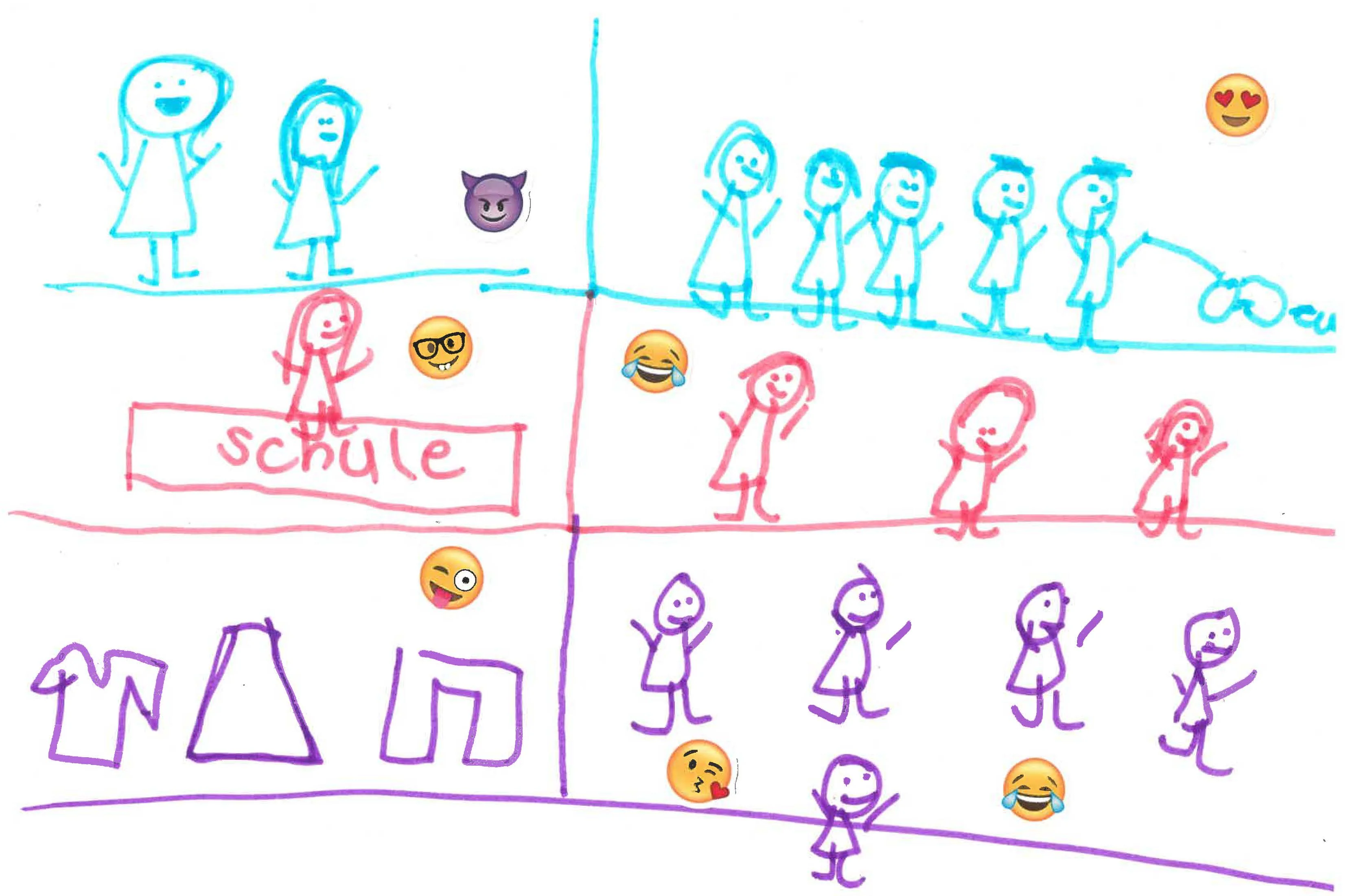
Project manager Pomey says that many of the 8- to 14-year-olds spontaneously spoke about difficult experiences or incidents of violence. “One important finding was that concerns about the future can affect well-being in the present,” says Pomey. To facilitate dialogue, the researchers provided paper, coloured pencils and emoji stickers and asked participants to express, in a creative way, what matters most to them. Once the conversation was underway, the researchers could follow up with open-ended questions. “Participants often experience conflicting emotions,” says Marion Pomey. They feel both secure and insecure when living in residential care. The young people feel both empowered and powerless at the same time. The project, which is supported by the association Integras, shows that three factors are particularly important for their well-being: security, a sense of belonging, and agency.