Paper on ARMADA accepted at EDBT conference
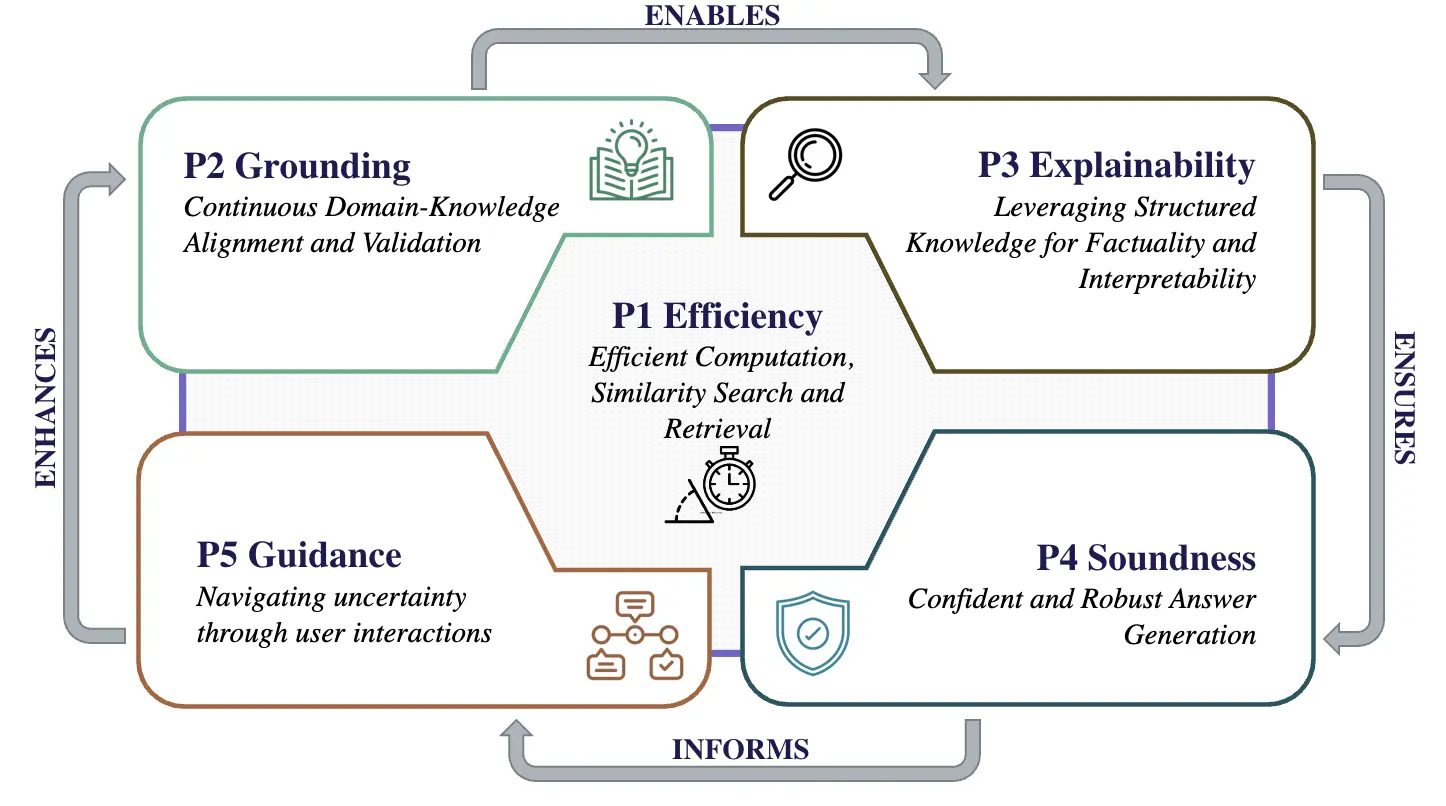
The first paper from the ARMADA project "Towards Reliable Conversational Data Analytics" by Prof Bogojeska accepted at EDBT conference. It outlines and examines five key properties that drive a paradigm shift in system design and user interaction, aiming to develop reliable Conversational Data Analytics (CDA) systems that deliver timely, consistent, and verifiable responses.
Prof. Dr. Jasmina Bogojeska is working on AI-powered tools for advancing various aspects of healthcare. She believes that a reliable conversational system for exploring and analyzing patient-specific medical data will provide clinicians with rapid access to relevant information, ultimately supporting more effective and personalized healthcare and improved patient outcomes. This is the research focus of the ARMADA project.
Abstract:
Conversational AI systems for data analytics aim to enable the extraction of analytical insights by means of conversational interfaces. Such interfaces are powered by a mix of query modalities and machine learning methods for analytics, and are relying on Large Language Models (LLMs) for natural language generation. However, critical challenges hinder their adoption. The question we discuss is how to devise reliable Conversational Data Analytics (CDA) systems producing timely, consistent, and verifiable answers. To reach this goal, we identify five properties that impose a paradigm shift in the way systems are built and in the way they interact with users. To illustrate that shift, we describe a prototypical CDA system. Realizing these properties involves either extending existing components, or redesigning components from scratch; both solutions require overcoming data management challenges and conducting a tight integration with advanced data management and machine learning techniques.
The full paper can be found here.