MiBAS – Micro-biogas plants in Switzerland
As part of a two-year study, operational data for a small-scale biogas plant were collected. The pilot operation on the premises of the Synergy Village Association served to gather operational data, gain practical experience under Swiss climatic conditions, and investigate regulatory approval and economic aspects of such systems.
Description
The MiBAS – Micro Biogas Plants Switzerland project established, for the first time, a scientifically data basis for the operation of micro biogas plants under Swiss climatic conditions. The objective was to investigate the potential of these systems for the decentralized treatment of organic residues and the provision of renewable energy in households, small residential communities, alpine farms, and mountain inns.
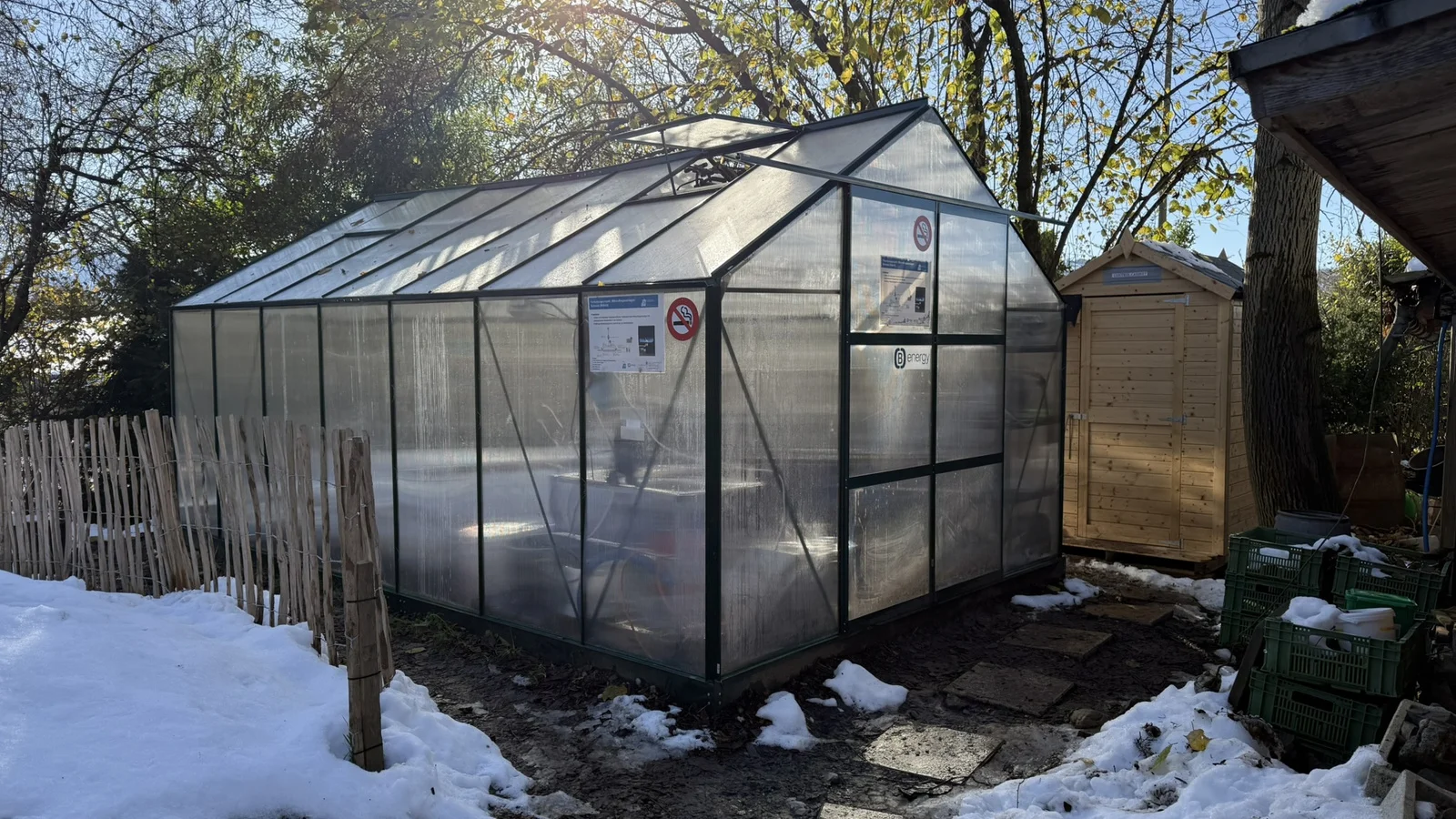
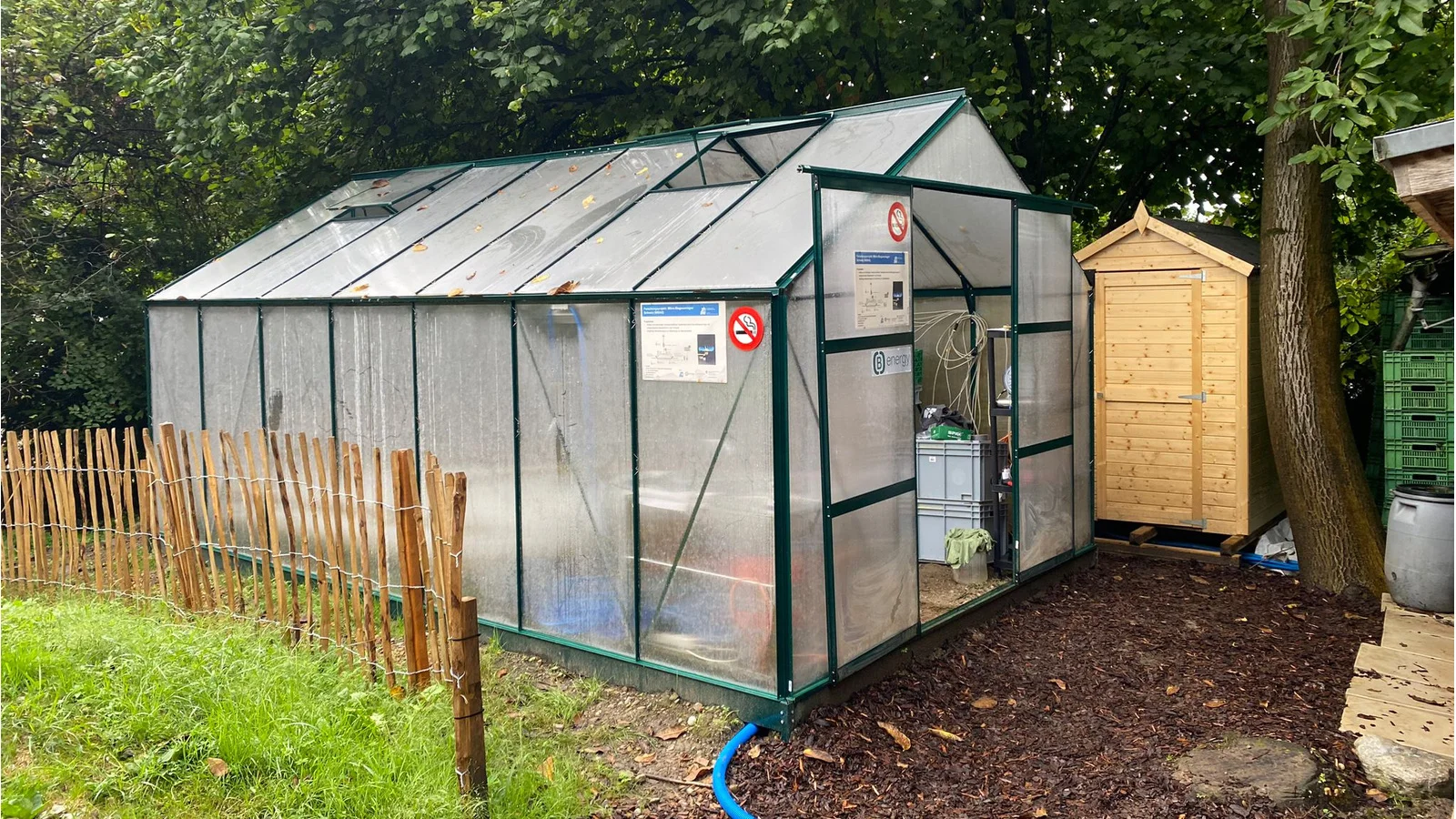
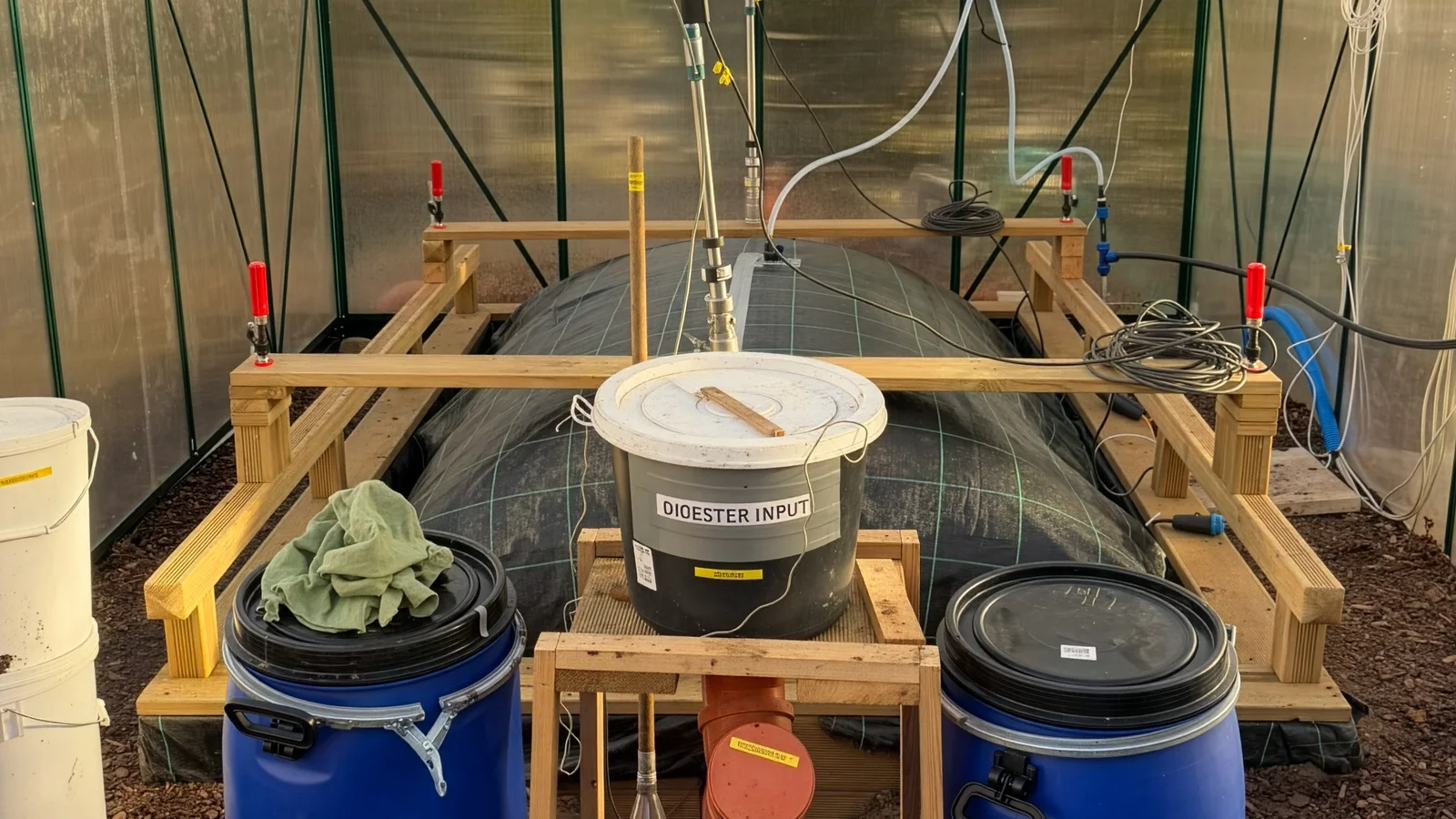
At the core of the project was the installation and one-year operation of a research and demonstration plant of the “(B)calm” type, featuring a digester volume of approximately 2 m³. The system was equipped with heating and insulation components, extensive monitoring technology, and automated data acquisition.
Over the twelve-month measurement campaign, continuous data on process stability, biogas production, gas quality, and energy yield were collected. In addition, legal, economic, and application-specific aspects were investigated.
Result
In total, approximately 1.4 t of organic feedstock was processed. Between day 50 and day 365 of operation, around 34 m³ of biogas was produced with an average methane content of 63%, corresponding to an energy yield of approximately 215 kWh. The average power output was about 28 W. During the heated operating phase, biogas production averaged 128 L per day. After the heating system was switched off, production declined to around 89 L per day, clearly demonstrating the importance of temperature control for gas generation.
The results show that microbiologically stable operation of micro biogas plants is fundamentally feasible under Swiss conditions. Key process indicators, particularly pH and the VFA/TIC ratio, remained within the optimal range for most of the monitoring period. At the same time, it became clear that temperature management, thermal insulation, and heat transfer are key factors influencing both plant operation and energy efficiency. Although stable gas yields were achieved through the use of active heating, further optimisation is required with regard to thermal design and energy efficiency. However, this optimisation need primarily relates to the operating conditions investigated in the project, which were characterized by low plant throughput, and does not allow general conclusions to be drawn about the performance potential of micro biogas plants under optimized design and operating conditions.
Economic assessments revealed that energy production costs depend strongly on plant size and utilization rate, with calculated values ranging from CHF 0.09 to CHF 0.65 per kWh. Larger systems benefit from economies of scale and, under the assumptions made, may achieve competitive levelized costs of energy. At the same time, preliminary legal assessments indicate that micro-biogas plants may, under certain conditions, be constructed and operated without requiring a permit.
Overall, the project confirms the technical feasibility of micro biogas plants and their potential to support a circular economy through the decentralized utilization of organic residues. To the authors’ knowledge, the measurement data and practical experience obtained constitute the most comprehensive data basis available to date for this field of application in Switzerland. Nevertheless, further research and demonstration projects are required before wider deployment can be achieved, particularly in alpine regions and off-grid or small-scale energy supply concepts. Future work should focus on improving energy efficiency, evaluating performance under alpine conditions, and positioning the technology relative to existing centralized waste treatment systems.
Key data
Projectlead
Deputy Projectlead
Project team
Florian Rüsch, Gabriel Sciascia, Katharina Schmid Lüdi, Yves Moser
Project partners
(B)energy GmbH; Verein Synergy Village
Project status
completed, 10/2023 - 11/2025
Institute/Centre
Institute of Chemistry and Biotechnology (ICBT); Institute of Natural Resource Sciences (IUNR)
Funding partner
Bundesamt für Energie BFE
Further documents and links

School of Life Sciences and Facility Management
Müller-Thurgau-Strasse 27
8820 Wädenswil