DermatoTherma
A safe treatment for cutaneous Leishmaniasis
Description
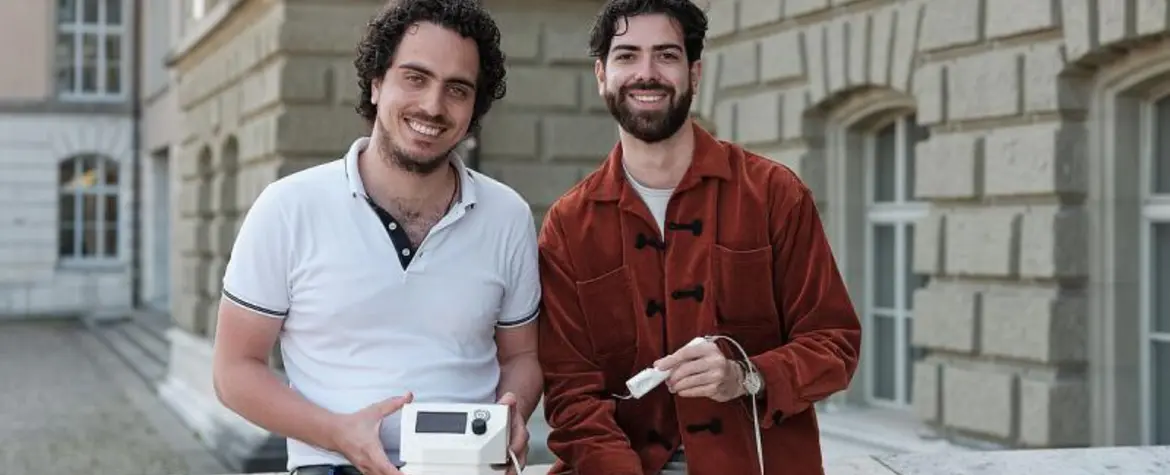
There are a wide variety of thermal treatment possibilities, one of them being radio frequency (RF) waves to introduce heat locally. For cutaneous Leishmaniasis (CL), a skin disease found in over 98 countries, such a treatment has been around for over 20 years. By reverse-engineering the only RF device widely used on the CL treatment market, we’ve built a prototype with the same functional principle. Through research and testing, shortcomings in the original device were rectified. By introducing a non-contact measurement method, we decrease the side-effects of the treatment while at the same time improving its controllability. Our unique selling proposition is a high-quality RF-treatment thanks to integrated temperature measurement at an affordable price. Benefiting from the partnership with the Drugs for Neglected Diseases initiative (DNDi), we plan to establish an initial business in the CL treatment market, where drug treatment with severe side effects has been prevalent. Valued at 31 million USD, it is a niche, yet global market still in its introduction phase. By lowering the cost of the device and improving patient safety the accessibility of the treatment method creates an alternative to drug treatment and improves the quality of life for millions of patients.
Key data
Projectlead
Davide Paparo
Deputy Projectlead
Project team
Ian Caetano Häusler, Daniel Fehr, Raphael Hagen
Project status
completed, 09/2022 - 02/2024
Institute/Centre
Institute of Computational Physics (ICP)
Funding partner
Foundation
Project budget
148'000 CHF
Further documents and links
Prof. Dr. habil. (UniBas) Mathias Bonmarin
School of Engineering
Technikumstrasse 71
8400 Winterthur