ZHAW Research on Cooperative Network Architecture Featured on the Cover of Neural Computation
A brain-inspired AI paradigm developed at the ZHAW Centre for Artificial Intelligence has been selected for the cover of MIT Press’s Neural Computation. The displayed research introduces an architecture that could significantly improve sample and energy efficiency in next-generation artificial intelligence.
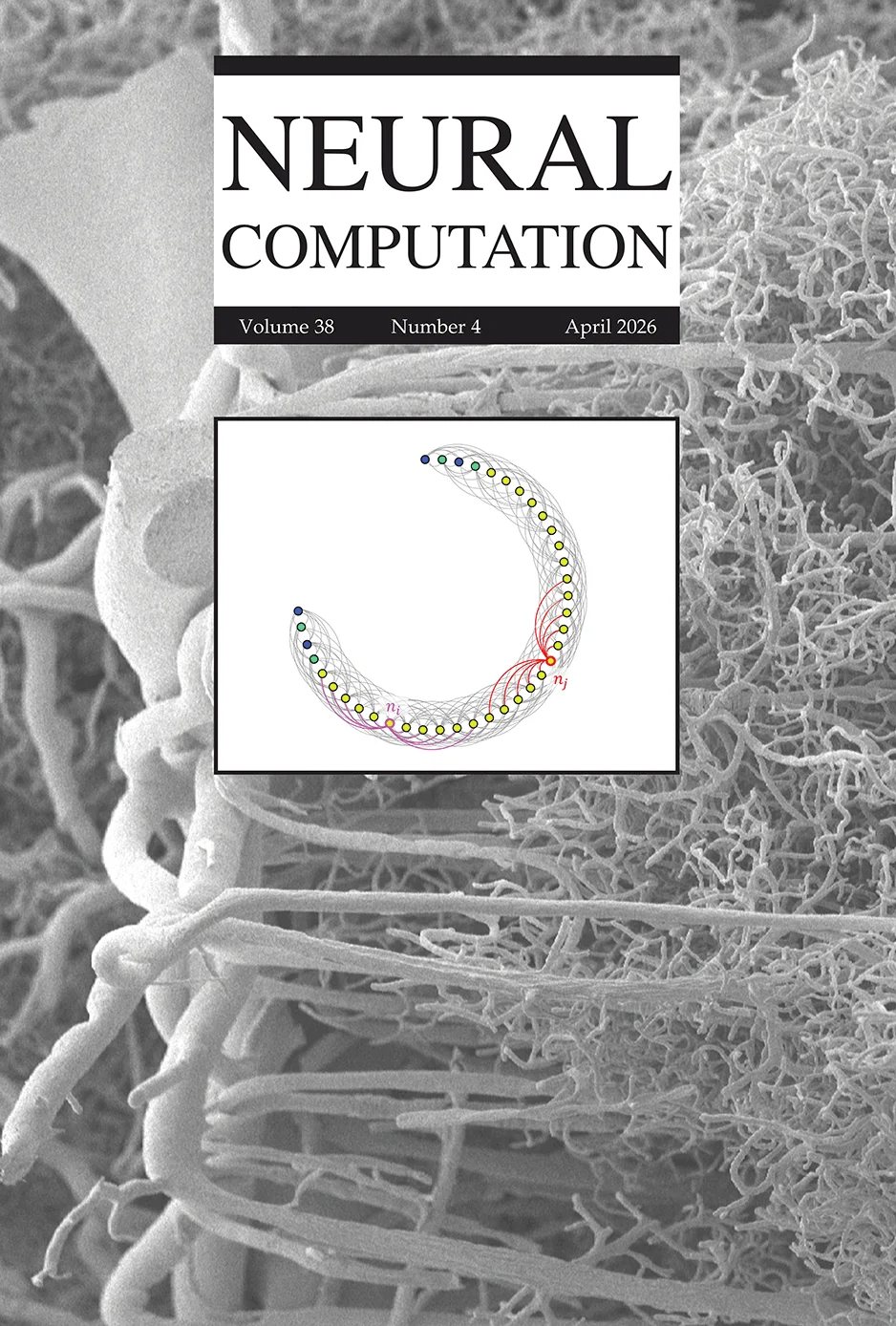
The cover of MIT's journal Neural Computation features a figure of net fragments, created by Pascal Sager, Jan Deriu, Thilo Stadelmann, and Christoph von der Malsburg from the Centre for Artificial Intelligence (CAI) at ZHAW as well as colleagues from the Grewe lab. Net fragments are the core building block of their proposed Cooperative Network Architecture (CNA).
CNA is an alternative to standard machine learning models. Unlike conventional methods that process images as static pixel arrays, the CNA maps inputs into these structured, overlapping networks. Learning is driven by Hebbian plasticity, enabling the system to capture statistical regularities without supervised training. The authors note that this paradigm could inform future AI development, demonstrating the potential to be orders of magnitude more sample and energy efficient.
The theoretical framework for this approach has been developed over the past decades by Christoph von der Malsburg, an associated researcher at the CAI. This kind of prominent display can help to ensure that this new paradigm becomes better known within the wider scientific community.