ZHAW/Cyber Defence Campus project HOLUL secures UAV drone communications
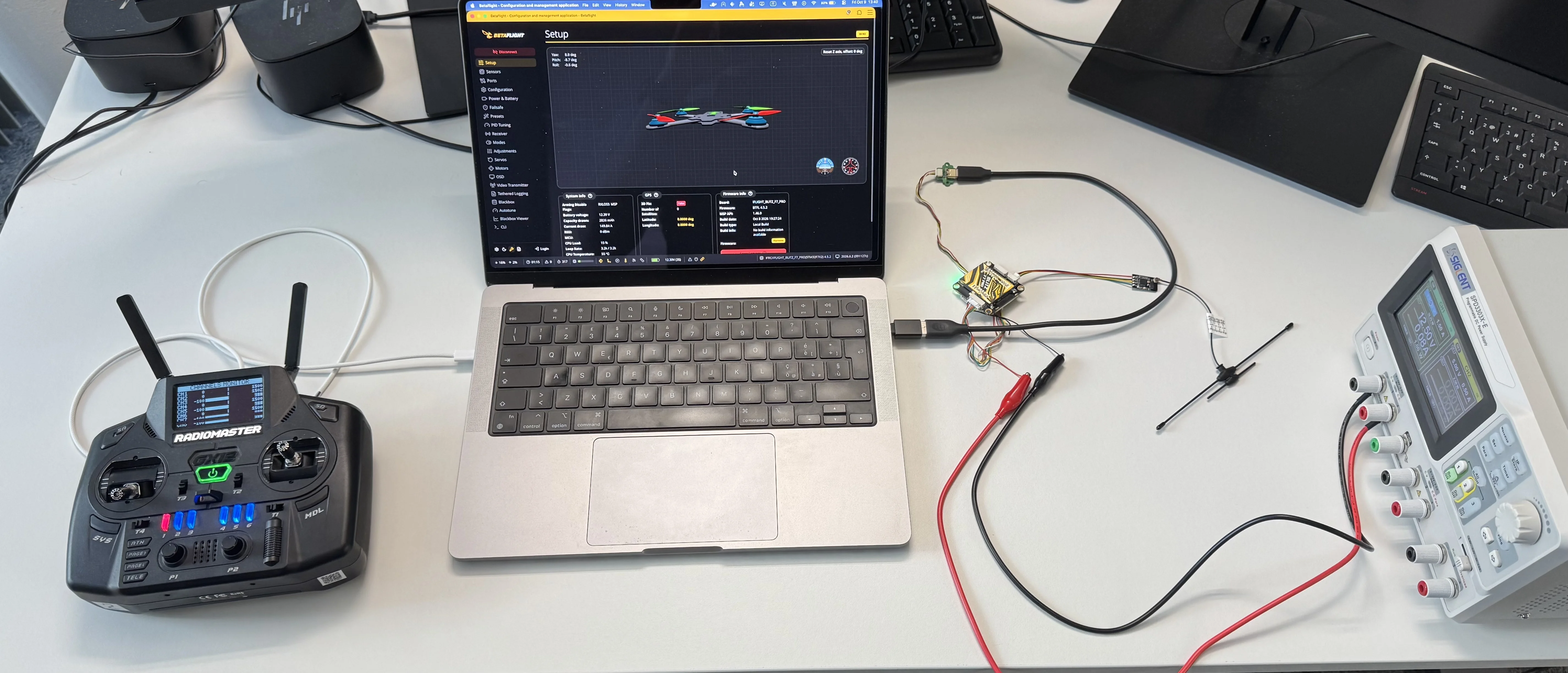
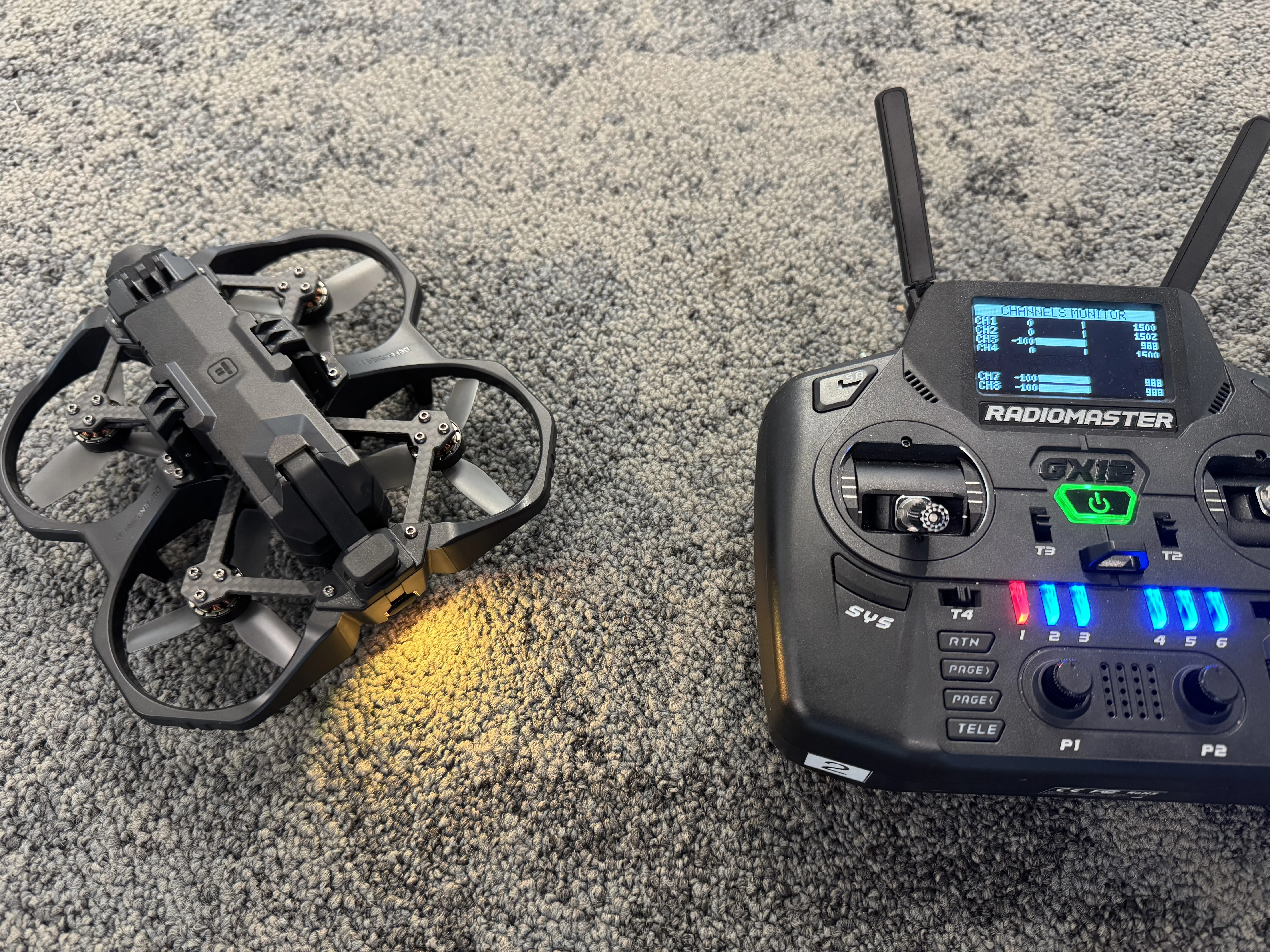
Small unmanned aerial vehicles (UAVs), including first-person vehicles such as drones with cameras operated through goggles have been used by hobbyists for a long time, but are now also used in war. Recent conflicts show small and relatively cheap drones handling many front-line duties. Militaries deploy commercial off-the-shelf components and open-source software at scale because they are inexpensive, readily available, and easy to adapt to their needs. It is therefore important to understand how attackers can interfere with their operation and how to defend against these attacks.
In our HOLUL project that ZHAW's Information Security Research Group is doing with the Cyber Defence Campus, we are analysing a popular and open drone control protocol, ExpressLRS. ExpressLRS is not geared for security, so over-the-air payloads travel without encryption and without strong integrity protection. Although the protocol implements frequency hopping for link resiliency, the hopping sequence follows deterministic patterns derived from non-secret identifiers. This is by design.
Security researchers have demonstrated that these weaknesses can be exploited quite easily. A passive observer with inexpensive radio hardware can intercept telemetry, inject unauthorized commands, or force the drone into a failsafe state in which the drone will land or return to base. An adversary could therefore use these weaknesses to hijack the aircraft, force a crash, or locate the pilot’s transmitter from captured packets. Because transmission channels and timing are deterministic, hostile units can also disable the link using low-power, targeted electronic jamming instead of burning energy on broad-spectrum noise.
The result of our analysis is ExpressLRS++, an enhancement of ExpressLRS that will run on the same controllers and drones that ExpressLRS runs on, but which provides confidentiality, authenticity and enhanced jamming protection. The new security features must keep the reliability and long-range operation that the current protocol guarantees. This is a challenge because control of the drone must happen in real-time, so there is little time available for cryptography or other computations.
Additionally, drone control packets carry only a few bytes of payload, which means that it’s not possible to add conventional headers and authentication tags that would significantly enlarge the packets.
By hardening an established open-source protocol, ZHAW's Information Security Group helps establish Swiss expertise in secure drone communications by focusing on transparent, auditable security measures that can be evaluated on standard hardware.