People in Switzerland pay digitally, but still rely on cash
How has the cash referendum affected the Swiss population’s payment preferences? Swiss Payment Monitor 2/2026, published by HSG and ZHAW, reveals that mobile payments are currently more popular than cash and debit cards in stores. At the same time, the majority opposes the elimination of cash altogether.
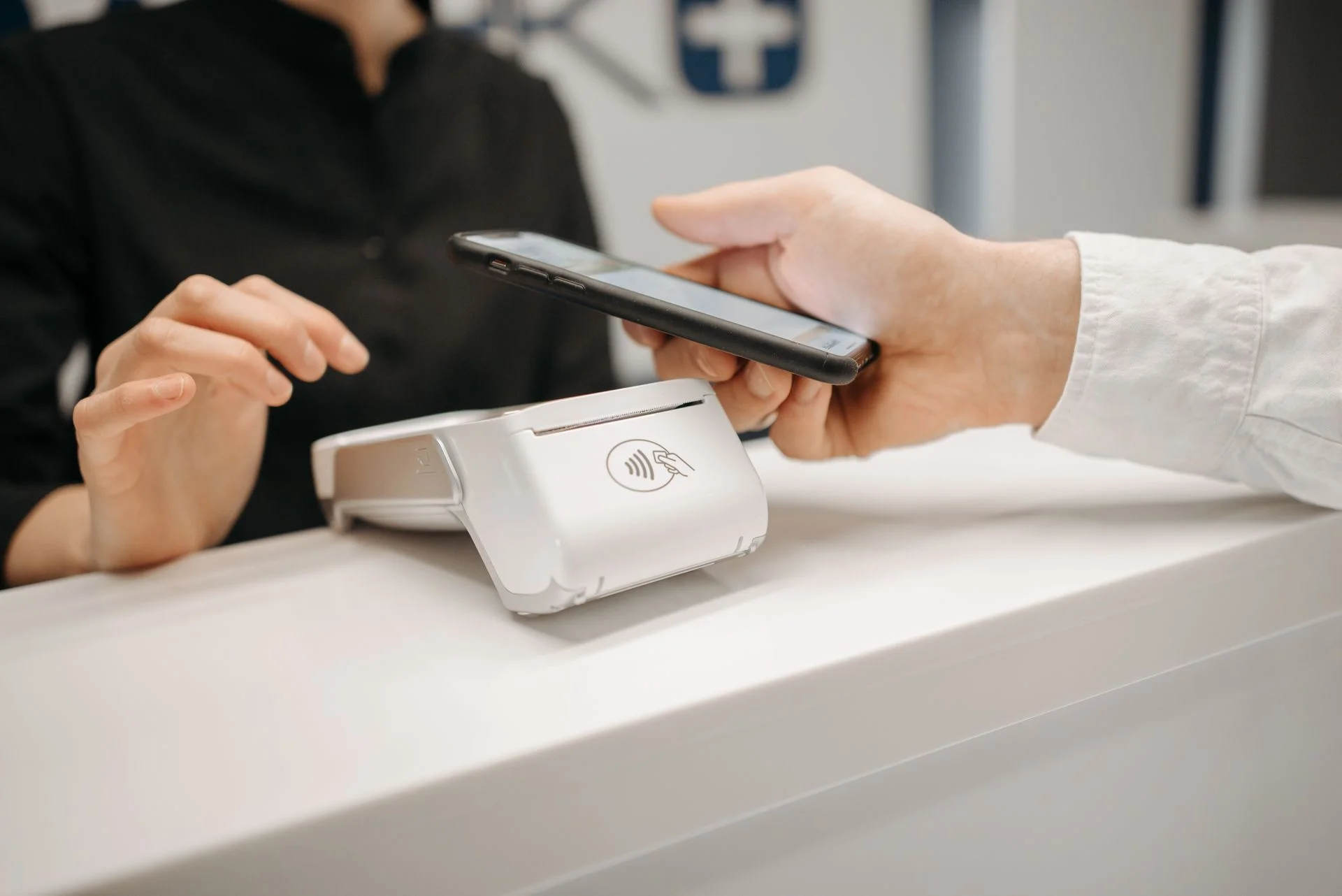
In Switzerland, mobile devices such as smartphones, tablets, and smartwatches are the most common payment methods, and this trend continues to grow. Although AI assistants are accepted as a source of advice, most people still prefer to make their own decisions about how to pay. In terms of the total number of all transactions, this involves a comparison with the survey conducted six months ago (change in brackets):
- Mobile devices: 34.5% (+3.1 percentage points)
- Cash payment: 23.2% (+0.2 percentage points)
- Debit card (non-mobile use): 22.5% (-1.3 percentage points)
- Credit card (non-mobile use): 14.5% (-2.7 percentage points)
The latest results are based on an electronic payment diary completed by 1,117 people as part of the 15th Swiss Payment Monitor (SPM), conducted by the Center for Financial Services Innovation at the University of St. Gallen and the ZHAW School of Management and Law in May 2026.
Debit cards lose their top spot in stores
In-person, in-store mobile payments (including Twint, mobile wallets, and in-app payments) have taken the top spot in terms of the number of transactions for the first time since the survey began – ahead of cash and debit cards, which held that position just six months earlier:
- Mobile devices: 28.2% (+3.4 percentage points)
- Cash: 27.1% (+0.6 percentage points)
- Debit card (non-mobile use): 25.8% (-1.3 percentage points)
- Credit card (non-mobile use): 16.2% (-2.5 percentage points)
When broken down by payment method for in-person transactions (debit and credit cards stored in mobile wallets are included in this category), the debit card continues to lead in terms of the number of transactions, at 33.2 percent (-0.4 percentage points), ahead of cash at 27.1 percent (+0.6 percentage points) and the credit card at 23.1 percent (-2.2 percentage points). Mobile payments debited directly from a bank account (primarily via Twint) rank fourth, with a peak of 12.7 percent (+2.1 percentage points).
In SPM 1/2026, credit card usage rates were higher than the actual levels for the general population. The reason for this was an unintended “positive effect” arising from the survey’s preceding questions on payment security. However, credit card use has declined compared to SPM 1/2026 figures, regardless of the perspective taken. Credit card data from the current survey can once again be considered representative.
Support for cash is rising sharply
The proportion of the population that thinks the complete elimination of cash is “not at all a good idea” has risen sharply by 11.3 percentage points to 58.3 percent. Overall, 79.2 percent (+10.4 percentage points) oppose the elimination of cash – a new record high – while the proportions of those undecided and in favor of abolition have dropped significantly to 10.5 percent (-4.6 percentage points) and 10.3 percent (-5.8 percentage points), respectively. On 8 March 2026, the Swiss people voted on the “Cash Is Freedom” popular initiative and a direct counterproposal. “The intense public debate leading up to the referendum undoubtedly had a strong influence on the public’s attitude toward the elimination of cash,” explains Dr. Tobias Trütsch, a payments economist at the University of St. Gallen.
Skepticism toward AI assistants
In a supplementary survey on “Agentic Commerce,” the Swiss Payment Monitor examined, for the first time, how open the public is to using AI assistants to help them choose a payment method. Language-based AI tools are already widely employed – 42 percent use them at least “regularly” – but only slightly more than one in five people have a paid version. About two-thirds of respondents can imagine an AI assistant recommending a payment method, but more than 80 percent reject fully automated payments without user confirmation, with those aged 30-44 being the most open to all forms of AI assistance. The top concern for respondents is that an AI assistant prioritizes the security and protection of their data as well as their privacy.
“People want to make the final decision themselves when choosing a payment method. Overall, trust in AI assistant providers is low, although local payment service providers and banks tend to be viewed as more trustworthy in this regard.”
Dr. Marcel Stadelmann, ZHAW payment expert
Swiss Payment Monitor
Swiss Payment Monitor is published every six months to provide an up-to-date picture of developments in the payment behavior of residents of Switzerland. It was published for the first time in 2018 and is based on representative survey data from online and diary surveys, as well as on public data from the Swiss National Bank. In May 2026, a representative survey was conducted among 1,590 people aged 18 and older from all three regions of the country regarding their payment habits and attitudes toward payment methods. 1,117 people recorded all their non-recurring payments over four days. The Swiss Payment Monitor is published by the Center for Financial Services Innovation at the University of St. Gallen and the Swiss Payment Research Center at the ZHAW School of Management and Law. The study is financed by the two research institutions, the Swiss Payment Association (an industry organization representing all major Swiss issuers of credit cards on behalf of international card organizations) and industry partners Nexi and Worldline.
Contact
Dr. Marcel Stadelmann
Head of the Swiss Payment Research Center, ZHAW School of Management and Law
Phone: +41 58 934 46 46
Email: marcel.stadelmann@zhaw.ch