Energy Transition Creates Opportunities but Raises Distribution Issues
The energy transition is changing not only Switzerland’s energy supply but also household budgets and the labor market. But who bears the cost and who benefits? How this distribution works and is perceived plays a key role in determining the acceptance of climate policy. These issues are addressed in a new policy white paper by the SWEET consortium EDGE, which brings together four lines of research and derives policy recommendations from them. In addition to ZHAW, EPF Lausanne, the University of Bern, and the University of Geneva participated in this study.
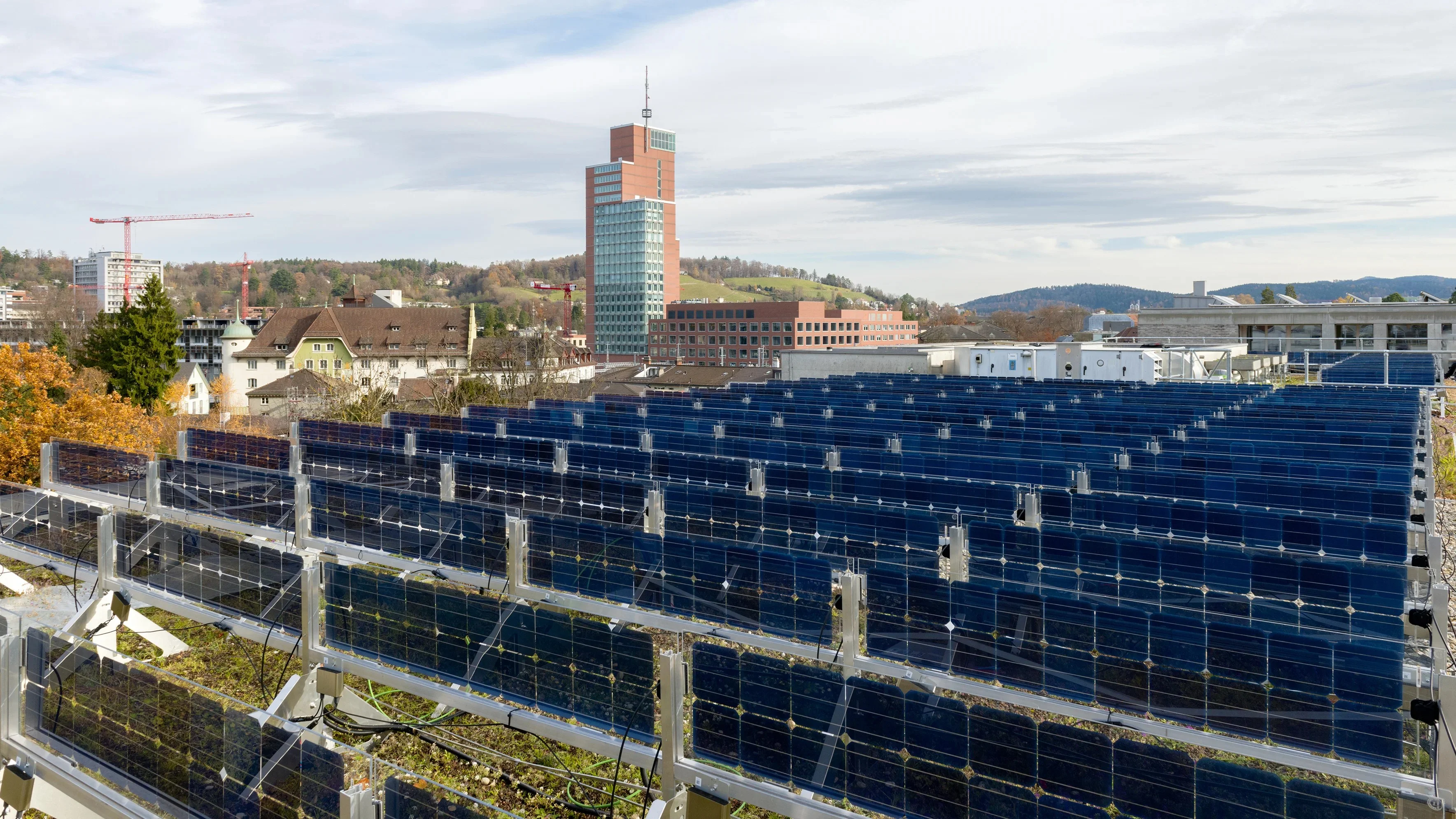
Dynamic Electricity Tariffs. Benefits for Flexible Customers
Dynamic electricity tariffs reward those who use electricity when it is cheaper, thereby reducing load on power generation and the national grid. However, while heat pumps and electric cars remain less commonplace, many households will have to pay a bit more for the time being. “In the short term, only a handful of households would opt for dynamic rates,” explains ZHAW expert Dr Florian Landis. In the long run, however, almost everyone can benefit. However, this means landlords and housing providers will have to invest in heat pumps and car charging stations.
More Jobs, Especially in Economically Weaker Cantons
If Switzerland achieves its renewable electricity expansion targets, more jobs will be created in the construction and operation of power plants and small-scale facilities because more electricity will be produced domestically – in contrast to how it would be without renewable energy expansion targets. All cantons benefit, but economically weaker ones benefit more. The effect depends on where new facilities are located and who is involved in the supply chains. It would be significantly greater in the Midlands and the Alps than in cities, but this potential can only be realized with a sufficient supply of skilled workers.

“In the short term, only a handful of households would opt for dynamic rates,”
ZHAW expert Florian Landis
Buildings: Effective Regulations, Unequal Burdens
Cantonal regulations, when combined with financial incentives, can reduce greenhouse gas emissions significantly more effectively than investments driven purely by economic considerations. Specifically, the study examined regulations under the Model Energy Regulations for the Cantons (MuKEn 2025), including a ban on new fossil-fuel heating systems, a requirement to install solar panels when replacing roofs, and renovation standards for poorly insulated buildings. However, the burdens would be unevenly distributed. In terms of income, low-income households, older people living alone, households in rural areas, and, in particular, homeowners would have to make a substantial financial investment. Stricter requirements by 2035 will have a greater impact, but also carry risks such as financial constraints.
Visible Distributional Effects Reduce Approval Ratings
A survey of more than 1,800 people reveals that as soon as it is clear who bears the costs and who reaps the benefits of heating bans or mandatory building renovations, support drops noticeably among both tenants and homeowners. Targeted exemptions or subsidies specifically for households at risk of poverty cannot offset this. Climate policy must, therefore, be perceived as fair by a wide range of the population.
Six Recommendations for Policymakers
A policy white paper summarizes research findings for policymakers, government officials, and the public and derives recommendations for action from these audiences. The recommendations in the EDGE Consortium’s latest white paper are:
- Ensure that there are enough skilled workers available to transform the energy system.
- Design regulations so that property owners’ investments also take tenants’ interests into account.
- Create framework conditions that promote the provision of services designed to reduce credit constraints (e.g., low-interest loans or “Energy-as-a-Service”).
- Take unequal burdens into account from the outset when selecting policy instruments.
- Provide targeted and sufficiently broad relief to vulnerable groups, including both tenants and homeowners.
- Clearly identify any remaining differences and justify them in terms of the benefits of the chosen tools.
About the SWEET Consortium EDGE
SWEET is a funding program of the Swiss Federal Office of Energy (SFOE) for solution-oriented research and innovation to implement the Energy Strategy 2050 and climate goals. As part of the SWEET project, the EDGE consortium – coordinated by the University of Geneva and EPFL – is investigating how an energy system with a high proportion of decentralized renewable energy can function effectively in cities, the Midlands, and the Alps from technical, economic, and safety perspectives. Numerous other universities and companies are involved in EDGE, including ZHAW and the University of Bern.
Downloads
- Policy White Paper, English Version (PDF 850 kB)
- Policy White Paper, German Version (PDF 852 kB)
- Policy White Paper, French Version (PDF 0.90 MB)
- Policy White Paper, Italian Version (PDF 837 kB)
- Communiqué de presse: La transition énergétique crée des opportunités et soulève des enjeux de répartition (PDF 176 kB)
- Comunicato stampa: La transizione energetica crea opportunità, ma solleva questioni distributive (PDF 170 kB)
Contact
Dr Florian Landis, Center for Energy and the Environment, ZHAW School of Management and Law, Tel. +41 58 934 79 84, florian.landis@zhaw.ch
ZHAW Media Office, Tel. +41 58 934 75 75, medien@zhaw.ch