The COPCA method helps train specialists worldwide
The COPCA physiotherapy method enables families to support the development of children with special needs.
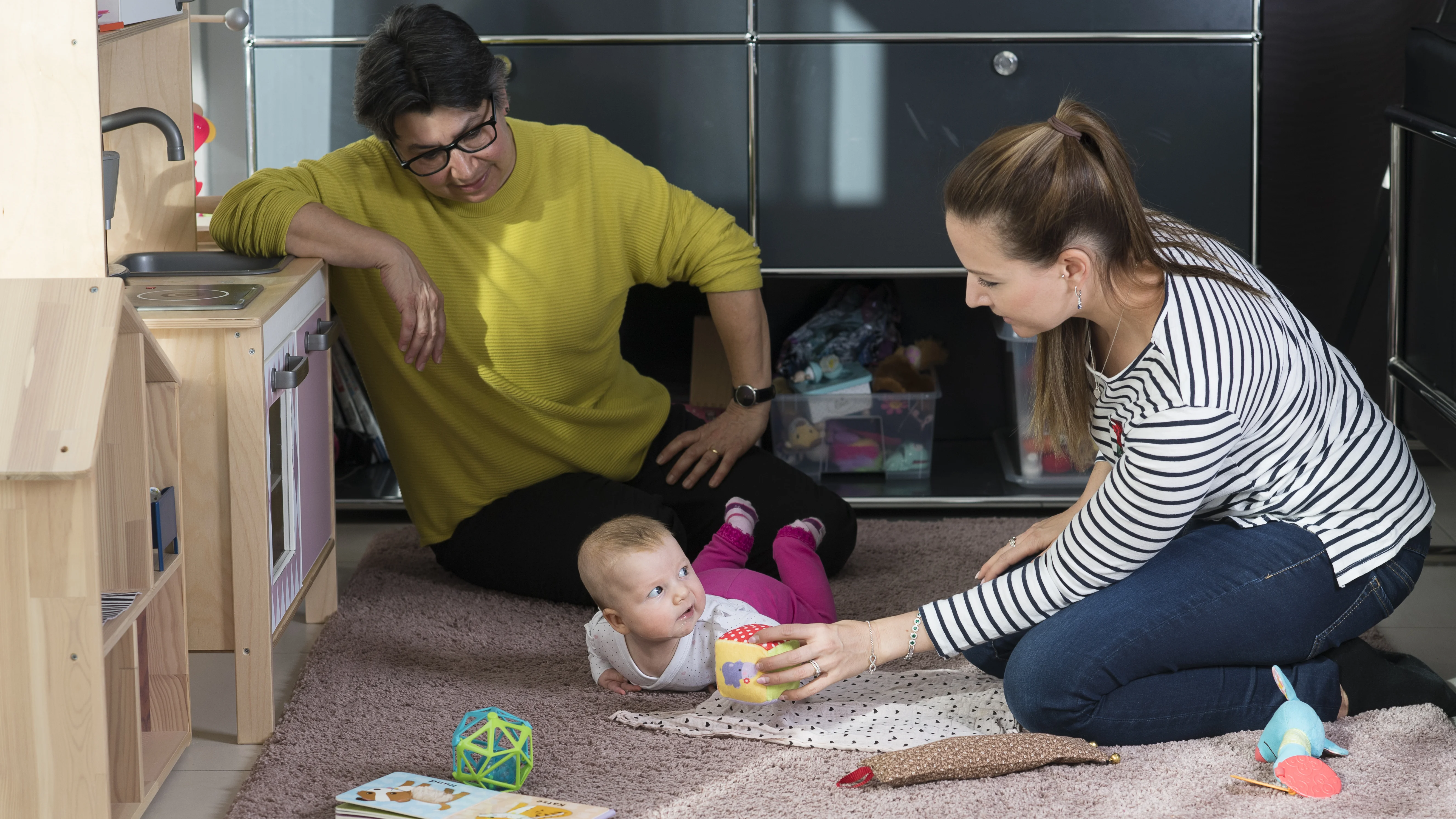
Children with neuromotor impairments benefit greatly from early physiotherapy support. COPCA (COPing with and CAring for Infants with Special Needs) has offered an effective approach for more than two decades. Developed by two researchers from the Netherlands, the programme is designed for the whole family. It encourages infants and toddlers to take an active role in their development and to explore movement through play in their everyday surroundings. “This is a paradigm shift,” says Schirin Akhbari Ziegler from the Institute of Physiotherapy. According to Akhbari Ziegler, COPCA coaches do not give any instructions but rather convey principles. “They help parents develop their own strategies for supporting their child in everyday life,” she adds.
Extending COPCA to lower-income countries
The ZHAW professor introduced the programme to Switzerland in 2015. Together with her team, she trains and certifies COPCA coaches. Since 2019, she has also been training participants from around the globe, including Ethiopia, Chile and India. “Participants learn a lot about other cultures,” says Akhbari Ziegler. In practice, however, they have had similar experiences. “The need for acceptance and support among families raising children with disabilities is universal.” The ZHAW is currently the only higher education institution offering training for COPCA coaches. To this end, the ZHAW has licensing agreements in Germany, Spain, Israel and Lithuania. The association for the international implementation of COPCA coaching also aims to make this innovative approach accessible in low-income regions.